Why Visit Macau in 2026?
Macau is one of those places people think they “know” before they arrive: glamorous casinos, glitzy hotels, and quick weekend trips from Hong Kong. But the Macau I’ve grown to love over the years is so much more intimate than that.
It’s the smell of freshly baked Portuguese egg tarts drifting down a narrow alley in the Historic Centre. It’s elderly locals playing Chinese chess under giant banyan trees while teenagers film TikToks in front of pastel Baroque churches. It’s the soft crash of waves on Coloane’s dark-sand beaches, just 25 minutes away from neon-lit Cotai.
In 2026, Macau feels particularly exciting. New cultural festivals are expanding, the UNESCO-listed old town is better preserved and interpreted than ever, and post-pandemic tourism has settled into a more thoughtful rhythm. You can still get the showy casino experience if you want it, but you can just as easily spend 3 days in Macau (or even 5 days in Macau) without stepping into a gaming floor at all.
This long-form travel guide for Macau is written like I’d plan a trip for a close friend: with detailed 3 day itinerary for Macau and extended 4 day itinerary for Macau and 5 day itinerary for Macau options, personal stories, food recommendations, and honest travel tips.
Table of Contents
- Why Visit Macau in 2026?
- Macau at a Glance
- Key Neighborhoods & Districts
- 20 Must-See Attractions in Macau (In Depth)
- Suggested Itineraries: 3–5 Days in Macau
- Best Local Food & Drinks in Macau
- Nightlife, Entertainment & Shows
- Cultural Experiences & Local Customs
- Day Trips & Nearby Getaways
- What’s New: Events & Festivals 2026–2027
- Practical Travel Tips for Macau
- Summary & Best Time to Visit Macau
Macau at a Glance
Macau is a Special Administrative Region (SAR) of China, like Hong Kong. It was a Portuguese colony for over 400 years, and that legacy is everywhere: in street names, azulejo tiles, pastel churches, and the famous Macanese fusion cuisine.
- Location: On the western side of the Pearl River Delta, across from Hong Kong.
- Area: Just over 33 km² – tiny, walkable, but surprisingly layered.
- Population: Around 700,000, one of the world’s most densely populated places.
- Languages: Cantonese and Portuguese are official; Mandarin and English are widely used.
- Currency: Macanese Pataca (MOP), but Hong Kong dollars (HKD) are accepted almost everywhere (change usually given in MOP).
Think of Macau as three main areas: the compact, historic Macau Peninsula, the entertainment-heavy Taipa & Cotai, and the more relaxed, village-like Coloane.
Macau’s Neighborhoods & Districts
Macau Peninsula: Old Macau’s Heart
The peninsula is where I spend most mornings when I’m in town. It’s the oldest part of Macau and home to the Historic Centre of Macau, a UNESCO World Heritage Site. Here you’ll find Senado Square, the Ruins of St. Paul’s, ancient Chinese temples, and narrow streets where laundry flaps between old tenements and boutique hotels.
Walkable, dense, and best explored on foot, this is where you’ll get the strongest sense of Macau’s Portuguese-Chinese fusion.
Taipa Village: Colorful Lanes & Cafés
Taipa Village is my go-to recommendation for first-timers who want something more local than Cotai, but newer and calmer than the Peninsula. It’s a warren of colorful alleys, hip cafés, traditional snack shops, and restored colonial houses overlooking Cotai’s skyline.
Cotai Strip: Macau’s Las Vegas
Built on reclaimed land between Taipa and Coloane, the Cotai Strip is pure spectacle: mega-resorts, malls, Michelin-starred dining, and world-class shows. Even if you’re not into gambling, it’s worth a wander for the scale alone – and many of Macau’s best indoor attractions, including family-friendly ones, are here.
Coloane: Villages, Beaches & Nature
Coloane is where I go to breathe. It still feels like an old fishing village in parts, with quiet temples, a waterfront promenade, hiking trails, and beaches. If you have 4 days in Macau or more, spend at least a half-day here.
NAPE & Nam Van Lakes: Business, Culture & Skyline Views
To the south of the Peninsula is NAPE (New Urban Zone), a modern business and residential district wrapped around Nam Van and Sai Van lakes. This is where you’ll find some government buildings, sleek cafés, jogging paths, and some of the best night views of Macau Tower and the skyline.
20 Must-See Attractions in Macau (Deep Dive)
These are the places I keep returning to on almost every trip. I’ll start with the most iconic and then move into some lesser-known favorites. Each sub-section includes history, why it matters, my personal experience, and practical tips.
1. Ruins of St. Paul’s
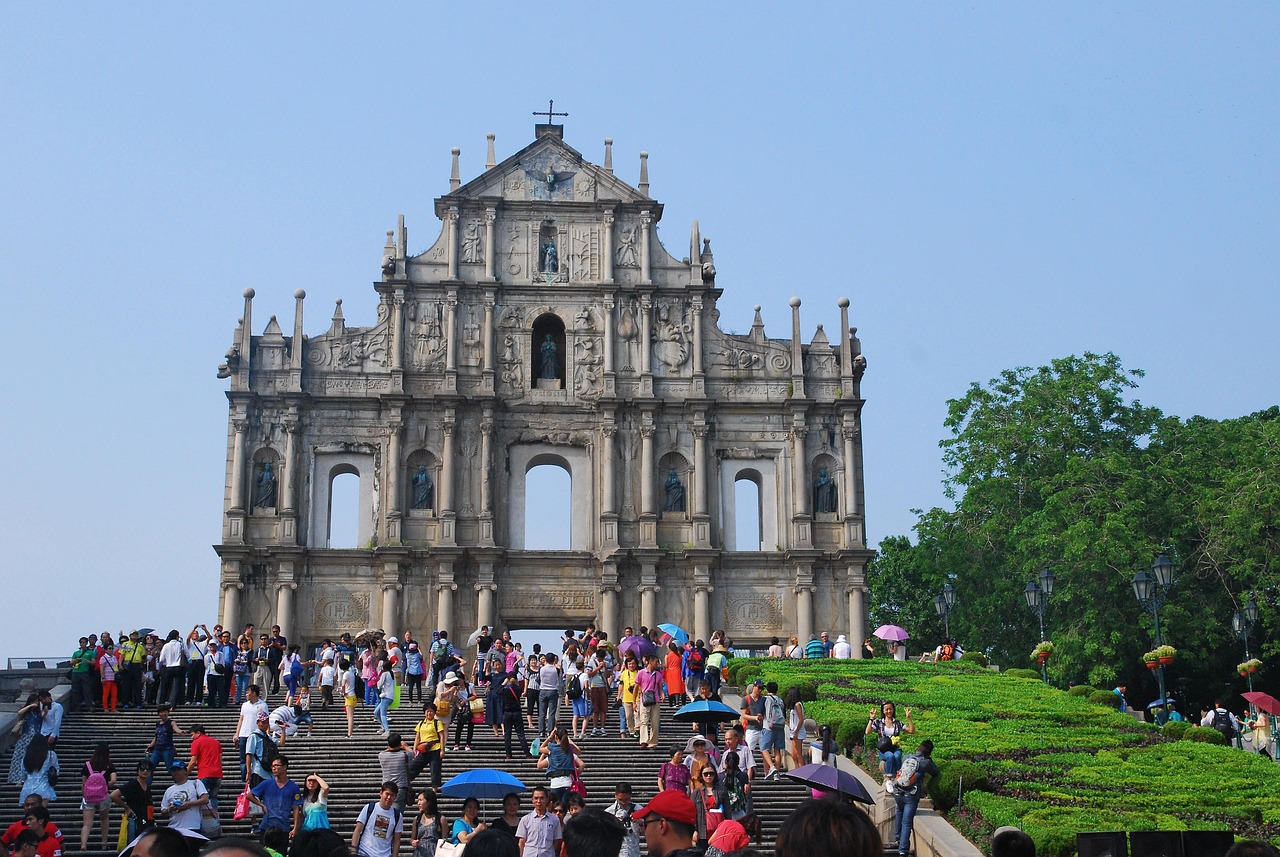
The Ruins of St. Paul’s are to Macau what the Eiffel Tower is to Paris: a symbol you’ve already seen in a hundred photos before you climb that last flight of stone stairs and see it in person.
Originally built in the early 17th century, the Church of St. Paul was once the largest Catholic church in Asia, part of a Jesuit college complex. A devastating fire in 1835 left only the stone façade and a grand staircase. Today, those ruins sit atop a hill overlooking the city, framed by souvenir shops and snack stalls below.
I like to visit twice: once early in the morning (around 8 am) when the alleyway up from Senado Square is relatively quiet, and again at night when the façade is lit up and buskers sometimes play music on the steps.
Don’t miss the small museum and crypt behind the façade. It’s easy to skip, but the underground crypt with relics and old stonework gives a tangible sense of how important this site was to early Catholic missions in East Asia.
- Best for: First-time visitors, photographers, history lovers, families.
- When to go: Early morning or after 8 pm to avoid the heaviest crowds.
- Tip: After visiting, wander into the side streets behind the Ruins; you’ll find quieter residential lanes, tiny shrines, and local snack shops away from the main stream of tourists.
2. Senado Square (Largo do Senado)
If Ruins of St. Paul’s are the face of Macau, Senado Square is its living room. This wave-patterned mosaic plaza is ringed by pastel-colored neo-classical buildings that once housed colonial offices and shops. Today, it’s a pedestrianized hub where everyone seems to pass through at some point.
I love grabbing a milk tea from a side-street café and just sitting on the edge of the central fountain, people-watching. You’ll see everything from school groups and families with strollers to couples taking wedding photos.
In 2026, Senado Square is often used for cultural events and seasonal decorations – during Lunar New Year and the Macau Light Festival, it becomes a glowing stage of lanterns and projections.
- Best for: Atmosphere, architecture, casual strolling, first-day orientation.
- Nearby: St. Dominic’s Church, Leal Senado Building, Rua da Felicidade.
- Tip: Look for the side entrance into the Leal Senado Building and its inner courtyard – a calm oasis right off the busy square.
3. Macau Tower
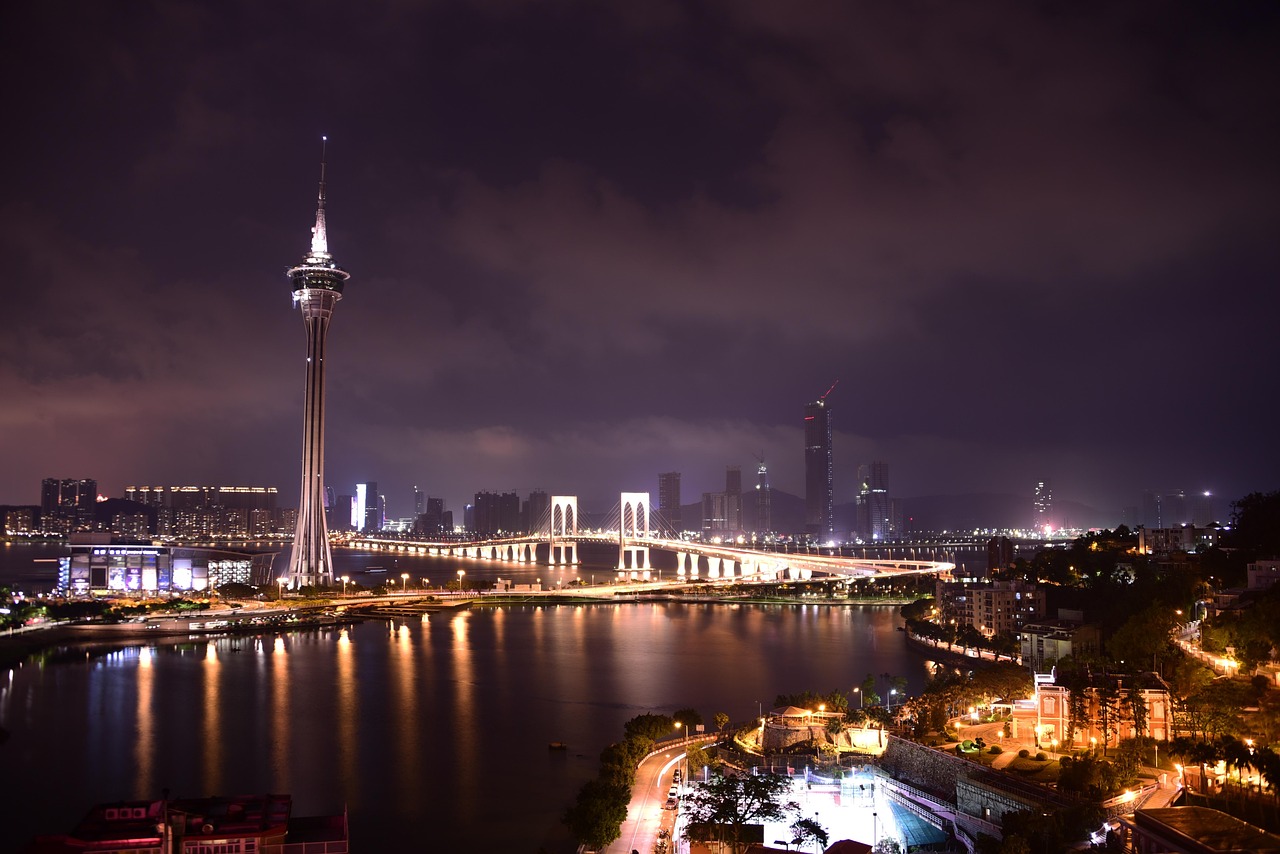
Every time I see Macau Tower against the skyline, I think of two very different experiences: sipping coffee over a serene view of the Pearl River Delta, and having my heart race while edging around the outside of the building 233 meters above the ground.
Opened in 2001, the tower is 338 meters tall and houses observation decks, restaurants, and some of the world’s most famous commercial bungee experiences, run by AJ Hackett.
If you’re adventurous, the Skywalk X is unforgettable: you’re harnessed in, but there’s no railing as you walk around the outer rim. I did it on a clear winter afternoon; the wind was strong, and looking down at the tiny cars below was both terrifying and liberating.
Less daring visitors will still love the 360° observation deck. Sunset is magical here – the Cotai resorts start to sparkle, and you can see the bridges and old town light up.
- Best for: Panoramic views, couples, families (for the views), adrenaline seekers.
- Tip: Book adventure activities in advance, especially on weekends and holidays. If you’re on a budget, time your visit to avoid expensive restaurant sittings and just do the observation deck.
4. A-Ma Temple
The A-Ma Temple is one of Macau’s oldest and most atmospheric temples, dedicated to Mazu (A-Ma), the goddess of seafarers. Legend has it that “Macau” itself is derived from “A-Ma-Gau” – the Bay of A-Ma.
Perched on a hillside overlooking the inner harbor, the complex is a series of courtyards, pavilions, and incense-filled halls. I like to come here in the late afternoon when the light hits the granite rocks and curling incense smoke just right.
Climb the steps slowly, lingering at each terrace. You’ll see worshippers lighting joss sticks, burning paper offerings, and drawing fortune sticks. The stone carvings and poetic couplets on the walls are a window into older Macau, long before the casinos.
- Best for: Culture, quiet contemplation, photography.
- Tip: Dress modestly, speak softly, and avoid blocking worshippers. Combine with a stroll along the nearby waterfront and the Maritime Museum.
5. Taipa Village & Taipa Houses-Museum
Taipa Village is one of my favorite places to stay when I want to balance local life with easy access to Cotai and Coloane. It’s walkable, colorful, and full of good food.
Start at the Taipa Houses-Museum, a row of restored green-and-white Portuguese villas facing a tranquil pond and Cotai’s skyline beyond. Inside, you’ll find period furniture and exhibits about Macanese life, but I mostly come for the peaceful garden and the view.
From there, wander through the village streets: Rua do Cunha and the nearby alleys are lined with snack shops selling almond cookies, jerkies, bubble tea, and Macanese specialties. My ritual: grab a serradura (sawdust pudding) to go and sit on a bench watching kids play and aunties gossiping in Cantonese.
- Best for: Food, casual exploring, evening strolls, families.
- Tip: Visit late afternoon and stay for dinner. The village lights up beautifully at night, and many restaurants offer outdoor seating.
6. Cotai Strip (The Venetian, Parisian & Beyond)
Whether you’re into casinos or not, the Cotai Strip is a spectacle worth experiencing once. Think Las Vegas glitz, but with a distinctly Asian flavor.
The Venetian Macao was my first Cotai resort years ago – I still remember stepping into the faux-Venetian canal area, complete with gondolas, painted sky, and opera-singing gondoliers. It’s touristy, sure, but there’s a certain charm in its over-the-top commitment.
Across the road, the Parisian Macao has a half-scale Eiffel Tower that lights up at night. Taking the elevator up to its observation deck gives a fun alternative view over Cotai.
In 2026, Cotai continues to evolve with new entertainment offerings, shopping, and kid-friendly attractions like indoor play zones, themed shows, and immersive LED experiences.
- Best for: Nightlife, shopping, shows, families (for entertainment), couples.
- Tip: Use the free shuttle buses running between major resorts and border gates/ferry terminals – it’s an easy way to move around Cotai without paying for taxis.
7. Coloane Village & Lord Stow’s Bakery
Coloane Village feels like a time capsule. Low-rise houses, peeling pastel paint, old fishing boats, and quiet temple courtyards – all a short bus ride from the neon of Cotai.
Every visit, I make a beeline for the original Lord Stow’s Bakery, birthplace of Macau’s most famous Portuguese egg tart. The tarts are flaky, caramelized on top, still warm from the oven. I usually buy two, meaning three, and sit on the sea-facing promenade just a minute away, watching the water.
Wander the lanes, peek into the tiny shops and temples, and don’t rush. Coloane rewards slow strolling. If you have time, walk to Tam Kung Temple and the nearby small square with its iconic yellow chapel (Chapel of St. Francis Xavier).
- Best for: Relaxation, food, couples, families, photography.
- Tip: Come in the morning on a weekday if you want Coloane almost to yourself. Pair your visit with a hike or a beach stop.
8. Coloane Hiking Trails (Alto de Coloane & Seac Min Pun)
When people ask me whether Macau has anything for nature lovers, I bring up Coloane’s hiking trails. The island is surprisingly green, with a network of paths crisscrossing its hills.
The most popular is the Coloane Trail, a loop that circles the island’s highest peak, Alto de Coloane (170m). It’s not a difficult hike, but the combination of forest, occasional sea views, and chirping birds makes you feel far from the city.
On one of my favorite afternoons, I hiked the trail under overcast skies – perfect for avoiding the heat. I ended at Hac Sa Beach, where I rewarded myself with grilled seafood at a beachside restaurant.
- Best for: Hikers, runners, anyone needing a break from city life.
- Tip: Bring water, wear proper shoes, and avoid the hottest midday hours in summer. Check weather forecasts; trails can be slippery after rain.
9. Hac Sa Beach
Hac Sa Beach (Black Sand Beach) on Coloane’s southeast coast is one of Macau’s few natural beaches, with darker sand caused by mineral content. It’s not a postcard-perfect tropical beach, but it has a rugged charm.
Locals come here to barbecue, walk dogs, and let kids run wild. I like walking from one end to the other at low tide, watching the interplay of sky and water.
There’s a popular restaurant nearby, famous for Portuguese-African chicken and grilled meats – a great spot for a long, lazy lunch.
- Best for: Families, relaxed afternoons, casual dining.
- Tip: Don’t expect pristine turquoise water; come for the atmosphere and coastal walks rather than classic “beach holiday” vibes.
10. Guia Fortress, Lighthouse & Park
Guia Fortress is my personal escape in the middle of the Peninsula. Built in the 17th century, it includes a chapel, old military structures, and the Guia Lighthouse, said to be the oldest modern lighthouse on the Chinese coast.
You can either walk up through the park (a bit of a climb but shady) or take the short cable car. At the top, the views over Macau’s dense urban fabric are fantastic, especially in the late afternoon.
The Guia Chapel has beautiful frescoes inside; please be respectful and quiet if you enter. I often see locals jogging or doing tai chi in the surrounding park.
- Best for: Views, quiet walks, history, photographers.
- Tip: Bring a light jacket in cooler months; it can be breezy at the top. Avoid the hottest midday hours in summer.
11. St. Dominic’s Church
Right off Senado Square, the yellow façade of St. Dominic’s Church is one of the prettiest Baroque buildings in Macau. Founded by Spanish Dominican priests in the late 16th century, it’s undergone many changes but still exudes old-world charm.
I like to step inside whenever I’m passing by – the interior is calmer and cooler than the busy streets outside, with white-and-gold details and soft light from the windows.
- Best for: Architecture enthusiasts, anyone exploring the Historic Centre.
- Tip: Look up at the ceiling and side altars; the details are easy to miss if you rush through.
12. Macau Museum & Monte Fort
Monte Fort (Fortaleza do Monte) is an old hilltop fort that once protected Macau from attacks. Today, it’s a peaceful park and viewpoint, home to the Macau Museum.
I recommend visiting the museum first: it’s one of the best introductions to Macau’s layered history, from early Chinese settlement and Portuguese arrival to the development of its unique Macanese culture. Exhibits are well curated and kid-friendly, with models and multimedia displays.
Afterward, walk around the fort walls. You’ll see cannons pointed toward what is now a forest of apartment blocks and casinos – a visual reminder of how much the city has changed.
- Best for: History buffs, families, first-time visitors.
- Tip: Combine with Ruins of St. Paul’s – they’re very close. Visit in the morning before the sun makes the open fort too hot.
13. Nam Van & Sai Van Lakes Promenades
The area around Nam Van and Sai Van Lakes is one of my favorite sunset spots in the city. Wide promenades, views of Macau Tower, and reflections of the skyline on the water – it’s a more relaxed alternative to Cotai’s intensity.
On some evenings, you’ll find light installations, art events, or small pop-up markets here. Joggers loop the lake, couples hold hands on benches, and families rent pedal boats.
- Best for: Evening walks, couples, casual photos.
- Tip: Bring a tripod if you’re into night photography; the skyline shots here are excellent.
14. Macau Fisherman’s Wharf
Macau Fisherman’s Wharf is an eclectic waterfront complex near the Outer Harbour Ferry Terminal, with themed architecture inspired by European and other world styles.
It’s gone through phases of liveliness and quiet, but in recent years it’s finding a second life as a space for events, dining, and photography. I like walking along the promenade here for harbor views and the quirky mix of building styles.
- Best for: Casual strolling, families, quirky photos.
- Tip: Come at golden hour for the best light on the faux-Roman and European façades.
15. Outer Harbour & Macau-Taipa Bridges
The bridges connecting Macau Peninsula to Taipa are iconic, especially when lit at night. I still remember my first drive across the Friendship Bridge at night – Cotai glowing in the distance, water below, and the tower in the corner of my eye.
While you’ll likely cross the bridges automatically when moving between districts, consider seeking out viewpoints on the Peninsula or Nam Van area for photos.
- Best for: Night views, cityscape photography.
- Tip: Ask locals which pedestrian-accessible spots they prefer for bridge shots; some lesser-known corners along the waterfront offer excellent angles.
16. Lou Lim Ioc Garden
Lou Lim Ioc Garden is the most Chinese-style of Macau’s classical gardens, with winding paths, rockeries, ponds, and pavilions. It was once a private garden owned by a wealthy merchant and later opened to the public.
I love coming here in the morning when locals practice tai chi or read newspapers on stone benches. The zigzag bridge over the pond, lotus flowers in summer, and the contrast of greenery against nearby high-rises all make it a place where time feels slower.
- Best for: Peaceful morning walks, families, photography.
- Tip: Pair with a visit to the nearby Tap Seac Square area, which has interesting architecture and local cafés.
17. Tap Seac Square & Surroundings
Tap Seac Square is a large urban plaza ringed by distinctive yellow-and-red neoclassical buildings. It’s less touristy than Senado Square and often used for local events, fairs, and public gatherings.
The surrounding streets have a good mix of heritage buildings, small museums (like the Tap Seac Gallery), and modern cafés. This is one of the areas where I feel Macau’s everyday life most strongly, away from the biggest tourist trails.
- Best for: Architecture fans, café-hopping, people-watching.
- Tip: Check what’s on at the Tap Seac Gallery; exhibits are often free and interesting.
18. Red Market & Local Wet Markets
The Red Market, with its brick façade and clock tower, is one of Macau’s most iconic wet markets. Inside, you’ll find stalls piled with fresh vegetables, seafood, meats, and dried goods. It’s noisy, colorful, and wonderfully alive.
I like to walk the aisles listening to the calls of vendors and the chatter of shoppers. Nearby, side streets have hawkers selling fruits, snacks, and household items.
- Best for: Food lovers, photographers, anyone curious about daily life.
- Tip: Come in the morning when the market is busiest. Be respectful when photographing; ask for permission if focusing closely on people.
19. Rua do Cunha & Taipa Food Streets
Rua do Cunha is Taipa Village’s most famous food street, lined with bakeries, dessert shops, and small restaurants. On a weekend afternoon, it can feel like the whole of Macau and half of Guangdong has turned up here to snack.
My personal ritual: start at one end and slowly graze – almond cookies, pork chop buns, bubble tea, serradura pudding, and maybe a sit-down Macanese meal if I’m not already too full.
- Best for: Foodies, families, casual grazing, souvenir shopping.
- Tip: Try at least one local snack you’ve never heard of. Many shops offer free samples; it’s a fun way to discover new flavors.
20. Seac Pai Van Park & Giant Panda Pavilion
In Coloane’s Seac Pai Van Park, you’ll find the Giant Panda Pavilion, a modern facility where you can see giant pandas and red pandas in naturalistic enclosures. It’s a hit with families, but I’ll admit I’ve gone alone more than once – there’s something endlessly charming about watching pandas munch bamboo.
The surrounding park has walking paths, small exhibits, and picnic areas. It’s a gentle, green contrast to the city.
- Best for: Families, animal lovers.
- Tip: Check feeding times; pandas are more active then. Buy tickets ahead on weekends and holidays.
Suggested Itineraries: 3–5 Days in Macau
Below are story-style itineraries based on how I actually spend my time in Macau. They’re flexible: you can compress them into a 3 day itinerary for Macau or stretch them into a 4 day itinerary for Macau or 5 day itinerary for Macau by slowing the pace, adding café time, or revisiting favorite spots.
3-Day Itinerary for Macau: Classic Highlights & Food
If you only have 3 days in Macau, this plan hits the historic center, Cotai’s glitter, and Coloane’s calm.
Day 1: Historic Centre, Ruins & Night Views
I like to treat the first day as a slow immersion into old Macau.
Morning: Start at Senado Square. Arrive before 9 am if you can; the mosaic waves are almost empty and the pastel façades glow in the soft light. Duck into a local cha chaan teng (Hong Kong-style café) on a side street for a simple breakfast: macaroni in soup with ham, scrambled eggs, and milk tea.
From Senado Square, walk up to St. Dominic’s Church, then follow the signage through the warren of streets toward the Ruins of St. Paul’s. Take your time; some of the best moments are in the alleys lined with old shophouses and snack stalls.
Climb the steps to the Ruins, then continue upward to Monte Fort and the Macau Museum. Spend an hour or two getting a feel for Macau’s history – it will deepen your appreciation of everything you see afterward.
Lunch: Head back down toward Senado and into nearby side streets for a simple Macanese or Cantonese lunch. I like small eateries where locals are queueing; look for Chinese menus with a few English translations or pictures.
Afternoon: Make your way to A-Ma Temple on the southwestern edge of the Peninsula. The walk is interesting, but if you’re tired, grab a bus or taxi. Light incense if you wish and take in the atmosphere. Then stroll along the waterfront, peeking into the Maritime Museum if you’re curious about Macau’s seafaring past.
Evening: As the sun starts to drop, head toward Nam Van Lake. Walk the promenade, watch the city lights flicker on, and snap photos of Macau Tower. For dinner, try a Portuguese restaurant on the Peninsula – order bacalhau (salt cod), African chicken, and a carafe of house wine.
End the night with a slow walk back through the old streets or a quick taxi ride if you’re staying in Taipa or Cotai.
Day 2: Taipa Village & Cotai Strip
Morning: Take a bus or taxi to Taipa Houses-Museum. Walk the lakeside path, then explore the restored colonial homes. Afterward, wander into Taipa Village. Grab coffee at a local café and spend the late morning getting happily lost in its alleys.
Lunch: Eat in Taipa Village – either Macanese, Portuguese, or a casual noodle shop. Rua do Cunha has endless choices; don’t skip dessert.
Afternoon: Walk or shuttle over to the Cotai Strip. Pick one or two mega-resorts to explore in depth. The Venetian is a classic; the Parisian offers the Eiffel Tower experience. If you’re traveling with kids, look for indoor attractions and themed zones; if you’re into shopping, the malls can occupy hours.
Evening: Have dinner at one of Cotai’s many restaurants – from food courts to fine dining. If you’re interested in shows, book ahead for a performance in one of the integrated resorts. Even if you skip the gaming floors, the atmosphere in Cotai at night is electric.
End your day with a late drink at a hotel bar or a quiet stroll back through Taipa Village if that’s where you’re staying.
Day 3: Coloane, Beaches & Macau Tower
Morning: Bus or taxi down to Coloane Village. Grab egg tarts at Lord Stow’s and eat them by the water. Wander the village, visit the Chapel of St. Francis Xavier and the temples, and soak in the slower pace.
If you’re up for it, continue to Hac Sa Beach or a portion of the Coloane Trail for some light hiking. Families may prefer heading to Seac Pai Van Park and the Giant Panda Pavilion.
Lunch: Choose a Coloane restaurant – seafood and grilled meats are popular, and many places have open-air seating.
Afternoon: Make your way back toward the Peninsula and stop at Macau Tower. Head up to the observation deck. If you’re feeling brave (and have booked ahead), do the Skywalk or bungee. Otherwise, take your time enjoying the view.
Evening: For your last night, either revisit a favorite neighborhood or try somewhere new – perhaps the Tap Seac area for a more local vibe. Have a final Macanese meal, raise a glass of Portuguese wine, and start planning your return.
4-Day Itinerary for Macau: Slower Pace & Deeper Dives
With 4 days in Macau, you can follow the 3-day plan above and add:
- Extra time in the Historic Centre to explore smaller streets and hidden temples.
- A leisurely morning at Lou Lim Ioc Garden and the Red Market.
- More hiking in Coloane or beach time at Hac Sa or Cheoc Van.
- An additional show or fine-dining experience in Cotai.
I usually use the extra day to do a “no-schedule” wander: pick a neighborhood like Tap Seac or Taipa Village and just explore wherever looks interesting, from tiny bakeries to independent galleries.
5-Day Itinerary for Macau: Immersive Experience
A 5 day itinerary for Macau lets you really settle into the city’s rhythm. Combine the 3- and 4-day ideas with:
- A full day devoted to Coloane: hiking, pandas, beaches, and long lunches.
- Deep-dive food days: one focused on Macanese and Portuguese cuisine, another on Cantonese and street snacks.
- Time to revisit favorite spots at different times of day (e.g., Ruins of St. Paul’s at dawn and after dark).
- An afternoon of café-hopping and reading in gardens or lakeside promenades.
On my last 5-day stay, I spent almost an entire day just oscillating between Lou Lim Ioc Garden, a nearby tea house, and Tap Seac Square – no big sights, just soaking in the small details of daily life.
Best Local Food & Drinks in Macau
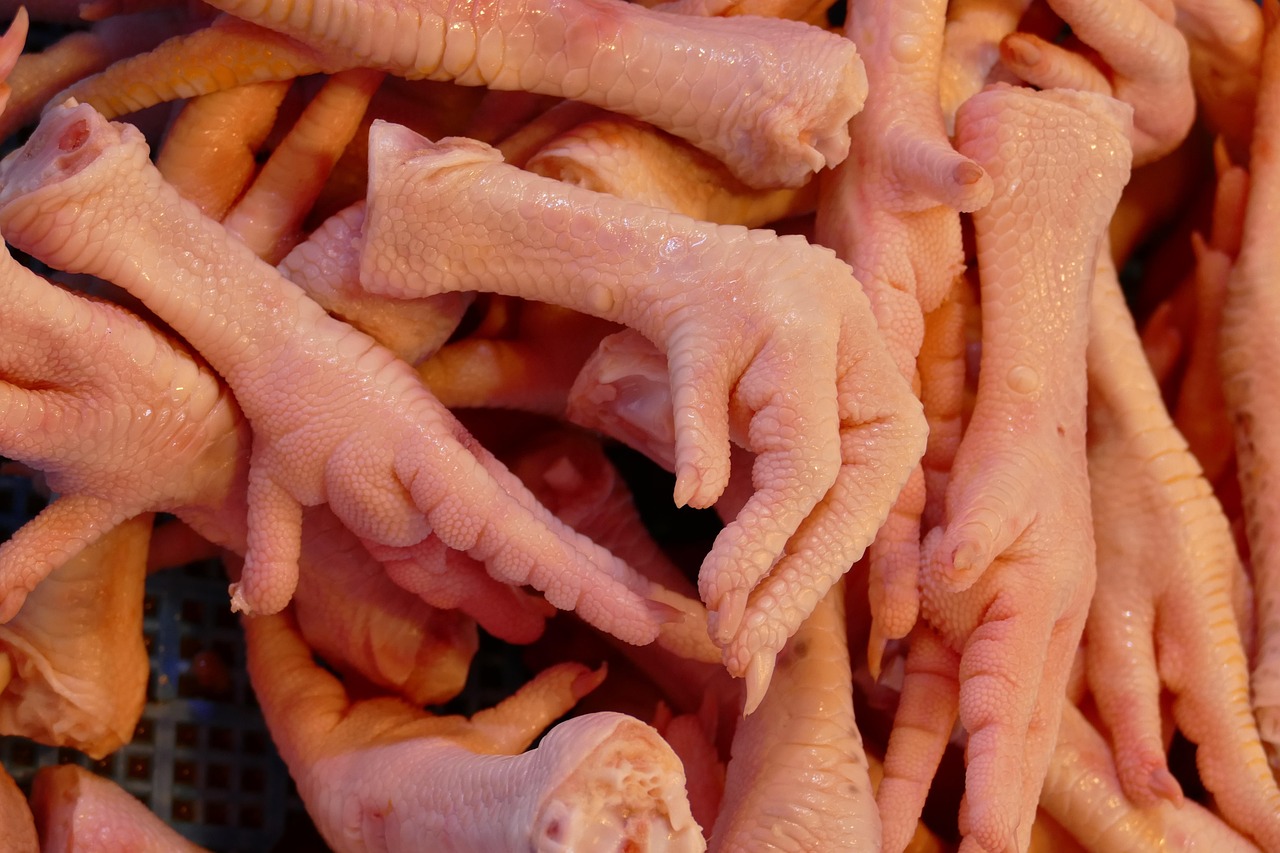
Food is one of the strongest reasons to visit Macau. The mix of Cantonese, Portuguese, and uniquely Macanese dishes means you can eat something different at every meal for days.
Must-Try Dishes
- Portuguese Egg Tarts (Pastéis de Nata): Especially from Lord Stow’s (Coloane) and Margaret’s Café e Nata (Peninsula).
- Macanese African Chicken: Grilled chicken in a mildly spicy, peanutty sauce – a colonial-era fusion dish.
- Pork Chop Bun: A juicy pork chop sandwiched in a crusty roll; great street snack.
- Bacalhau (Salt Cod): From croquettes to stews, a Portuguese staple done very well here.
- Serradura (Sawdust Pudding): Layers of whipped cream and crumbled biscuits; simple but addictive.
- Almond Cookies & Jerky: Popular souvenirs, especially around Rua do Cunha and Senado area.
- Cantonese Dim Sum & Seafood: Excellent quality in many local restaurants.
Where to Eat (Personal Picks)
- Lord Stow’s Bakery (Coloane): For the original egg tarts.
- Margaret’s Café e Nata (Peninsula): Iconic egg tarts & simple bakes; go early to avoid long lines.
- Taipa Village eateries: Great for Macanese and Portuguese meals in a cozy setting.
- Local cha chaan tengs: Look for busy, no-frills cafés – perfect for breakfast and quick lunches.
- Cotai hotel restaurants: If your budget allows, try at least one Michelin or high-end restaurant for refined Portuguese or Chinese cuisine.
Saving Money on Food
Macau can be expensive if you only eat in hotels, but it doesn’t have to be:
- Seek out local noodle shops and canteens a few streets away from major tourist squares.
- Use food courts in malls and integrated resorts for mid-range, clean, and varied options.
- Snack strategically: a pork chop bun plus a bubble tea can tide you over between big meals.
Nightlife, Entertainment & Shows
Macau’s nightlife ranges from high-energy casinos to lakeside strolls and cozy wine bars.
Cotai’s Big Nights
- Casinos: Even if you don’t gamble, walking through the gaming floors and adjacent entertainment zones is an experience.
- Shows: Check current lineups in 2026 at major resorts; large-scale productions, concerts, and seasonal performances are common.
- Bars & Clubs: Many integrated resorts have rooftop bars, lounges, and clubs – dress codes may apply.
Low-Key Evenings
- Nam Van Lake: Ideal for relaxed walks and night photography.
- Taipa Village: After dark, some bars and restaurants create a laid-back, intimate vibe.
- Peninsula Pubs & Cafés: Around the old town, you’ll find smaller spots for a quiet drink.
Family-Friendly Nights
- Evening shows suitable for kids (check age recommendations).
- Ferris wheels, light installations, or seasonal attractions in Cotai.
- A night visit to the Macau Tower observation deck.
Cultural Experiences & Local Customs
Macau’s charm lies in its blend of Chinese and Portuguese influences. To really appreciate it, try to engage with local culture beyond the surface.
Simple Cultural Experiences
- Visit both Chinese temples (like A-Ma, Kun Iam) and Catholic churches (St. Dominic’s, St. Lawrence’s) to see the religious diversity.
- Wander older residential streets in the morning to see daily routines: markets, schoolkids, park exercises.
- Try Macanese cuisine – it’s one of the world’s earliest fusion cuisines, reflecting centuries of cultural blending.
Local Etiquette & Customs
- Language: English is understood in tourist areas, but a few Cantonese words and a smile go a long way.
- Temples: Dress modestly, speak quietly, don’t touch altars or statues, and ask before photographing people.
- Churches: Similar respect applies; avoid loud conversations and disruptive photography during services.
- Tipping: Not mandatory but appreciated in restaurants and for good service; rounding up or 5–10% is common in mid/high-end places.
- Queuing: Lines are generally respected; don’t cut in.
Romantic & Family-Friendly Cultural Moments
- Couples: Sunset at Nam Van Lake or Macau Tower, then a Portuguese dinner by candlelight.
- Families: A morning in the Historic Centre followed by a simple Macanese lunch and an afternoon in a park or at the Panda Pavilion.
Day Trips & Nearby Getaways
Macau is compact, but if you’re here for 5 days or combining it with other destinations, consider:
- Zhuhai (Mainland China): Just across the border, with its own coastal parks and shopping. Check visa requirements and border opening times.
- Hong Kong: Reachable via the Hong Kong–Zhuhai–Macau Bridge shuttle or ferry (check 2026 schedules); good for a multi-city Pearl River Delta trip.
- Island Hopping in the Delta: Some organized tours or private boats offer day trips; ask local agencies for current options.
What’s New: Events & Festivals 2026–2027
While exact dates can shift slightly year to year, these are major events to watch for in 2026–2027 (confirm closer to your travel dates):
- Macau Chinese New Year Celebrations (Early 2026 & 2027): Lion dances, parades, and festive decorations across the city.
- Macau Arts Festival (Spring 2026 & 2027): Theatre, dance, music, and visual arts at venues across Macau.
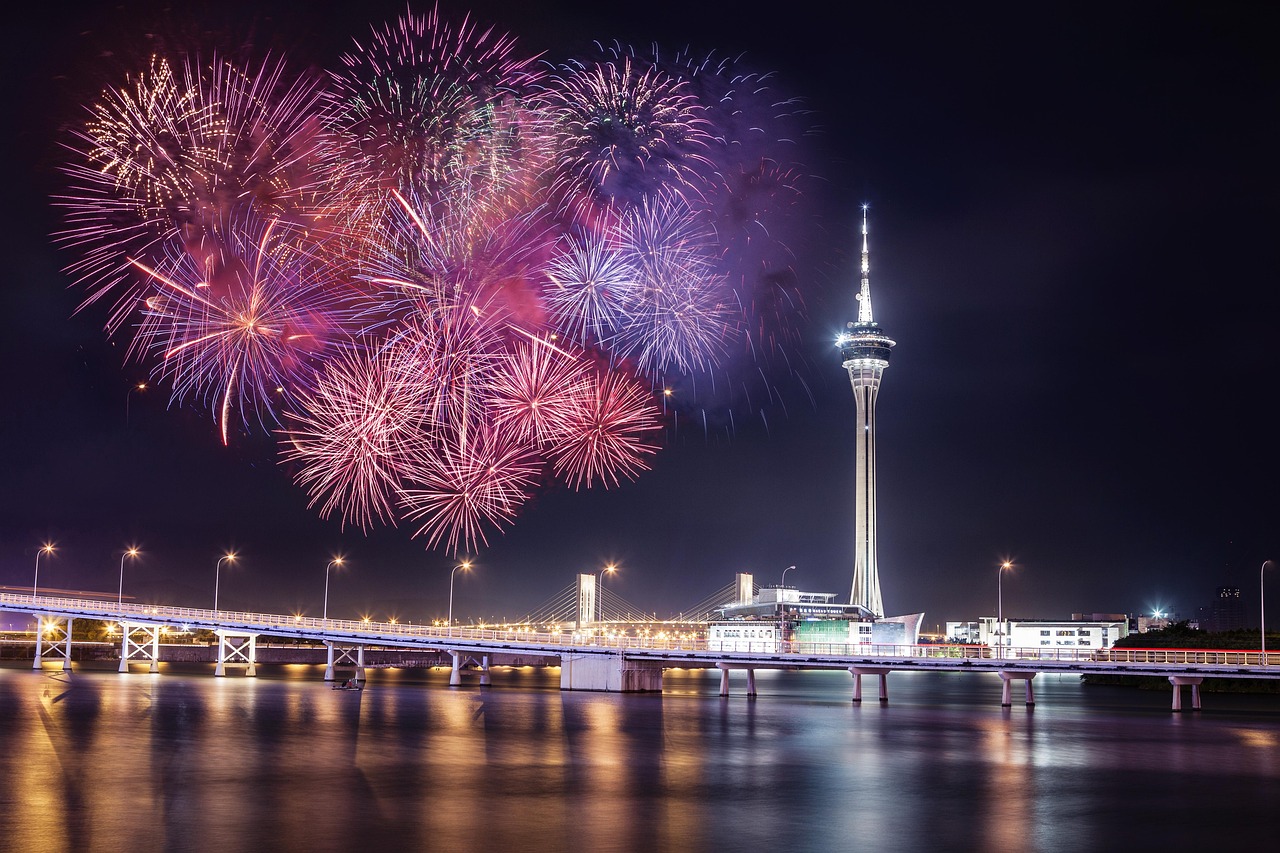
- Macau International Fireworks Display Contest (Usually Autumn): Pyrotechnic teams from around the world compete; best viewed from around Macau Tower and Nam Van Lake.
- Macau Grand Prix (November 2026 & 2027): Street racing event; book accommodation far in advance if you plan to visit then.
- Macau Food Festival (Late Autumn): Food stalls, tastings, and events near the Macau Tower area.
- Macau Light Festival (December): Light installations and projections in the Historic Centre and Nam Van area.
Practical Travel Tips for Macau (2026)
Visas & Entry
Macau maintains its own immigration system separate from mainland China.
- Many nationalities can enter visa-free for short stays (7–90 days), but always check the most up-to-date information from official Macau government sources before travel.
- If you plan to visit mainland China or Hong Kong during your trip, check their separate visa policies and re-entry rules.
Getting There
- By Air: Macau International Airport (on Taipa) has direct flights from several Asian cities.
- By Sea: High-speed ferries historically run between Hong Kong and Macau; check 2026 schedules and any changes.
- By Road: The Hong Kong–Zhuhai–Macau Bridge shuttle and buses connect the three cities; specific transit rules apply.
Getting Around Macau
- On Foot: The Peninsula and Taipa Village are very walkable, though hilly in parts.
- Buses: Extensive, affordable network connecting all major districts, including Coloane and Hac Sa.
- Taxis: Relatively inexpensive but can be scarce during rush hours or rain. Always have your destination written in Chinese.
- Hotel Shuttles: Free shuttles from major resorts to border gates, ferry terminals, and between Cotai and the Peninsula – handy even if you’re not staying there.
Car Rental & Driving
Most visitors don’t rent cars in Macau – traffic, limited parking, and the small size of the territory make public transport more practical.
- Foreign driver’s licenses may be recognized under certain conditions, but always verify with local authorities and rental companies.
- Left-hand traffic, dense roads, and frequent buses make driving stressful if you’re not used to it.
SIM Cards & Connectivity
- Local SIM cards are available at the airport, ferry terminals, convenience stores, and telecom shops.
- Short-term tourist packages often include generous data; bring an unlocked phone.
- Free Wi-Fi is common in hotels, malls, and some public areas.
Money & Costs
- Currency: Macanese Pataca (MOP). Hong Kong Dollars (HKD) are widely accepted 1:1, but MOP is not generally accepted in Hong Kong.
- ATMs: Widely available. Inform your bank before travel.
- Cards: Credit cards accepted in most hotels, malls, and larger restaurants; small shops may be cash-only.
Seasons & Weather: When to Visit
- Autumn (Oct–Nov): Generally the best time – pleasant temperatures, lower humidity, clearer skies. Great for walking and outdoor activities.
- Winter (Dec–Feb): Mild and often sunny. Light jacket needed, but very comfortable for exploration.
- Spring (Mar–May): Warming up, some humidity and rain; still good, but pack an umbrella.
- Summer (Jun–Sep): Hot, humid, and possible typhoons. Plan more indoor activities (museums, malls, shows) and stay hydrated.
Hidden Tips to Save Money & Stress
- Transport: Use buses and free hotel shuttles instead of taxis when possible.
- Food: Have at least one main meal per day in a local, non-hotel restaurant; better value and more character.
- Accommodation: Consider staying in Taipa Village or the Peninsula for more affordable options; visit Cotai for entertainment instead of sleeping there if on a tighter budget.
- Timing: Visit major attractions early or late to avoid tour group crowds and heat.
- Weekdays: If possible, plan your stay to include weekdays rather than only weekends – hotels and some attractions are quieter and sometimes cheaper.
Summary & Final Recommendations
Macau in 2026 is an ideal destination whether you’re planning 3 days in Macau or stretching to 5 days in Macau. You can design your trip around must-see attractions in Macau – Ruins of St. Paul’s, Senado Square, Macau Tower, Cotai’s mega-resorts – or lean into hidden gems in Macau like Coloane’s trails, Taipa’s backstreets, and local markets.
For cultural experiences in Macau, balance temples and churches, museums and street life, and most importantly, spend time eating your way through local food in Macau – from Macanese fusion to humble noodle shops.
If you want the sweet spot for weather and events, aim for October to early December or March to May. But with the right planning and a flexible itinerary, Macau is rewarding year-round.
Pack comfortable shoes, an open mind, and an appetite. Let the city surprise you – it always does me, no matter how many times I return.