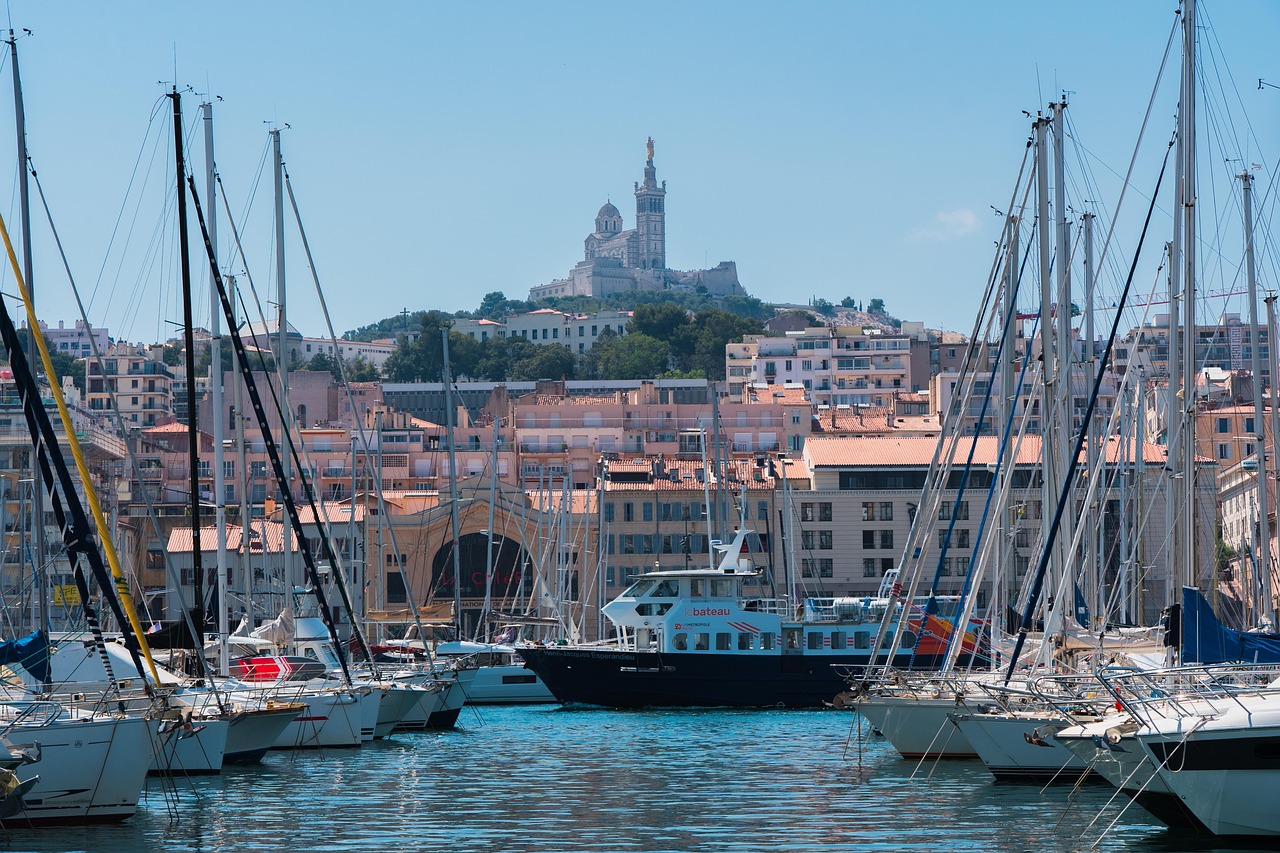
Why Visit Marseille in 2026
Marseille is messy, sun-soaked, salty from the sea, and utterly alive. It’s France’s oldest city, a 2,600-year-old port where Greek traders once docked, North African spices perfume the markets, and locals still argue (loudly) over who makes the best bouillabaisse. It’s not a polished postcard like Paris or Nice; it’s more interesting than that.
In 2026, Marseille is finally getting the attention it deserves. The city has doubled down on arts, food, and sustainable tourism. New galleries and street art tours have sprung up around La Joliette and Le Panier, ferry connections to the calanques are better regulated (and more eco-conscious), and the restaurant scene keeps getting bolder—without losing its gritty, Mediterranean soul.
I’ve been coming back to Marseille regularly since 2015—sometimes for work, sometimes just to reset with sea air and sunshine. I’ve watched the Old Port pedestrianize, the street art explode in Cours Julien, and the craft beer scene go from nonexistent to seriously good. I’ve sweated up to Notre-Dame de la Garde in August heat, eaten oysters for breakfast at the fish market, and missed the last ferry back from the Frioul Islands (don’t worry, there’s a tip on that later).
This 2026 travel guide to Marseille is long, detailed, and personal. Think of it as a conversation with a local-leaning friend who’s made all the mistakes so you don’t have to. Whether you’re planning 3 days in Marseille or a 5 day itinerary for Marseille, you’ll find step-by-step suggestions, hidden gems in Marseille, and practical travel tips for Marseille to make your trip feel lived-in, not just “ticked off.”
Table of Contents
- Why Visit Marseille in 2026
- Quick Overview of Marseille’s Neighborhoods
- 20 Must-See Attractions in Marseille (With Personal Notes)
- Suggested Itineraries: 3–5 Days in Marseille
- Local Food in Marseille: What & Where to Eat
- Nightlife, Entertainment & Cultural Experiences
- Best Day Trips from Marseille
- Cultural Etiquette & Local Customs
- Practical Travel Advice for Marseille (Money-Saving, SIM, Transport, Visas)
- Major Events & Festivals in 2026–2027
- Best Time to Visit Marseille & Final Takeaways
Marseille’s Neighborhoods at a Glance
Before diving into specific attractions and itineraries, it helps to get your bearings. Marseille is big and sprawly, but as a visitor you’ll mostly orbit around a handful of districts:
- Vieux-Port (Old Port): The beating heart of the city, framed by bobbing boats, cafes, and the tourist office. Great base if it’s your first time.
- Le Panier: The old town just above the port. Steep, colorful, full of street art and tiny ateliers. My favorite place to wander aimlessly.
- La Joliette & Euroméditerranée: The “new” waterfront with modern architecture, trendy offices, and the Terrasses du Port mall. Good for sea views and sunset drinks.
- Cours Julien & La Plaine: Bohemian, graffiti-covered, full of bars, music venues, and indie boutiques. Where you go when you want to feel Marseille’s creative pulse.
- Le Roucas-Blanc & Corniche Kennedy: Hilltop villas, sea views, and access to beaches. Romantic, a bit fancy, but still very Marseille.
- Prado & Stade Vélodrome Area: Wide boulevards, residential, and where locals actually live and shop. Also home to Marseille’s football cathedral.
- Les Goudes & Callelongue: At the city’s edge, where the road crumbles into limestone cliffs and the calanques begin. Feels like a separate fishing village.
20 Must-See Attractions in Marseille (With Local Insight)
This section is your deep dive into the best places to visit in Marseille. Each mini-guide blends history, personal anecdotes, and on-the-ground tips. You won’t do all 20 in a single trip—but together they’re the toolbox for crafting your own perfect 3 days in Marseille or 5 day itinerary for Marseille.
1. Basilique Notre-Dame de la Garde (“La Bonne Mère”)
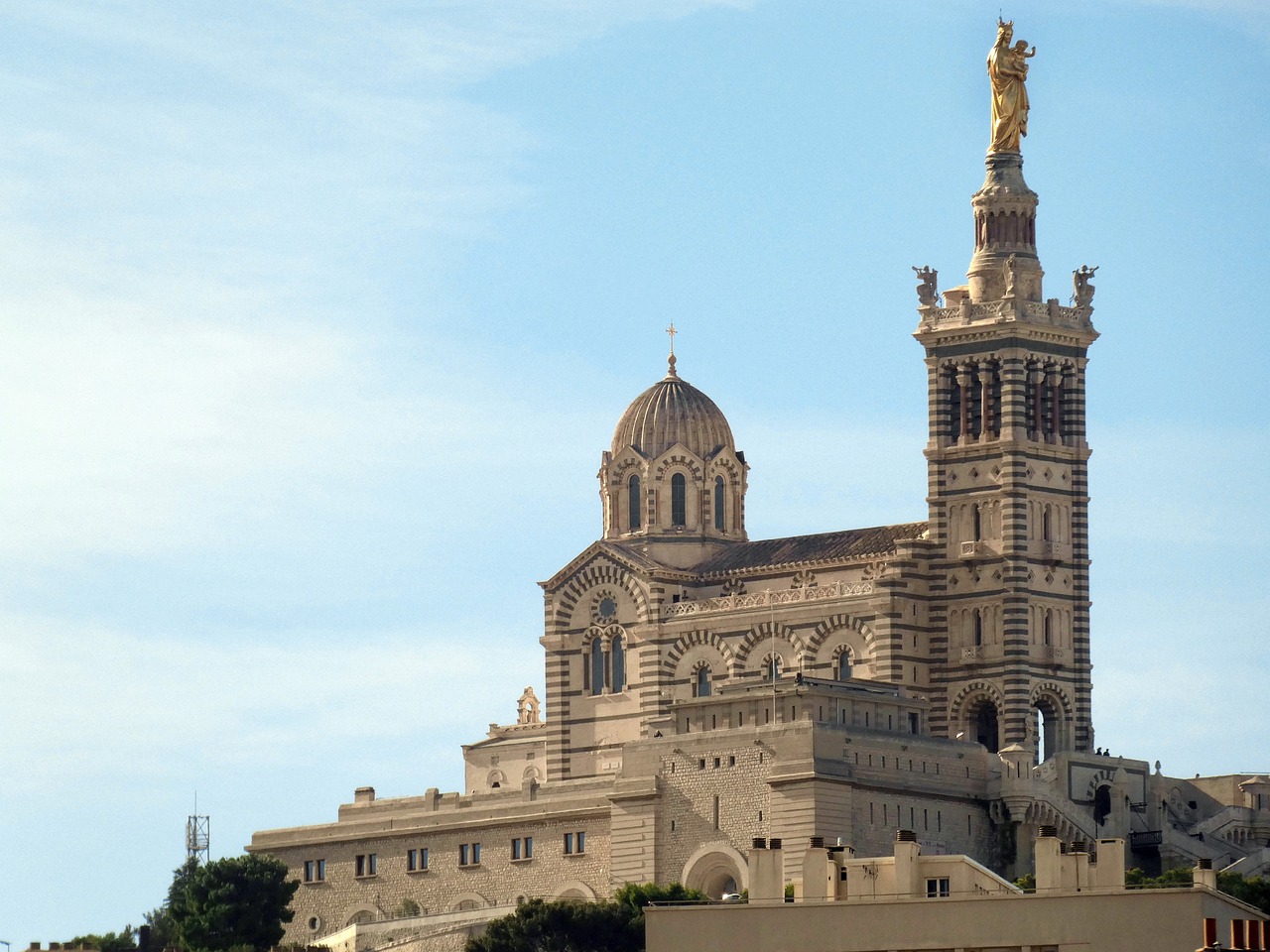
If Marseille had a guardian angel, she’d live here. Locals call the basilica “La Bonne Mère” (the Good Mother), and you’ll spot her golden statue watching over the city from almost anywhere. It’s the single most iconic sight—and the view alone is worth the climb.
The first time I went up, it was July, scorching, and I stubbornly decided to walk from the Vieux-Port instead of taking the bus. I arrived sweaty, red-faced, but when I stepped onto the terrace and saw the 360° panorama—the Old Port, the Frioul Islands, the sharp white cliffs of the calanques in the distance—it felt like the city finally made sense.
History & Significance
Perched at 149 meters above sea level, Notre-Dame de la Garde was built in the 19th century on the site of an older chapel and a former military fort. For centuries, sailors and fishermen have come here to pray before heading to sea. Inside, you’ll see model ships and ex-votos hanging from the ceiling—tiny testaments of gratitude for safe returns and answered prayers.
What to Do There
- Walk the outer terraces first for sweeping views over the city, harbor, and islands.
- Step inside to admire the striped neo-Byzantine interior, mosaics, and hanging boats.
- Circle around the back for quieter spots and a different angle on the city.
- If you’re into photography, come at golden hour and stay for sunset—Marseille glows in pink and orange.
How to Get There
- Bus: Take bus 60 from Vieux-Port (it’s frequent and easy).
- Petit train touristique: The little tourist train from the Old Port is cheesy but fun, especially with kids.
- On foot: A beautiful but steep 30–40 minute walk from the port. Avoid midday in summer.
Food & Drink Nearby
There’s a small café and souvenir shop by the basilica, but I usually save my appetite for the way down. A nice option is to walk back toward the Old Port via the Vauban neighborhood and stop at a café terrace there—quieter and more local than the port.
Tips
- Best time: Early morning or late afternoon to avoid tour groups and harsh light.
- What to wear: Shoulders covered inside; bring a light scarf in summer if you’re in a tank top.
- Family-friendly: Yes, but keep an eye on kids near terrace railings; it’s windy.
2. Vieux-Port (Old Port)
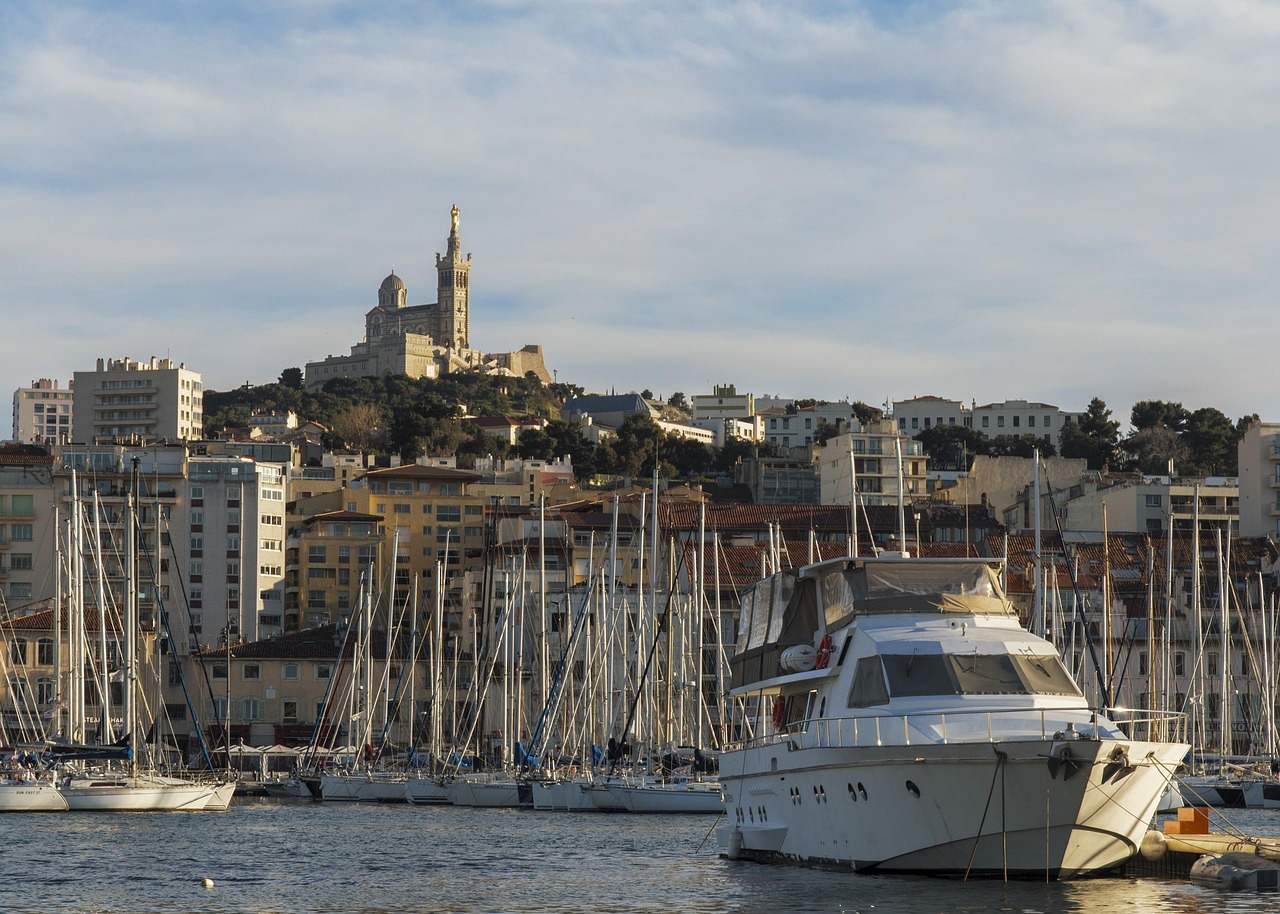
The Vieux-Port is Marseille’s living room. Fishermen sell their catch at dawn, teenagers dive from the quay in summer, and everyone seems to end up here for an evening drink at some point. This is also where many itineraries start—my ritual is always the same: drop bags at my hotel, walk straight to the water, and breathe in the mix of diesel, sea salt, and grilled fish.
What Makes It Special
The port has been Marseille’s heart since the Greeks landed here in 600 BC. Today, the old warehouses have become bars and restaurants, and the once car-clogged quays are mostly pedestrianized. The mirrored canopy by architect Norman Foster—locals call it “the giant mirror”—creates fun reflections and much-needed shade in summer.
What to Do There
- Morning fish market: Come early (around 8–9 am) to see fishermen selling directly on the quay. Great for photos, atmosphere, and overhearing very Marseille arguments.
- Boat trips: Ferries and tours to the Frioul Islands, Château d’If, and the calanques all depart from here.
- Sunset drinks: Grab a table at one of the many terraces. For slightly less touristy vibes, head to the north side (Quai du Port) toward Le Panier.
- Night stroll: On summer nights, street performers, buskers, and pop-up stands line the port.
Food & Drink
I avoid the most aggressively touristy spots right on the water unless I’m just having a drink. Walk a few minutes inland or toward Rue Sainte and you’ll find better value. I’ve had a few memorable platters of grilled sardines and a glass of chilled rosé here—simple, fresh, and so Marseille.
Tips
- Stay nearby: If it’s your first visit, booking accommodation near the Vieux-Port makes logistics easy.
- Boat timing: Book calanques and Frioul boats in advance in July–August and on weekends.
- Pickpockets: As in any busy tourist area, keep an eye on your phone and bag.
3. Le Panier (Old Town)
Le Panier is where Marseille shows its age and its soul. Climbing lanes, laundry strung between pastel buildings, tiny squares buzzing with café chatter, and murals tucked into every corner. I’ve gotten lost here countless times—and that’s the point.
History & Atmosphere
This is Marseille’s oldest quarter, once home to sailors, dockworkers, and waves of immigrants. After World War II damage and controversial demolitions, the neighborhood slowly reemerged, attracting artists, artisans, and small galleries. It still feels lived-in and stubbornly authentic, even as it’s become one of the city’s major attractions.
What to See & Do
- Place de Lenche: A lively square with terraces and a view down to the port.
- La Vieille Charité: A stunning 17th-century almshouse turned cultural center and museum (see separate section below).
- Street art stroll: Wander Rue du Panier, Rue des Moulins, and side alleys for murals and tiny ateliers.
- Artisan shops: Look for handmade soaps, ceramics, and jewelry—much better souvenirs than the mass-produced stuff near the port.
Personal Tip
I like to start at the Vieux-Port, walk up past Hôtel de Ville (city hall), and just climb. When I need a break, I stop for a coffee under the plane trees and watch kids play football in a square that’s probably seen centuries of the same game.
Good to Know
- Footwear: Wear proper shoes; streets are steep and often cobbled.
- Heat: Narrow lanes give some shade, but it can still feel like an oven in August—go early or late afternoon.
- Family-friendly: Yes, but strollers will struggle on stairs; a baby carrier is easier.
4. MuCEM & Fort Saint-Jean
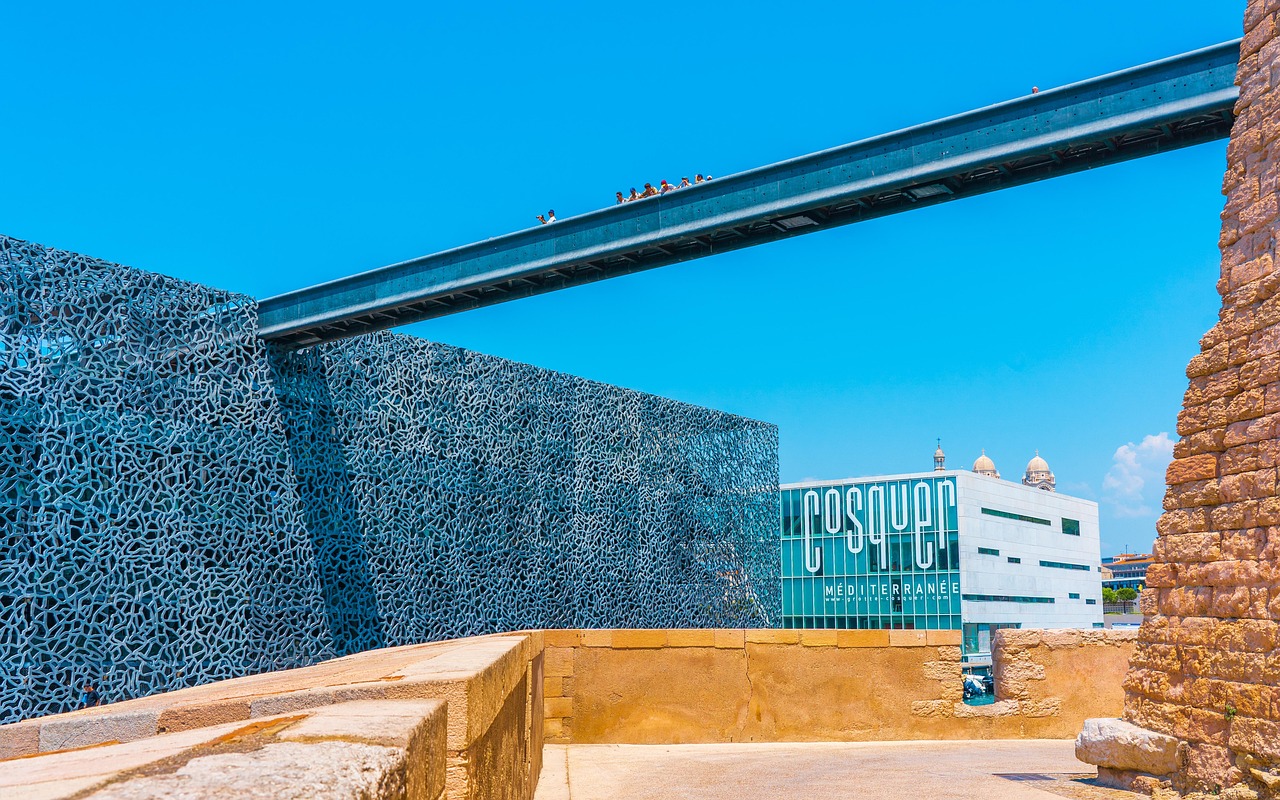
Where ultra-modern architecture meets centuries-old stone. The MuCEM (Museum of European and Mediterranean Civilisations) is one of the best museums in France—yes, I’ll die on that hill—not just for its exhibitions, but for the way it connects sea, sky, and city.
Architecture & Setting
The dark, lace-like cube you see on the J4 pier is the MuCEM’s most famous building, designed by Rudy Ricciotti. A footbridge links it to Fort Saint-Jean, a 17th-century fortress that has been beautifully restored and turned into a public promenade and garden. Walking from the cube across the bridge into the fort, with the sea crashing below, feels like stepping between time periods.
What to Do There
- Explore the permanent collections on Mediterranean cultures—food, religion, migration, everyday life.
- Check out the temporary exhibitions; they’re often excellent and thought-provoking.
- Walk the rooftop terraces of the MuCEM for sea views and cool breezes.
- Wander around Fort Saint-Jean’s gardens and ramparts; lots of quiet corners to sit and watch boats.
My Experience
I usually plan at least half a day here. One of my favorite afternoons in Marseille was drifting between an exhibition on Mediterranean food cultures and then sitting on the fort walls, watching kids jump off the rocks into the water. You really feel how maritime and multicultural Marseille is.
Practical Info
- Location: Short walk from the Vieux-Port, on the J4 pier.
- Tickets: The outdoor spaces (fort, rooftop) are often free; exhibitions are paid. Check the official website and consider a combined ticket.
- Family-friendly: Yes; kids usually love the bridges and ramparts.
5. Château d’If
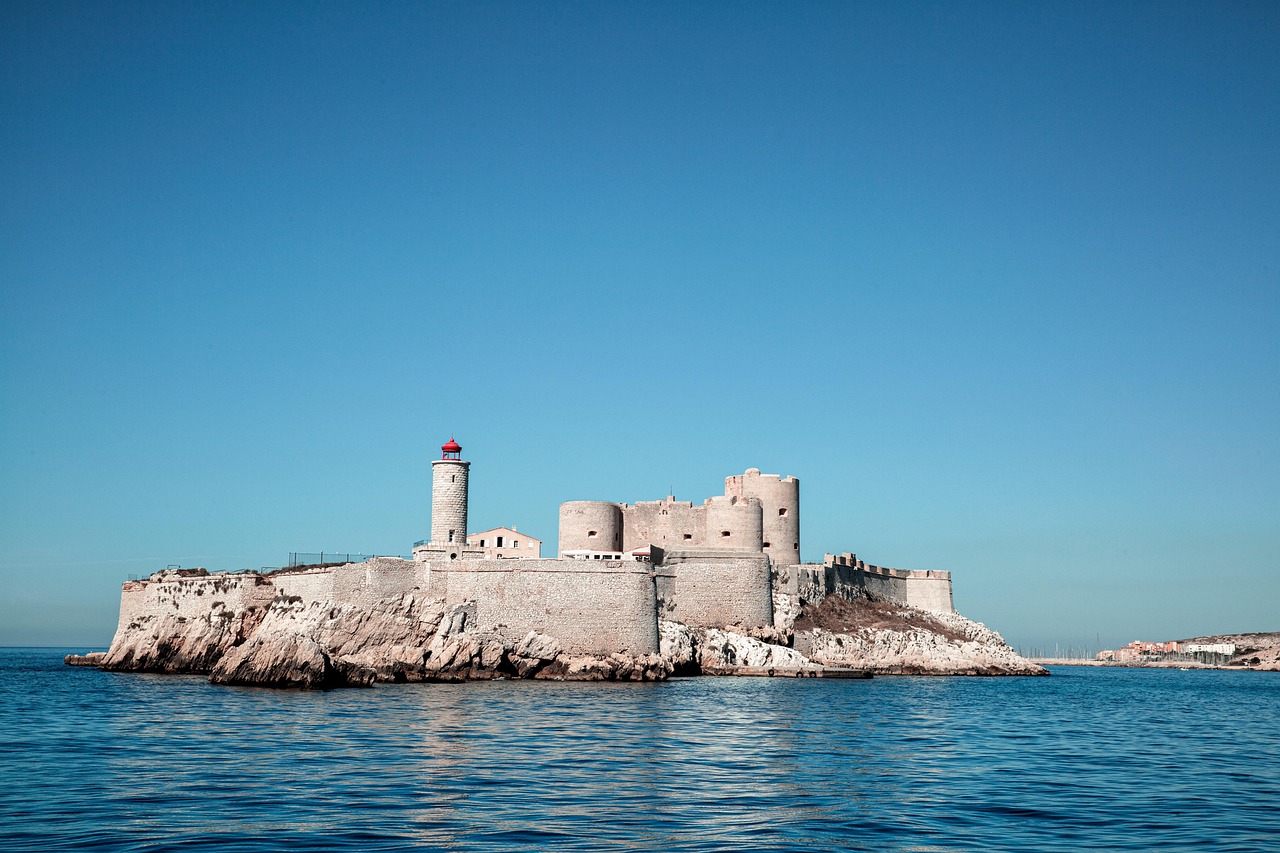
If you grew up reading The Count of Monte Cristo, this is pilgrimage territory. Château d’If is a fortress-turned-prison perched on a tiny island just off Marseille’s coast. On days when the mistral wind kicks up, the ride out feels like a miniature adventure.
History & Literature
Built in the 16th century to protect Marseille, Château d’If later became a notorious prison, holding political and religious prisoners. Alexandre Dumas immortalized it as the place where Edmond Dantès is unjustly imprisoned before his epic escape. While Dantès is fictional, the cells and graffiti of real prisoners remain.
What to Expect
- Boat ride: 20–30 minutes from the Vieux-Port. Sit outside for views of the city receding behind you.
- Fortress tour: Explore the ramparts, cells, and courtyards. Panels explain the history; you can also get an audio guide.
- Views: The skyline of Marseille from the island is one of my favorite cityscapes anywhere.
Personal Tip
I like combining Château d’If with the Frioul Islands (some boats allow a stopover). Pack a picnic, sturdy shoes, and a windbreaker—it can be surprisingly chilly, even in summer, when the mistral blows.
Good to Know
- Weather-dependent: Boats are canceled in rough seas; check the schedule the day before.
- Tickets: Buy combo boat + monument tickets at the port or online.
- Family & couples: Great for both; adventurous for kids, romantic for Dumas fans.
6. Frioul Islands
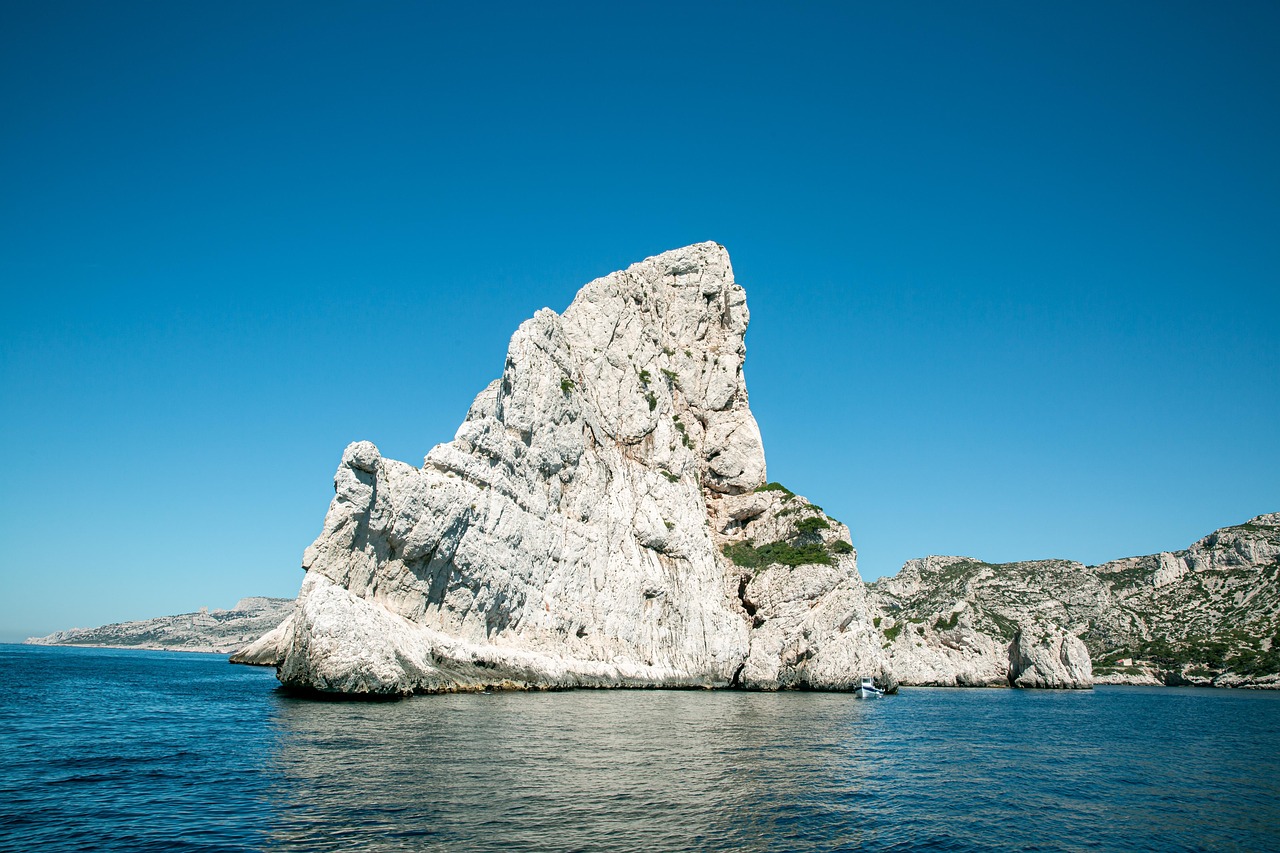
When I need a break from Marseille’s noise but don’t have time to head deep into the calanques, I hop on a boat to the Îles du Frioul. These windswept, rocky islands feel a world away, even though they’re only a short ferry ride from the Vieux-Port.
What to Do
- Hiking: There are easy trails with gorgeous views of Marseille and the open sea.
- Swimming: Small creeks and coves with turquoise water—rocky, so bring water shoes if you have sensitive feet.
- Picnics: My go-to: grab bread, cheese, olives, and fruit in Marseille, then find a sheltered spot out of the wind.
My Experience
One late May afternoon, I went out with a book and no plan. I ended up napping on a rock warmed by the sun, then swimming in water that was colder than it looked but so, so clear. The last boat back was full of pink-faced sunburnt people clutching beach bags and happy tired kids.
Practical Tips
- Boats: Regular departures from the Vieux-Port; schedules change by season.
- Food & water: Limited options on the islands; bring plenty of water in summer.
- Don’t miss the last boat: Check return times and set an alarm; there’s no cheap way back if you miss it.
7. Calanques National Park
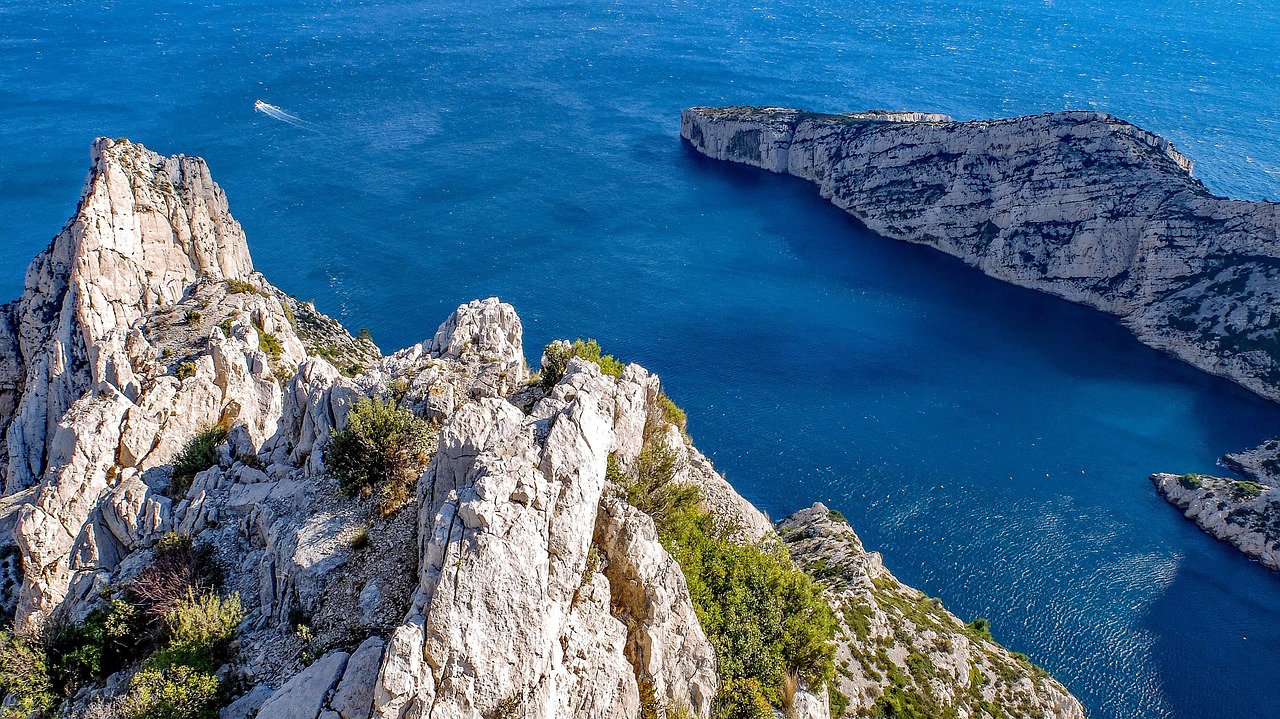
The calanques are Marseille’s wild side: dramatic limestone cliffs plunging into electric-blue water, pine trees clinging to rocks, and hidden pebble beaches that feel like they belong to you alone—if you get there early enough.
Calanques Basics
The Parc National des Calanques stretches between Marseille and Cassis. From the city, the most accessible calanques include Sormiou, Morgiou, and Sugiton. You can reach them by hiking, by car (with seasonal access restrictions), or by boat tours that leave from the Vieux-Port or from Cassis.
My Favorite Experiences
- Hike to Calanque de Sugiton: A moderate hike with rewarding views and access to beautiful coves. I once swam here in October; the water was still warm enough, and there were only a handful of locals.
- Boat tour from Marseille: Less physical, more panoramic. Ideal if you’re short on time or visiting with kids or older travelers.
Important Tips
- Check closures: In summer (especially July–September), trails can be closed due to fire risk. Check the official park website or tourist office each morning.
- Bring everything: Water, snacks, sun protection, proper shoes. Shade is scarce and heat is intense.
- Respect the park: Stay on marked paths, pack out trash, and don’t light fires.
8. Cathédrale de la Major
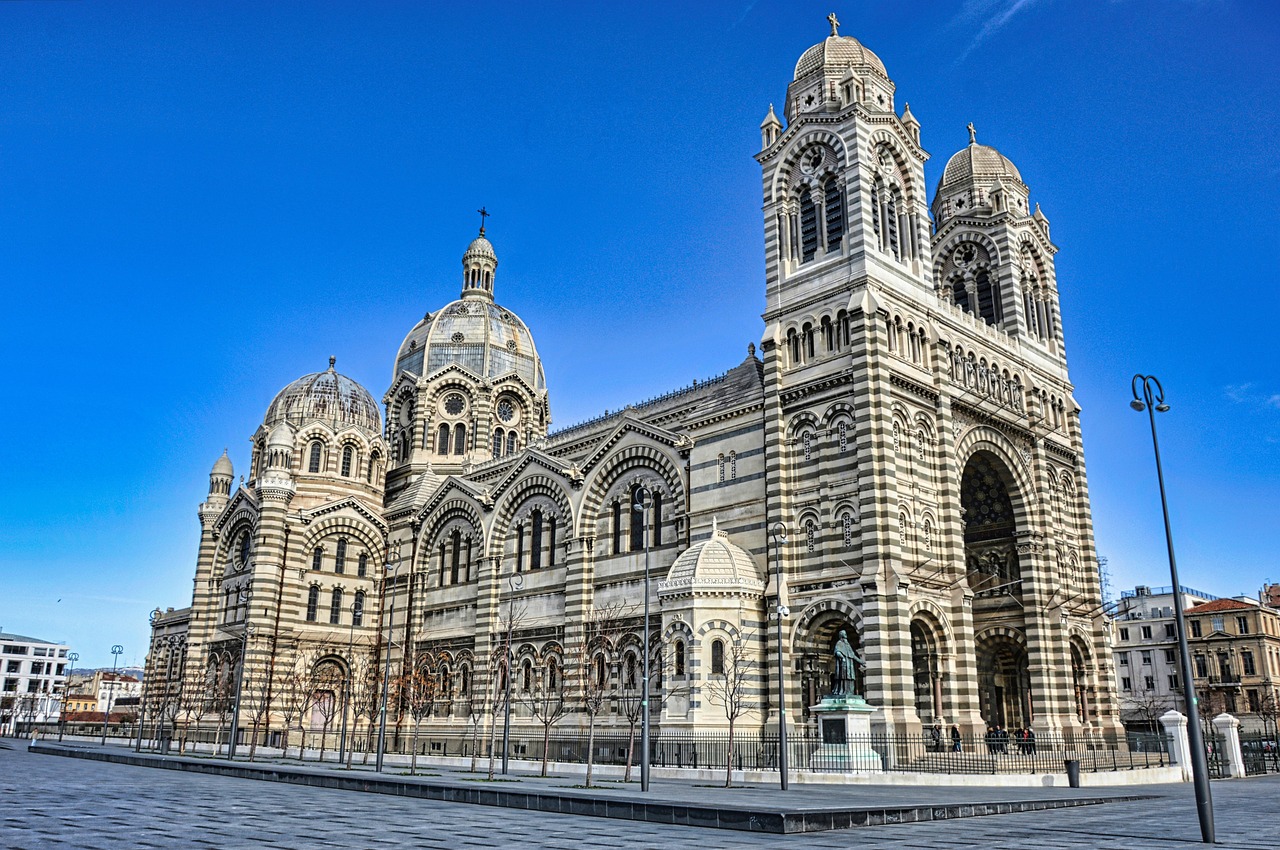
With its striped façade and onion-like domes, La Major looks a little like a cathedral that took a holiday in Venice and Istanbul and came back with new style. Overlooking the sea next to the modern waterfront, it’s one of Marseille’s most photogenic landmarks.
Why Visit
Built in the 19th century on the site of an earlier cathedral, La Major reflects Marseille’s status as a gateway between Europe and the Mediterranean. Inside, it’s cavernous and surprisingly serene, with beautiful mosaics and marble.
My Tip
I like to pair a visit here with a wander down to the Les Voûtes de la Major—the arches under the cathedral now house stylish shops, cafés, and bars with terraces facing the sea. It’s a lovely place for a coffee between sightseeing stops.
9. La Vieille Charité
Tucked into Le Panier, La Vieille Charité is an oasis of symmetry and calm. Built in the 17th century as a charitable housing complex for the poor, its Baroque courtyard and domed chapel now shelter museums and cultural spaces.
What to See
- The courtyard itself—arcaded galleries and the central chapel are incredibly photogenic.
- The Museum of Mediterranean Archaeology and the Museum of African, Oceanian, and Native American Arts, if you’re in a museum mood.
Personal Note
On hot days, I come here mostly for the atmosphere. The stone stays cool, and there’s a quiet hum of students, researchers, and visitors. It’s a contemplative counterpoint to the chaos of the port.
10. Cours Julien & La Plaine
If the Vieux-Port is Marseille’s living room, Cours Julien is its studio. This is the bohemian heart of the city—murals on every surface, independent bookstores, record shops, and bars with mismatched furniture and live music.
Why I Love It
Cours Julien is where I go when I want to feel like I live in Marseille, even if it’s only for a few days. Morning coffee on a terrace watching dog walkers and kids, afternoon browsing through secondhand shops, evening drinks under strings of lights.
What to Do
- Street art walk: The walls around Place Jean Jaurès (La Plaine) and Cours Julien constantly change; you’ll find political pieces, portraits, and wild abstract works.
- Shopping: Indie boutiques, vintage stores, and local designers—good for unique clothing and gifts.
- Food: A wide range of restaurants, from cheap falafel to creative bistros and vegan spots.
- Nightlife: Bars and small venues for live music and DJ sets; lively but more laid-back than giant clubs.
Good to Know
- Day vs night: Daytime is very family-friendly; at night it’s more student/creative crowd.
- Safety: Generally fine, just the usual big-city bar area precautions late at night.
11. Corniche Kennedy & Plages du Prado
The Corniche Kennedy is Marseille’s balcony over the sea: a winding coastal road with spectacular views, villas, and little staircases that drop down to swimming spots. Further south, the Plages du Prado offer long, artificial but well-loved beaches.
My Favorite Moments
I love walking part of the Corniche at sunset, starting near the Catalans beach and heading south. The light, the joggers, the fishermen, the couples sharing pizzas on benches—Marseille feels very itself here. In summer, I’ll stop for a quick dip from one of the rocky coves.
What to Do
- Swim: At Plage des Catalans (closest to the center) or further down at the Prado beaches.
- Picnic: Grab takeaway from a bakery and eat overlooking the sea.
- Skatepark & kids: The Prado area has space, playgrounds, and a skatepark—great with children.
Access
- Bus: Several lines run from the Vieux-Port toward the Corniche and Prado.
- On foot: Walkable if you like long strolls; otherwise, take a bus one way and walk back.
12. Stade Vélodrome (Orange Vélodrome)
If you want to understand Marseille passion, go to a football match at the Orange Vélodrome. Olympique de Marseille is more religion than sport here. Even if you’re not a football fan, the atmosphere is unforgettable—songs, smoke flares, and the entire stadium buzzing.
What to Expect
I’ve been to a few OM matches, and every time I leave hoarse, slightly deaf, and weirdly emotional. The stadium itself was modernized for Euro 2016, with a sweeping roof that seems to amplify the sound.
Visiting
- Matches: Check the OM schedule; buy tickets in advance, especially for big games.
- Tours: Stadium tours are available for those curious about the architecture and behind-the-scenes.
- Families: It can be intense; choose a less “derby” game if you’re with younger kids.
13. Palais Longchamp & Parc Longchamp
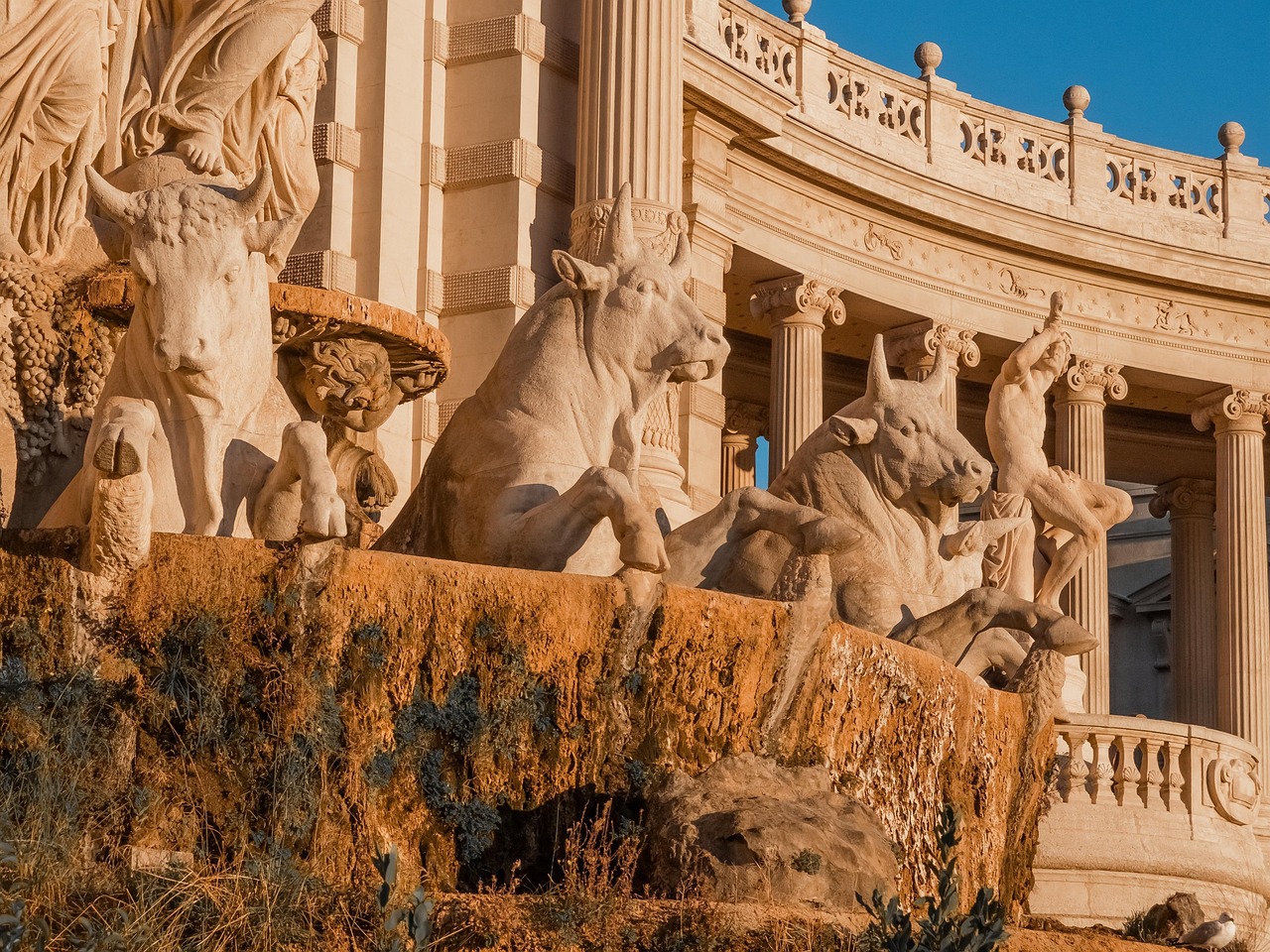
The Palais Longchamp is one of those places that makes you stop and say, “Wait, this is in Marseille?” A grand 19th-century monument with fountains, colonnades, and a park behind it, Longchamp celebrates the arrival of water to the city via an aqueduct.
What to Do
- Climb the steps, admire the fountain and sculptures, and enjoy the view back toward the city.
- Stroll in the park behind—great for kids, picnics, and a break from the urban hustle.
- Visit the on-site Fine Arts Museum or Natural History Museum if you’re in the mood.
My Tip
I often come to Longchamp on a slower day, when my feet need a break from hills. It’s a great place to just sit on the grass and watch local life—dog walkers, kids on scooters, elderly couples on benches.
14. Noailles Market District
If you only visit one market area in Marseille, make it Noailles. This North African and Middle Eastern-influenced quarter is a tangle of narrow streets filled with spice shops, halal butchers, little groceries, and cheap eateries. The smells—cumin, grilled meat, fresh mint—are intoxicating.
What to Do
- Wander Rue d’Aubagne and side alleys, ducking into shops to buy dates, olives, and spices.
- Eat at one of the little Tunisian, Algerian, or Lebanese places—great value, hearty portions.
- Browse the daily market (more active mornings and early afternoons).
Personal Note
I once spent an entire morning here doing nothing more than buying ingredients for a picnic: flatbreads still warm from the oven, hummus, olives, and halva. It cost almost nothing and fed three of us by the sea later that day.
Good to Know
- Busy & chaotic: Embrace the bustle, but keep valuables secure.
- Respectful photography: Avoid pointing cameras in people’s faces without permission.
15. Les Goudes & Callelongue
At the southeastern edge of Marseille, the city frays into rocks and sea at Les Goudes. Think small fishing houses, boats moored in tiny coves, and seafood restaurants where dinner lasts hours. From here, a short hike takes you to Callelongue, the gateway to the calanques.
Why Go
Les Goudes feels like a village at the end of the world. When I need to remember that Marseille is a maritime town at heart, I come here. The sunsets are outrageous, the atmosphere relaxed, and the grilled fish as fresh as it gets.
What to Do
- Stroll around the harbor and along the rocks.
- Have a long lunch or dinner at a seafood restaurant overlooking the water.
- Hike from Les Goudes to Callelongue and into the calanques (if open and you’re prepared).
Access
- Bus: City buses run from central Marseille, but allow plenty of time.
- Car: Roads are narrow and parking is limited; avoid peak times in high season.
16. Roucas-Blanc & Vallon des Auffes
Between the Vieux-Port and the Prado beaches lies one of Marseille’s prettiest corners: the hillside neighborhood of Roucas-Blanc and the tiny fishing port of Vallon des Auffes, tucked under a stone bridge.
Why Visit
Vallon des Auffes feels like a pocket universe: colorful boats bobbing in a miniature harbor, stairs winding between houses, and a handful of beloved restaurants. It’s a romantic spot—come for sunset if you can.
What to Do
- Walk down from the Corniche to explore the harbor.
- Have dinner at one of the restaurants (book ahead on weekends and in summer).
- Climb back up to the Corniche to watch the sky turn pink over the sea.
17. Fort Saint-Nicolas & Fort d’Entrecasteaux (Lacydon Viewpoints)
Opposite Fort Saint-Jean, guarding the other side of the Vieux-Port, stand Fort Saint-Nicolas and Fort d’Entrecasteaux. They’re less visited than Saint-Jean, but the viewpoints over the port are superb and the atmosphere quieter.
Why I Like It
On one of my trips, I came up here with a takeaway socca (chickpea pancake) and just sat on the walls as the port lights came on. It felt like I had a private balcony over the city.
18. La Joliette & Euroméditerranée Waterfront
The Euroméditerranée project has transformed the once-derelict docks north of the Vieux-Port into a sleek business and leisure district. It’s where you’ll find the Les Terrasses du Port shopping center, modern office towers, and new cultural venues.
Why Go
It’s not “charming” in the traditional sense, but it gives you another facet of Marseille: a city that’s pushing forward, not just resting on its history. The rooftop terraces and sea views from Les Terrasses du Port are fantastic, especially at sunset with a drink in hand.
19. City Beaches: Catalans, Prophète, and Beyond
Marseille’s beaches aren’t as postcard-perfect as some along the Riviera, but they’re full of life and easy to reach. Locals swim year-round; I’ve seen people in the water in January on sunny days.
Main Beaches
- Plage des Catalans: Closest to the center, sandy, and very popular.
- Plage du Prophète: Family-friendly, shallow water, relaxed vibe.
- Plages du Prado: Larger, more spread out, with space for sports and picnics.
Tips
- Arrive early in July–August if you want a good spot.
- Bring a light beach mat or towel; some areas are pebbly.
- Respect flag warnings for swimming; currents can be strong.
20. Street Art of Marseille
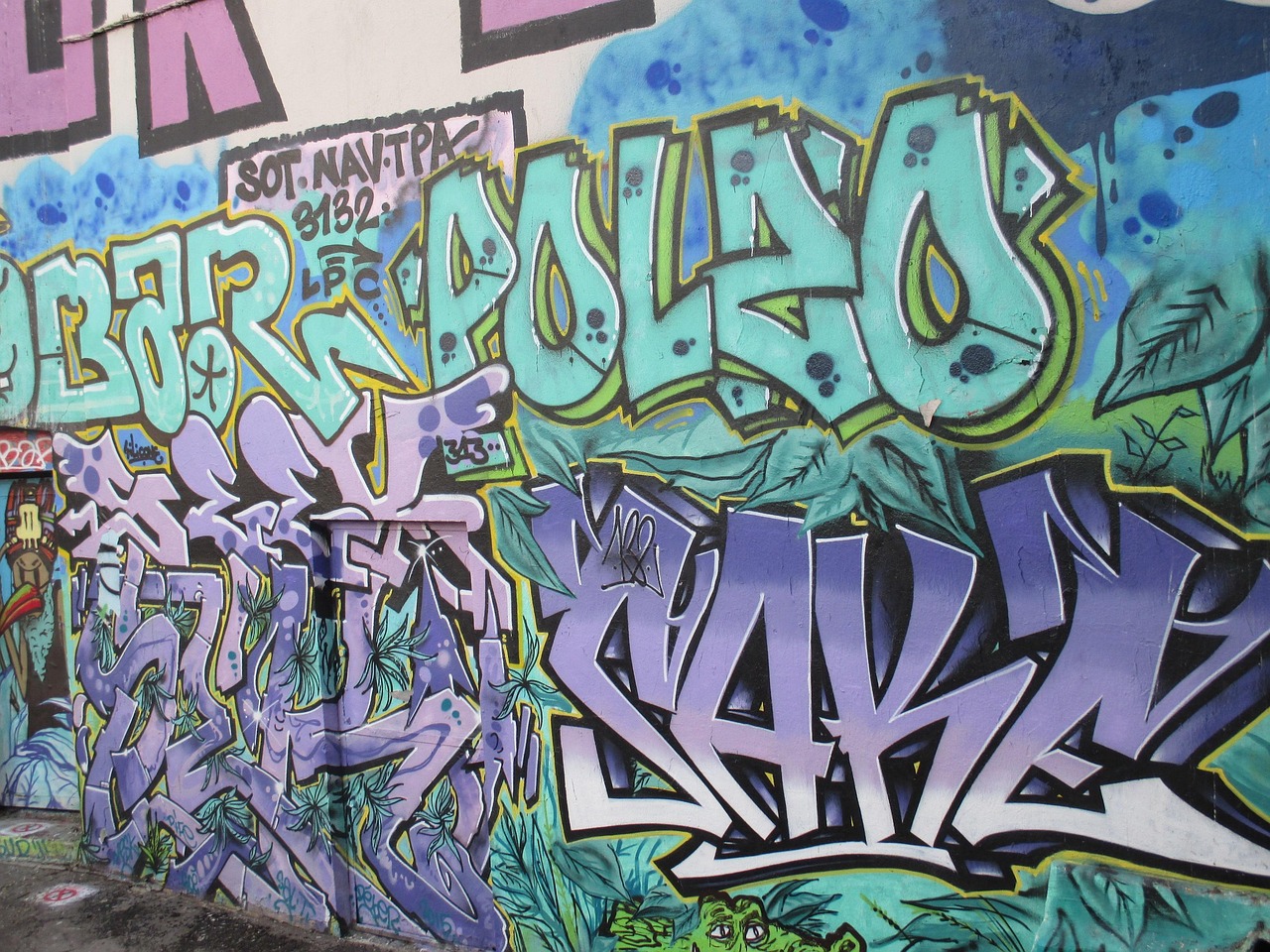
While not a single “attraction,” Marseille’s street art is one of its defining features. From Cours Julien to parts of Le Panier and beyond, the city is an open-air gallery.
How to Explore
- Join a guided street art tour (several local guides offer excellent ones in English and French).
- Wander independently, especially around Cours Julien and La Plaine.
- Look up and into hidden courtyards; some of the best pieces are half-hidden.
Every time I come back, some murals are gone, and new ones have appeared. It’s a constantly evolving reflection of Marseille’s mood.
Suggested Itineraries: 3–5 Days in Marseille
This section focuses on structure rather than exhaustive storytelling (otherwise we’d be here all week). Use these as flexible frameworks; mix and match based on your interests, stamina, and the season. All are designed to balance the must-see attractions in Marseille with local corners and downtime.
3 Day Itinerary for Marseille
If you only have 3 days in Marseille, you’ll want a smart blend of city, sea, and history.
Day 1 – Old Port, Le Panier & MuCEM
- Morning: Start at the Vieux-Port. Grab a coffee by the water and stroll the fish market. Walk up into Le Panier, exploring its lanes, street art, and La Vieille Charité.
- Lunch: Eat in Le Panier—small bistros and terraces offer daily specials and seafood.
- Afternoon: Head down to MuCEM and Fort Saint-Jean. Spend a few hours between exhibitions and ramparts.
- Evening: Sunset drinks overlooking the port, then dinner on the north side of the Vieux-Port or along Rue Sainte.
Day 2 – Notre-Dame, Corniche & Beaches
- Morning: Climb or bus up to Notre-Dame de la Garde. Enjoy the views and visit the basilica.
- Late morning: Walk or bus down toward the Corniche Kennedy. Stop at Vallon des Auffes if you like.
- Afternoon: Relax at Plage des Catalans or Plage du Prophète. Swim, read, doze.
- Evening: Dinner in Vallon des Auffes or back in the center; consider a nightcap in Cours Julien.
Day 3 – Calanques or Frioul & Noailles
- Option A (Active): Take a boat tour to the Calanques or hike to Sugiton (checking closures first).
- Option B (Relaxed): Boat to Château d’If and the Frioul Islands for light hiking and swimming.
- Late afternoon: Return to Marseille and wander through Noailles for snacks and spice shopping.
- Evening: Farewell dinner—this is a good night to splurge on bouillabaisse or a creative bistro.
4 Day Itinerary for Marseille
With 4 days in Marseille, you can go deeper into neighborhoods and add a bit more culture.
Days 1–3
Follow the 3-day itinerary above.
Day 4 – Cours Julien, Palais Longchamp & Modern Waterfront
- Morning: Brunch in Cours Julien, then explore its street art and boutiques.
- Afternoon: Metro or tram to Palais Longchamp. Visit the park and, if you wish, one of the museums.
- Late afternoon: Head to La Joliette and Euroméditerranée. Walk along the waterfront and browse Les Terrasses du Port.
- Evening: Sunset drinks on a rooftop bar overlooking the harbor, dinner nearby.
5 Day Itinerary for Marseille
A 5 day itinerary for Marseille lets you travel slower and even squeeze in a day trip.
Days 1–4
Follow the 4-day itinerary.
Day 5 – Les Goudes & Edge of the Calanques (or Day Trip)
- Option A – Les Goudes & Callelongue: Bus or car to Les Goudes, lunch with a sea view, then a hike to Callelongue and the start of the calanques.
- Option B – Day trip to Cassis or Aix-en-Provence: See the day trip section below for details.
Use your last evening for anything you missed: a match at the Vélodrome, a final swim, or one more wander through Le Panier.
Local Food in Marseille: What & Where to Eat
Marseille’s food is a full-on Mediterranean mashup: Provençal herbs, olive oil, fresh fish, North African spices, and Italian comfort. Eating well here doesn’t have to be expensive if you know where to look.
Marseille Specialties to Try
- Bouillabaisse: The famous fish stew—traditionally served in two courses (broth with bread and rouille, then fish). True bouillabaisse is pricey; if it’s suspiciously cheap, it’s probably just “fish soup.” Reserve ahead at reputable spots.
- Soupe de poisson: A simpler, more affordable fish soup, often served with croutons, cheese, and rouille.
- Panisse: Chickpea fritters, crispy outside, creamy inside. Street snack or starter—my personal addiction.
- Pieds et paquets: Traditional dish of tripe and stuffed lamb’s feet, for the truly adventurous.
- Navettes: Boat-shaped orange blossom biscuits from Marseille, great with coffee.
- Pastis: Anise-flavored apéritif, best sipped slowly with water and ice before dinner.
Where I Actually Eat
Rather than a long restaurant list that will be outdated in a year, here’s how I choose:
- For seafood: Look slightly away from the most touristy Old Port spots. Check daily specials (poisson du jour) and ask staff what’s freshest.
- For cheap, hearty meals: Head to Noailles for couscous, tagines, shawarma, and sandwiches.
- For brunch and bistros: Cours Julien and Le Panier both have excellent small spots with seasonal menus.
- For markets: The Marché des Capucins (near Noailles) and small neighborhood markets are great for picnic supplies: cheese, cured meats, fruit, bread.
Money-Saving Food Tips
- Prix fixe lunches: Many restaurants offer a cheaper midday menu—perfect way to try nicer places.
- Picnics: With weather this good, eating on a bench or beach feels luxurious. Buy from markets and boulangeries.
- Tap water: Ask for “une carafe d’eau” instead of bottled water; it’s free and normal.
Nightlife, Entertainment & Cultural Experiences in Marseille
Marseille’s nights are more bar-and-terrace than mega-club, though you’ll find those too. The vibe is social, loud, and relaxed.
Best Areas After Dark
- Vieux-Port: Lively, touristy, great for a first-night apéritif and people-watching.
- Cours Julien & La Plaine: Bars, small clubs, live music, student and creative crowd.
- La Joliette/Waterfront: Trendy bars and restaurants with sea views, slightly more polished.
Cultural Experiences
- Theater & music: Check listings at venues like Le Silo, Dock des Suds, and smaller clubs in Cours Julien.
- OM Match: For sports culture, nothing beats a game at the Vélodrome.
- Festivals: See the events section below—Marseille hosts major music and cultural festivals, especially in summer and early autumn.
Day Trips & Nearby Attractions from Marseille
One of the perks of staying 4–5 days in Marseille is how easy it is to escape for a day.
Cassis
A pastel fishing town with a pretty port, beach, and direct access to the eastern calanques. It’s more polished and resort-like than Marseille.
- How to get there: Train from Marseille Saint-Charles to Cassis (about 30 minutes), then shuttle/bus or walk down to town; or by car.
- What to do: Harbor stroll, beach, boat tours to the calanques, short hikes.
Aix-en-Provence
Elegant, leafy, and very different in feel from Marseille. Fountains, markets, and art (Cézanne country).
- How to get there: Frequent buses and trains (30–40 minutes).
- What to do: Market on Cours Mirabeau, Cézanne’s studio, café hopping.
Arles & Camargue
Further afield but doable: Roman ruins in Arles, and wild horses and flamingos in the Camargue wetlands. Best as a long day with a rental car or organized tour.
Cultural Etiquette & Local Customs in Marseille
Marseille is friendly but direct. A few basics go a long way.
Everyday Interactions
- Greetings: Always say Bonjour (day) or Bonsoir (evening) when entering shops, cafes, or speaking to staff. It’s essential politeness in France.
- “Tu” vs “Vous”: Use the formal vous with strangers, staff, and older people unless invited to use tu.
- Volume: Locals can seem loud and intense, especially when animated; it’s not necessarily anger.
Dining Etiquette
- Wait to be seated; don’t just grab a table inside unless clearly self-service.
- Table-sharing is less common; ask if a seat is free before joining a table.
- Don’t expect the bill automatically; ask for it (l’addition, s’il vous plaît) when ready.
Dress & Behavior
- Beachwear: Swimsuits are for beaches, not city streets or shops.
- Religious sites: Cover shoulders in churches, speak quietly.
- Photography: Ask before photographing people, especially in markets and working-class neighborhoods.
Practical Travel Advice for Marseille (2026–2027)
Getting Around
- Public transport: Marseille has metro, tram, and bus networks run by RTM. Buy single tickets or day passes at stations or via app. Validate every time you board.
- On foot: Many central sights are walkable, but remember: Marseille is hilly. Factor that into your daily plans.
- Car rental: Useful only if you plan multiple day trips or are staying outside the center. Traffic and parking can be stressful.
- Taxis & ride-hailing: Available, but not as ubiquitous as in some cities. Pre-book for early airport rides.
From the Airport
- Airport bus: Direct shuttle from Marseille Provence Airport to Saint-Charles station (~30 minutes).
- Taxi: More expensive but convenient if you’re arriving late with luggage.
Money-Saving Strategies
- Use public transport passes if you’re taking multiple rides per day.
- Eat prix fixe lunch menus and simpler dinners.
- Stay in neighborhoods slightly off the Old Port (e.g., near Cours Julien or Castellane) for better value.
SIM Cards & Connectivity
- EU visitors: Most EU plans include roaming in France; check with your provider.
- Non-EU visitors: Buy a prepaid SIM at the airport, major train stations, or phone shops in the city. Providers like Orange, SFR, Bouygues, and Free all have tourist-friendly options.
- eSIMs via travel apps are increasingly common and convenient in 2026.
Visas & Entry Requirements
- France is in the Schengen Area. Many nationalities can enter visa-free for short stays (typically up to 90 days in 180), but always check current rules.
- From 2026, EU travel authorization systems (like ETIAS for some non-EU travelers) may be in effect—verify before you book.
Driving & Licenses
- Most foreign driver’s licenses are accepted for short stays; some non-EU licenses may require an International Driving Permit. Check before travel.
- City driving is aggressive and parking tight; if you’re not confident, stick to trains and buses.
Safety
- Marseille has a rough reputation, but the main tourist areas are generally safe with normal city precautions.
- Watch for pickpockets in crowded places (Old Port, public transport, markets).
- Avoid flashy jewelry and keep a low profile late at night in unfamiliar neighborhoods.
Major Events & Festivals in Marseille (2026–2027)
Dates shift every year, so always confirm, but here are recurring highlights for 2026–2027:
- Festival de Marseille (June–July): Contemporary dance, theater, and music across the city—often in outdoor venues.
- FID Marseille – International Documentary Festival (early July): For film lovers; screenings and events around town.
- Fiesta des Suds (October): A major world music festival, typically at Dock des Suds or waterfront venues.
- Christmas Markets (December): Provençal santons (nativity figurines), local crafts, and seasonal treats on the Vieux-Port and central squares.
- OM Football Season: From late summer to spring each year, home games at the Vélodrome are a cultural event in themselves.
For 2026 specifically, Marseille is expected to host expanded cultural programming tied to ongoing urban renewal and Mediterranean cooperation projects—check city tourism sites closer to your travel dates for special exhibitions and waterfront events.
Best Time to Visit Marseille & Final Takeaways
Seasons in Marseille
- Spring (April–June): My favorite. Mild weather, wildflowers in the calanques, fewer crowds. Ideal for hiking and a 3 day itinerary for Marseille that includes both city and nature.
- Summer (July–August): Hot, busy, and buzzing. Best for beach time and nightlife, but calanques can be restricted due to fire risk. Book accommodation and boats well in advance.
- Autumn (September–October): Warm seas, softer light, and fewer tourists. Great for a 4 day itinerary for Marseille or 5 days in Marseille with day trips.
- Winter (November–March): Quieter, cooler, with some rainy days, but still milder than much of Europe. Good for culture, food, and lower prices—just don’t expect full beach weather.
Key Takeaways
- Marseille is not a polished museum piece; it’s a living, working port with grit and grace.
- Base yourself near the Vieux-Port or Cours Julien for easy access to most things to do in Marseille.
- Balance your days between must-see attractions in Marseille (Notre-Dame, MuCEM, Le Panier) and slower local experiences (markets, beaches, neighborhood strolls).
- Plan at least one sea day—Frioul or calanques—and one neighborhood day (Noailles + Cours Julien).
- Respect the heat, the hills, and the sea; pack water, sun protection, and sensible shoes.
Whether you’re here for 3 days in Marseille or stretching it to a 5 day itinerary for Marseille, let the city unfold at its own pace. Sit by the water, listen to the mix of accents, try something you’ve never eaten before, and leave space for serendipity. That’s when Marseille really gets under your skin—and makes you start planning your next trip back.