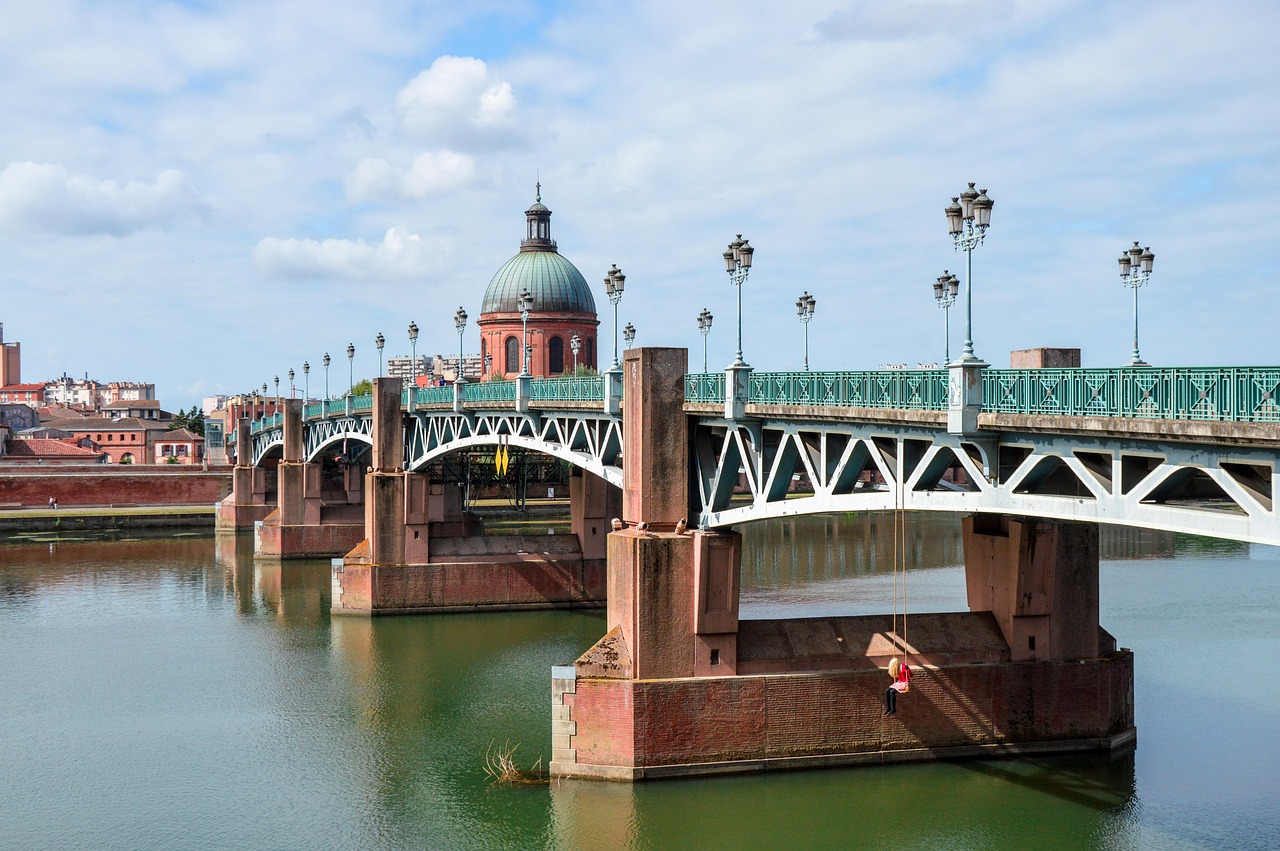
Why Visit Toulouse in 2026?
Toulouse is one of those cities that quietly gets under your skin. It doesn’t shout like Paris or pose like Nice. Instead, it glows—literally. The pink bricks of its buildings catch the morning and evening light in a way that makes the whole city look soft and almost theatrical. That’s why it’s called La Ville Rose, the Pink City.
I first came to Toulouse for “just a weekend” back in 2014. I stayed for a month. Since then, I’ve been back nearly every year—sometimes to work, sometimes to meet friends, sometimes just to wander along the Garonne with a paper cone of hot aligot saucisse from a food truck. The city feels like a village that happens to have 500,000 people, an aerospace industry, and some of the best food in France.
In 2026, Toulouse feels especially alive: new tram extensions are making it easier to get around, the city’s aerospace sector is buzzing with events around sustainable aviation, and festivals are leaning even more into music, food, and outdoor culture. Whether you’re planning 3 days in Toulouse or a deeper 5 day itinerary for Toulouse, you’ll find a mix of history, riverside life, great wine, and a food scene that can be surprisingly affordable if you know where to look.
This travel guide for Toulouse is written like I’d plan a trip for a close friend: unfiltered, detailed, and full of tiny tips I wish I’d known my first time. We’ll go through the must-see attractions in Toulouse, the best local foods, hidden gems in Toulouse, and practical travel tips for Toulouse to help you get around, save money, and feel at home.
The 20 Best Places to Visit in Toulouse (With Local-Style Stories)
These are the places I go back to again and again—sometimes for the architecture, sometimes for the views, often just for the atmosphere. For each, I’ll share what to see, when to go, and a few personal, very human tips.
1. Place du Capitole & Le Capitole
Place du Capitole is the beating heart of Toulouse. Every visit I make to the city starts here, usually with a coffee on a terrace, pretending I’m not obviously a visitor while I watch locals sweep across the square on bicycles or in perfectly casual French outfits.
The square is dominated by the Capitole, a stunning pink-brick building that houses both the town hall and the Théâtre du Capitole opera house. Its neoclassical façade, lined with eight massive columns, glows particularly beautifully at sunset. Step under the arches and look up—there are ceiling paintings depicting the history and mythology of Toulouse.
History & significance: The Capitole has been the seat of municipal power since the 12th century, evolving over time as Toulouse grew richer with the pastel (woad) trade. The square itself has seen markets, demonstrations, and celebrations for centuries; it’s where Toulouse gathers when something big happens, good or bad.
My routine: I like to arrive early, around 8:30–9am, when the city is still waking up. I grab a coffee and croissant at Le Florida or Le Bibent—yes, they’re a bit touristy, but the view makes up for it. After breakfast, I wander into the Capitole building (it’s free) to peek into the Salle des Illustres, a grand hall with frescoes and marble statues that looks like a mini Versailles.
Tips for visitors:
- Best time: Early morning for photos without crowds, or evening when the square is lit up and buskers play music.
- Money-saver: Coffee at the terraces is pricey. If you’re on a budget, grab a takeaway espresso from a side-street café and sit on the edge of the square instead.
- Family-friendly: Kids love the wide-open space and the zodiac signs inlaid in the square’s paving—send them on a little “zodiac treasure hunt.”
- Romantic tip: Come back at night when the Capitole is illuminated and stroll under the arcades. It’s cliché, but it works.
2. Basilique Saint-Sernin
Every time I emerge from the side street and see the bell tower of Basilique Saint-Sernin, I get the same little spine-tingle. It’s one of the largest remaining Romanesque churches in Europe, and it feels both grand and surprisingly human-scale.
History snapshot: Built mainly between the 11th and 13th centuries, Saint-Sernin was a major stop on the Camino de Santiago pilgrimage route. The layered octagonal bell tower is practically a symbol of Toulouse. Inside, relics and chapels testify to centuries of devotion and footsore pilgrims.
What I like to do here: I usually come mid-morning. I walk slowly down the nave, letting my eyes adjust to the dim light; the air always smells faintly of stone and incense. I light a candle (about €2) in memory of a friend. Even if you’re not religious, the quiet is soothing after the city’s bustle.
Don’t miss the crypt, where you can see relics and get a sense of the church’s foundations, and the ambulatory around the choir with its small chapels. Outside, the square around the basilica is a good place to sit on a bench and people-watch.
Practical tips:
- Dress code: No strict code, but out of respect avoid very short shorts and noisy behavior.
- Photography: Allowed, but no flash during services.
- Nearby snack: Take a 5-minute walk to Maison Pillon on nearby streets for a serious pastry reward afterward.
- Family note: Kids might not want to linger too long, but counting the columns and spotting the different capitals can turn it into a little game.
3. Couvent des Jacobins
If I had to pick just one building to show someone why Toulouse’s architecture is special, I’d take them to the Couvent des Jacobins. From the outside, it looks almost severe: thick pink-brick walls, tall buttresses, and narrow windows. Inside, it’s pure magic.
Why it’s special: The church is famous for its “palm tree” column—a single slender column that branches into 22 ribs in the ceiling, like a stone palm. It’s one of those things photos never quite capture; you have to stand underneath and spin slowly until you get dizzy.
The cloister is my personal happy place in Toulouse. Arched walkways frame a simple garden, and the sunlight filters through in a way that makes you whisper without knowing why. I once sat here for an hour just listening to distant city sounds and swallows swooping overhead.
History: The convent was built by the Dominican order (called Jacobins in France) in the 13th and 14th centuries, at the height of Toulouse’s medieval power. It also houses the relics of Saint Thomas Aquinas.
Visitor tips:
- Tickets: There’s usually a small entrance fee for the cloister and certain parts; the main church is often free.
- Best time: Late afternoon, when the sun angles through the stained glass and paints the columns.
- Hidden corner: Look for the quieter side chapels and sit for a few minutes—this is one of the few places in central Toulouse where I can reliably reset my brain.
- Nearby food: Walk a few minutes to Rue du Taur afterward for casual crêpes or a cheap plat du jour.
4. The Garonne River & Quais
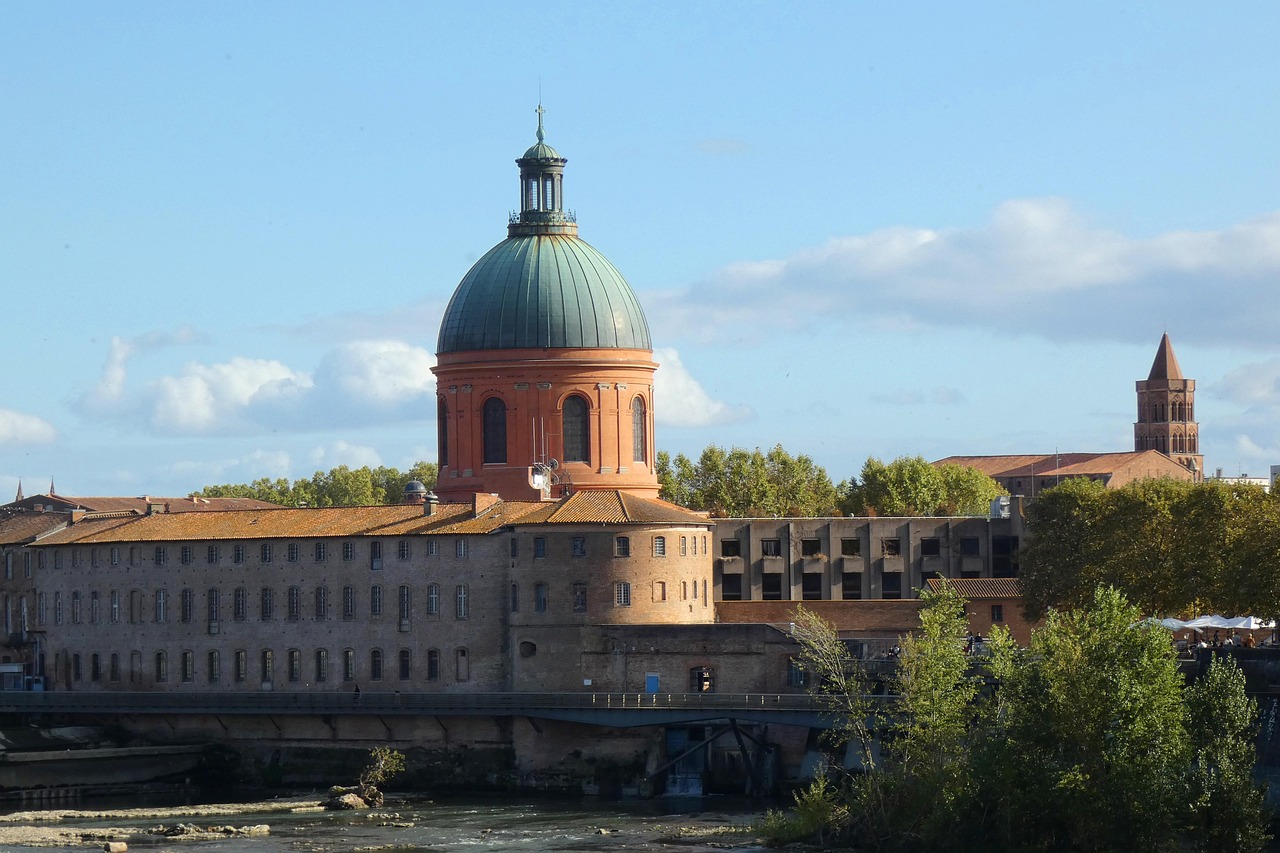
The Garonne is where Toulouse goes to breathe. On long summer evenings, it feels like the entire city has migrated to the riverbanks with bottles of wine, picnic blankets, and bluetooth speakers. On winter mornings, a mist hangs over the water and joggers puff clouds of breath as they move along the paths.
My favorite stretch: Start near Place Saint-Pierre, where students gather on the steps, and wander along the river to La Daurade. From here you get postcard-perfect views of the dome of La Grave and the Pont Neuf. I’ve lost count of the sunsets I’ve watched here—each one seems better than the last.
Things to do along the Garonne:
- Sunset picnic: Grab a baguette, cheese, and a bottle of southwest wine from a supermarket or small épicerie and join the locals on the grass near La Daurade.
- River cruise: Seasonal cruises offer a different perspective on the city (look for departures near Pont Neuf).
- Jogging or cycling: The riverside paths are perfect for a morning run or casual bike ride.
- Photography: Come twice: once for sunrise if you’re an early bird, and once for golden hour and blue hour.
Tip: In high summer, take extra care with your belongings in crowded areas; the vibe is very relaxed, but pickpockets know that.
5. Pont Neuf
The name means “New Bridge,” but Pont Neuf is actually the oldest bridge still standing across the Garonne in Toulouse, finished in the 17th century. It’s stolid, handsome, and a bit quirky, with its uneven arches and cutwaters designed to help it survive floods.
I love walking across it at night, when its arches are lit and reflected in the river. On one trip, I paused halfway across to watch a storm roll in from the west; lightning flashed behind the silhouette of the city, and for 10 minutes it felt like a private light show.
What to do:
- Walk across from the Capitole side toward Saint-Cyprien for a great skyline view.
- Look for the small viewing platform halfway along, where musicians sometimes busk.
- Use it as a link between your old town wanderings and the more local-feeling Saint-Cyprien neighborhood.
6. Place Saint-Pierre
Place Saint-Pierre is where student Toulouse comes to life. Overlooking the Garonne, it’s lined with bars that range from laid-back to downright rowdy. On warm evenings, the steps fill with young people drinking beer, playing guitar, and debating everything from politics to rugby.
As someone no longer in my student years, I tend to drop by early in the evening for a drink with a view, then move on as the night gets louder. That said, on one random Wednesday in May, I ended up here until 1am with a group of new friends I’d met on a walking tour; we sang along badly to 90s rock and watched the river sparkle under the lights. It’s that kind of place.
Tips:
- Best time: Sunset for the atmosphere and views, especially on Thursdays and Fridays.
- Budget: Beers here are often cheaper than in the hyper-central tourist bars near Capitole.
- Safety: The atmosphere is generally friendly, but as with any busy nightlife area, keep an eye on your drink and your bag.
7. Saint-Cyprien & Hôpital de La Grave
Cross the Garonne via Pont Neuf or Pont Saint-Pierre and you’re in Saint-Cyprien, a neighborhood that feels more lived-in and slightly scruffier—in the best way—than the polished streets around Capitole. This is where I go when I’m tired of feeling like a tourist.
The star of the riverside skyline is the dome of La Grave, part of a former hospital complex. You can’t always go inside the dome itself (check local listings), but walking around the complex and along the riverbank here gives you some of the most iconic Toulouse views.
Why I love Saint-Cyprien:
- It has a village feel, with small squares and local shops.
- The Saint-Cyprien market is great for fresh produce and ready-to-eat food.
- There are excellent, affordable restaurants with fewer tourists.
One evening, I ended up in a tiny wine bar here where the owner insisted I try a natural wine from Gaillac that “tasted like the forest after rain.” It did, weirdly. These are the kinds of encounters I associate with Saint-Cyprien.
8. Cité de l’Espace
Toulouse isn’t just about medieval bricks and riverside picnics; it’s Europe’s aerospace capital. Cité de l’Espace is where that side of the city comes to life. If you’re even slightly into space, engineering, or cool science museums—or if you’re traveling with kids—it’s a must.
What you’ll find:
- Full-scale models of the Ariane 5 rocket and sections of the Mir space station.
- Interactive exhibits explaining how satellites and space missions work.
- Planetarium shows (often with multilingual options).
- Hands-on experiments for kids (and adults who act like kids).
I spent nearly a full day here on my last visit. The highlight for me was sitting in a mock-up of a space module and listening to recordings of astronauts describing daily life in orbit. It’s well-curated, and you can feel Toulouse’s pride in its aerospace expertise.
Practical info:
- Getting there: Bus from the city center (or metro + bus). Allow about 30–40 minutes.
- Time needed: 4–6 hours, especially with kids.
- Family-friendly: Absolutely—it’s one of the best things to do in Toulouse with children.
- Food: On-site cafeterias are decent but not cheap; consider bringing snacks.
9. Aeroscopia Museum & Airbus Tours
If Cité de l’Espace is about space, Aeroscopia is about planes—big, beautiful planes. Located near Toulouse-Blagnac airport, this vast museum is a love letter to aviation.
Highlights:
- Boarding a real Concorde and seeing its supersonic cabin up close.
- Walking through giant Airbus models, including wide-body aircraft.
- Exhibits on aviation history, from early biplanes to modern jets.
I’m not a hardcore plane geek, but I still spent an entire rainy afternoon here, geeking out over cockpit controls and imagining glamorous 1960s transatlantic flights.
You can also book Airbus factory tours nearby (book well in advance). Watching giant aircraft sections come together is oddly mesmerizing.
Tips:
- Advance booking: Essential for Airbus tours.
- Transport: Tram + short walk or local bus from central Toulouse.
- Weather backup: Perfect rainy-day activity.
10. Canal du Midi
The Canal du Midi, a UNESCO World Heritage Site, slips quietly through Toulouse, shaded by plane trees. Compared to the drama of the Garonne, it’s calm and introspective—perfect for long walks, runs, or bike rides.
I first discovered it on a too-hot afternoon when I just wanted shade and quiet. I ended up walking for almost two hours, watching narrowboats drift by and locals play pétanque on the towpath.
Things to do:
- Rent bikes and ride part of the towpath (you can go for kilometers with hardly any car traffic).
- Take a short boat cruise in high season.
- Pack a picnic and sit on the grassy banks.
Tip: This is one of the best free, low-key, and active things to do in Toulouse, especially if you need a break from museums.
11. Jardin des Plantes & Toulouse’s Green Spaces
When the city heat gets intense, I head for the Jardin des Plantes. This botanical park is lush, shady, and full of families, joggers, and students stretched out on the grass with textbooks they may or may not be reading.
The park is part of a chain of green spaces (Jardin Royal, Grand Rond) that you can stroll through in a loop. There are ponds with ducks, small playgrounds, and some quirky statues.
Why it’s great:
- Ideal for a picnic or book-and-blanket afternoon.
- Family-friendly with playgrounds and lots of open space.
- Close to several museums if you want to mix culture and nature.
12. Musée des Augustins
Housed in a former Gothic convent, the Musée des Augustins is Toulouse’s fine arts museum—and one of the most atmospheric spaces in the city. Think cloisters, vaulted halls, and rooms filled with medieval sculpture and paintings.
I once ducked in here to escape a sudden downpour and ended up staying three hours. The stone sculptures lining the cloister walls, salvaged from churches around the region, feel like a secret garden of saints and monsters.
Good to know:
- Check current opening status and exhibitions; the museum has undergone phases of renovation in recent years.
- Often quieter than you’d expect, especially on weekday afternoons.
- A great choice for art lovers or anyone who likes old buildings more than what’s inside them (guilty).
13. Cathédrale Saint-Étienne
Cathédrale Saint-Étienne is one of those churches that looks like several architects with different personalities fought over it across the centuries—and no one quite won. That’s exactly why I love it.
Parts are Romanesque, parts are Gothic, and the result is slightly off-kilter in a charming way. Inside, look for the stained glass and the enormous organ.
I like to stop here on my way between the Jardin des Plantes and the Capitole—just a quick pause in the cool, dim interior before diving back into city life.
14. Les Abattoirs – Modern & Contemporary Art
Formerly a slaughterhouse (hence the name), Les Abattoirs is now a major modern and contemporary art museum on the Saint-Cyprien side of the river. If you like bold, sometimes baffling art, this is your place.
Even if you’re not an art buff, the building and its riverside setting are worth a visit. On my last trip, I stumbled into a temporary exhibition mixing video art and sound installations that left me feeling slightly disoriented but oddly energized.
Tips:
- Check their website for current exhibitions and special events.
- Combine a visit with a walk along the Garonne and dinner in Saint-Cyprien.
- Good rainy-day option that’s less crowded than Cité de l’Espace.
15. Gare Matabiau & Canal-side Area
Gare Matabiau, Toulouse’s main railway station, is more than just a transport hub. Its façade, with ornate stonework and a clock tower, has a quiet elegance. I always feel a little thrill walking out of the station and knowing the city is waiting.
The area around the station is also where you’ll likely connect with the Canal du Midi. It’s not a “must-see attraction” in the traditional sense, but if you’re arriving by train (which I recommend), take a minute to look up and appreciate the architecture before you dive into metro maps.
16. Carmes & Its Market
Carmes is one of my favorite neighborhoods to actually live in (or pretend to, via Airbnb). It’s a warren of narrow streets, small squares, and pastel-colored shutters, with an excellent covered market at its heart: Marché des Carmes.
Market life: Inside the market, stalls overflow with produce, cheese, cured meats, and prepared foods. On a recent trip, I built my dream picnic from here: a wedge of local goat cheese, cherry tomatoes that tasted like sunshine, a still-warm baguette, and a tiny bottle of Gaillac white wine.
Why base yourself here:
- Easy walking distance to the Capitole and the Garonne.
- Lots of small bistros, wine bars, and independent shops.
- Feels very “Toulousain” without being overwhelmingly touristy.
17. Place Saint-Georges
Place Saint-Georges is where I go when I want a terrace but not the full showiness of Place du Capitole. It’s smaller, ringed with charming buildings and cafes, and almost always lively.
On sunny afternoons, the square fills with people lingering over coffee or aperitifs. I once spent an entire afternoon here “working” on my laptop and eavesdropping on conversations. (My French improved. I regret nothing.)
Tip: Slightly lower-key and often a bit cheaper than Capitole terraces, but with plenty of people-watching.
18. La Daurade Promenade & La Grave Viewpoint
The Quai de la Daurade is my favorite spot for that classic “Toulouse at sunset” shot: the dome of La Grave, the Pont Saint-Pierre, and the soft pink glow on the water.
In summer, the steps and grass here fill up with groups of friends. Street musicians often set up, and temporary guinguette-style bars sometimes appear along the quay.
Romantic angle: This is a top spot for couples: bring a bottle of wine, share a baguette and cheese, and watch the sky change color. Just remember: in France, open alcohol in public is generally tolerated as long as you’re discreet and respectful.
19. Rue Saint-Rome & Shopping Streets
Rue Saint-Rome runs from Place du Capitole toward Esquirol and is one of the main shopping arteries of Toulouse. It’s always busy, lined with mid-range shops and the occasional street performer.
I don’t come here for serenity; I come here when I need something practical (like a new phone charger) and want to feel the city’s energy. Look up from the shop signs to notice the old façades and wrought-iron balconies.
20. Saint-Aubin & Its Sunday Market
Saint-Aubin itself is a quieter neighborhood east of the center, but on Sundays it transforms thanks to one of Toulouse’s best markets. Stalls spread around the church, selling everything from organic veggies to second-hand books and handmade jewelry.
I try to coordinate at least one Sunday in Toulouse just to come here. I’ll grab a galette or some North African street food from one of the stands, find a patch of curb or a low wall to sit on, and listen to buskers play everything from jazz to Balkan folk.
Tip: Come with cash, an empty stomach, and no fixed agenda. It’s also a good place to pick up unique, small souvenirs.
Neighborhoods & Areas to Explore in Toulouse
One of the best things to do in Toulouse is simply wander its neighborhoods. Each has its own flavor, and understanding them helps you choose where to stay and how to plan your days.
Vieux Toulouse (Historic Center)
This is the area around Capitole, Saint-Sernin, and Rue du Taur. It’s a maze of medieval streets, Renaissance townhouses, and lively squares.
- Best for: First-time visitors, short stays (3 days in Toulouse), being near major attractions.
- Vibe: Bustling, central, slightly touristy but never overwhelming like Paris.
- Stay here if: You want to walk to almost everything and don’t mind some noise.
Carmes
Carmes is the chic-but-not-snobby heart of local life. Think charming apartments, food shops, and little wine bars.
- Best for: Foodies, longer stays, people who like a neighborhood feel.
- Vibe: Lived-in, friendly, slightly bohemian.
- Stay here if: You want to shop in a local market every morning and feel like you live here.
Saint-Cyprien
Across the river, Saint-Cyprien has historically been more working-class and remains more mixed and down-to-earth than the center. It’s changing fast, with new bars and restaurants opening every year.
- Best for: Returning visitors, budget stays, nightlife on the western side.
- Vibe: Up-and-coming, artsy, slightly gritty in spots.
- Stay here if: You want a more “local” base and don’t mind a 10–15 minute walk or short metro ride to Capitole.
Saint-Georges & Shopping District
A mix of modern and historic, with a central shopping mall, boutiques, and the lovely Place Saint-Georges.
- Best for: Shoppers, families wanting modern conveniences.
- Vibe: Busy in the daytime, mellow in the evening.
Compans-Caffarelli
Northwest of the center, this area has offices, a park, and some big hotels. It’s practical rather than charming, but the Japanese Garden in Jardin Compans-Caffarelli is a real gem.
- Best for: Business travelers, people wanting a quieter, modern base.
- Hidden gem: The Japanese Garden—a peaceful spot with ponds, bridges, and koi.
Saint-Aubin & Guilheméry
East of the center, this area is more residential, with lots of students and young families. Sunday’s Saint-Aubin market is the big draw.
- Best for: Longer stays, lower accommodation costs, quieter nights.
- Vibe: Local, mixed, slightly alternative around the market.
Suggested Itineraries: 3–5 Days in Toulouse
Whether you’re planning 3 days in Toulouse, 4 days in Toulouse, or a deeper 5 day itinerary for Toulouse, here are flexible plans based on how I actually show friends around. I’ll keep them relatively concise here, but you can stretch or compress as needed.
3 Day Itinerary for Toulouse – The Essentials
Day 1: Historic Heart & Riverfront
Morning: Start at Place du Capitole. Have a terrace coffee, then visit the Capitole building and the Salle des Illustres. Wander down Rue du Taur toward Saint-Sernin, stopping in little boutiques along the way.
Visit Basilique Saint-Sernin, including the crypt. Grab a quick lunch nearby—there are plenty of small bistros and sandwich spots.
Afternoon: Walk to the Couvent des Jacobins. Spend time in the cloister and under the palm-tree column. From there, meander through side streets toward the Garonne.
Stroll along the river near La Daurade, cross Pont Neuf, and wander into Saint-Cyprien for a coffee or early aperitif.
Evening: Head back toward the center via Pont Saint-Pierre, then have dinner in Carmes or near Place Saint-Georges. If you still have energy, finish with a nightcap near Place Saint-Pierre or a quiet glass of wine in a Carmes bar.
Day 2: Aerospace & Canal du Midi
Morning & early afternoon: Dedicate most of the day to Cité de l’Espace or Aeroscopia (pick one if time is short). With kids, Cité de l’Espace tends to be a bigger hit; with aviation fans, Aeroscopia is non-negotiable.
Late afternoon: Return to town and decompress with a walk along the Canal du Midi. If you’re staying near Matabiau or Saint-Aubin, it’s an easy stroll.
Evening: Try a classic cassoulet dinner—ask your hotel or host for a current favorite, as good spots change. Afterward, walk it off along the river or through the illuminated streets of the center.
Day 3: Markets, Parks & Hidden Corners
Morning: If it’s a Sunday, head to the Saint-Aubin market. Otherwise, explore Marché Victor Hugo or Marché des Carmes for a food-centric morning.
Afternoon: Wander to the Jardin des Plantes, then visit either Musée des Augustins or another museum that catches your eye. Spend some time just sitting in a park or at a café—this is a city that rewards doing nothing in particular.
Evening: For your final night, book a slightly nicer restaurant or join a wine-tasting experience. Finish with a slow stroll along the Garonne and one last look at La Grave’s dome.
4 Day Itinerary for Toulouse – One Extra Layer
With 4 days in Toulouse, follow the 3-day plan and add:
Day 4: Neighborhood Deep Dive
Morning: Explore Saint-Cyprien in more depth: its market (if open), small shops, and riverside walk. Visit Les Abattoirs for a cultural hit.
Afternoon: Metro to Compans-Caffarelli and relax in the Japanese Garden. From there, walk back toward the center through residential streets to see a more everyday side of Toulouse.
Evening: Dive into the nightlife: cocktails near Jean-Jaurès, beers at Place Saint-Pierre, or a jazz club depending on your mood.
5 Day Itinerary for Toulouse – Add a Day Trip
With 5 days in Toulouse, you can really settle in. Use the 4-day itinerary and add a day trip.
Day 5: Day Trip – Albi or Carcassonne
Option 1: Albi – A beautiful brick city with a massive cathedral and the Toulouse-Lautrec museum. Easy train ride (about 1 hour).
Option 2: Carcassonne – The famous medieval citadel. A bit more touristy, but spectacular. Train or bus options available.
Return to Toulouse in the evening for a casual dinner in Carmes or Saint-Georges and a last wander around the Capitole by night.
Local Food in Toulouse: What to Eat & Where
Toulouse sits in one of France’s great food regions. If you like duck, hearty stews, and robust wines, you’re in luck. If you’re vegetarian or vegan, it takes a bit more hunting, but the scene is improving every year.
Must-Try Dishes
- Cassoulet: A slow-cooked dish with white beans, duck confit, and sausage. Rich, filling, and best on a cooler day.
- Saucisse de Toulouse: Local sausage, often grilled and served with potatoes or lentils.
- Magret de canard: Duck breast, usually served pink.
- Foie gras: Controversial but traditional; you’ll see it everywhere in the region.
- Pastel-inspired treats: Some bakeries play with blue/pastel colors in homage to the region’s woad trade history.
Wine & Drinks
- Gaillac: A nearby wine region with whites, reds, and sparkling.
- Fronton: Red wines made from Négrette grapes.
- Armagnac: A brandy from southwest France, smoother and often more rustic than Cognac.
Favorite Eating Spots & Markets (Personal Picks)
- Marché Victor Hugo: Big indoor market with upstairs restaurants—great midday splurge.
- Marché des Carmes: My daily go-to when staying in Carmes; excellent produce and deli counters.
- Saint-Aubin Sunday Market: For street food and snacks from around the world.
- Small bistros in Carmes & Saint-Georges: Menus change often; look for places with short menus and lots of locals.
Saving Money on Food
Eating well in Toulouse doesn’t have to mean emptying your wallet.
- Lunch deals: Many restaurants offer a formule midi (set lunch menu) for €13–€20—often the best-value meal of the day.
- Bakeries: A filled baguette or quiche from a bakery + fruit from a market = cheap and delicious picnic.
- Self-catering: If you have a kitchen, markets and supermarkets make it easy to cook occasionally and save.
Nightlife, Cultural Experiences & Entertainment
Toulouse is a university city, so nightlife is lively but not as chaotic as some bigger capitals. You’ll find everything from casual wine bars to clubs and live music venues.
Nightlife Areas
- Place Saint-Pierre: Student-heavy, loud, fun, especially in good weather.
- Carmes & Saint-Georges: Wine bars, cocktail spots, and relaxed terraces.
- Jean-Jaurès / Allées Jean Jaurès: More clubs and late-night bars.
Cultural Experiences
- Théâtre du Capitole: Opera and ballet in a stunning setting.
- Concerts: Look for events at Le Bikini, Le Metronum, or smaller venues.
- Festivals: Music, film, and cultural festivals dot the calendar—see the events section below.
Family-Friendly Evenings
For families, evening activities might be:
- Sunset picnic by the Garonne.
- Evening stroll through the illuminated historic center.
- Early dinner in a casual brasserie followed by gelato.
Major Events & Festivals in Toulouse (2026–2027)
Exact dates can shift each year, but here are recurring events to watch for in 2026–2027:
- Rio Loco (June): A world music festival on the banks of the Garonne, with a different country or theme highlighted each year.
- Festival de Toulouse (Summer): Classical music and cultural events, often including open-air performances.
- Toulouse à Table (Late summer/early autumn): A food-focused celebration with tastings and events.
- Christmas Markets (December): Place du Capitole turns into a festive market with crafts, food, and mulled wine.
- Aerospace & Tech Events (throughout 2026–2027): Toulouse’s role as an aerospace hub means conferences, open days, and special events at Cité de l’Espace and Airbus—check local listings if that’s your interest.
Day Trips from Toulouse
If you’re planning a 4 day itinerary for Toulouse or longer, add at least one day trip. Here are a few favorites:
Albi
A gorgeous brick town about an hour away by train. Highlights include the massive Cathédrale Sainte-Cécile and the Toulouse-Lautrec Museum. The old bridge and riverside views are picture-perfect.
Carcassonne
The fortified medieval city of Carcassonne is an easy train ride away. Yes, it’s touristy—but walking the walls and wandering the cobbled lanes is still magical, especially if you go early or off-season.
Midi-Pyrénées Villages
Places like Cordes-sur-Ciel or Montauban make for lovely day trips if you’re comfortable with trains or renting a car. Think hilltop villages, more pink brick, and quiet squares.
Cultural Etiquette & Local Customs in Toulouse
France has its quirks, and Toulouse is no exception. A few basics will take you far.
Greetings
- Say “Bonjour” (daytime) or “Bonsoir” (evening) when entering shops, cafes, or speaking to staff. It’s important.
- “Merci, au revoir” when you leave.
Language
Many people, especially younger ones, speak at least some English, but starting in French is appreciated. A simple “Bonjour, parlez-vous anglais?” goes a long way.
Dining Customs
- Table service is slower and more relaxed than in some countries; you’re expected to linger.
- Asking for the bill: say “L’addition, s’il vous plaît.” It usually won’t appear automatically.
- Tipping: Service is included, but leaving 5–10% or rounding up is appreciated for good service.
Dress & Behavior
- Smart-casual works almost everywhere. Sportswear outside of sports is less common.
- On public transport, keep voices moderate; loud phone conversations are frowned upon.
Practical Travel Advice for Toulouse (2026 Edition)
Arriving & Getting Around
- By air: Toulouse-Blagnac Airport connects to the city by tram and shuttle buses.
- By train: Gare Matabiau has frequent connections to Paris, Bordeaux, and beyond.
- Public transport: Metro (2 lines), trams, and buses. Tickets are integrated; you can buy single tickets or day passes.
- Walking: The historic center is very walkable; for most visitors, you’ll walk more than you ride.
- Bike & e-scooters: Bike-share and scooter services are available—good for the Canal du Midi or riverside paths.
SIM Cards & Connectivity
For 2026, options include:
- EU travelers: Roaming may be included in your plan—check before you come.
- Non-EU travelers: Buy a prepaid SIM from operators like Orange, SFR, or Bouygues at the airport or in town. You’ll need ID.
- eSIMs: Increasingly popular; you can set one up before you arrive via apps and avoid hunting for a physical SIM.
Money & Budget Tips
- Card payments are widely accepted, including contactless.
- ATMs are easy to find; avoid currency exchange kiosks with bad rates.
- For saving money: use lunch deals, markets, and free attractions (churches, walking, parks).
Car Rental & Driving
You don’t need a car for Toulouse itself; in fact, it can be a hassle. For day trips to smaller villages, a car can be useful.
- Foreign licenses: Many non-EU licenses are accepted for short stays; check if you need an International Driving Permit (IDP) depending on your country.
- Parking: Limited and often paid in the center; look for park-and-ride options if you must drive in.
Visas & Entry Requirements
France is part of the Schengen Area. For 2026:
- EU/EEA/Swiss citizens: No visa required.
- Many other nationalities: Short stays (up to 90 days in 180) are visa-free, but an ETIAS-style pre-travel authorization may be required once implemented—check official EU sources before travel.
- Others: May need a Schengen visa; apply well in advance.
Safety
Toulouse is generally safe. Usual city advice applies:
- Watch for pickpockets in crowded areas and on public transport.
- Avoid leaving valuables on tables or visible in parked cars.
- At night, stick to well-lit areas; the center and student neighborhoods are usually lively late.
When to Visit & Seasonal Advice
- Spring (April–June): My favorite time. Mild weather, long evenings, blooming parks. Perfect for a 3 day itinerary for Toulouse or longer.
- Summer (July–August): Hot, sometimes very hot, but vibrant. Great for riverside life and festivals. Book accommodation early.
- Autumn (September–October): Still pleasant, fewer crowds, beautiful light on the brick buildings.
- Winter (November–March): Quieter, cooler, with occasional rain. Christmas market adds charm in December.
Hidden Tips from Repeat Visits
- Plan at least one “nothing” afternoon—no big sights, just wandering, coffee, and parks. Toulouse rewards slowness.
- Carry a small reusable water bottle; fountains are available in some parks.
- Check local posters and flyers—some of the best concerts and events aren’t heavily advertised online.
Final Thoughts: Is Toulouse Worth It?
Toulouse doesn’t always make the top of “must-see” lists, but it should—especially if you like cities with real life beyond tourism. In a few days you can explore must-see attractions in Toulouse like Saint-Sernin and the Garonne, dive into aerospace at Cité de l’Espace, taste some of the best local food in Toulouse, and still have time to sit in a park and do absolutely nothing.
For 3 days in Toulouse, you’ll hit the essentials and get a feel for the city’s rhythm. With 4 days in Toulouse, you can add neighborhoods and maybe a museum or two. With a full 5 day itinerary for Toulouse, you can work in a day trip and start to feel like you live here, just a little.
If you can choose your timing, aim for late spring or early autumn for the best combination of weather, light, and manageable crowds. But honestly, I’ve been in all seasons, and there’s always something quietly special about watching the pink bricks of Toulouse shift color with the sky.
Come hungry, come curious, and give yourself permission to slow down. Toulouse will meet you halfway.