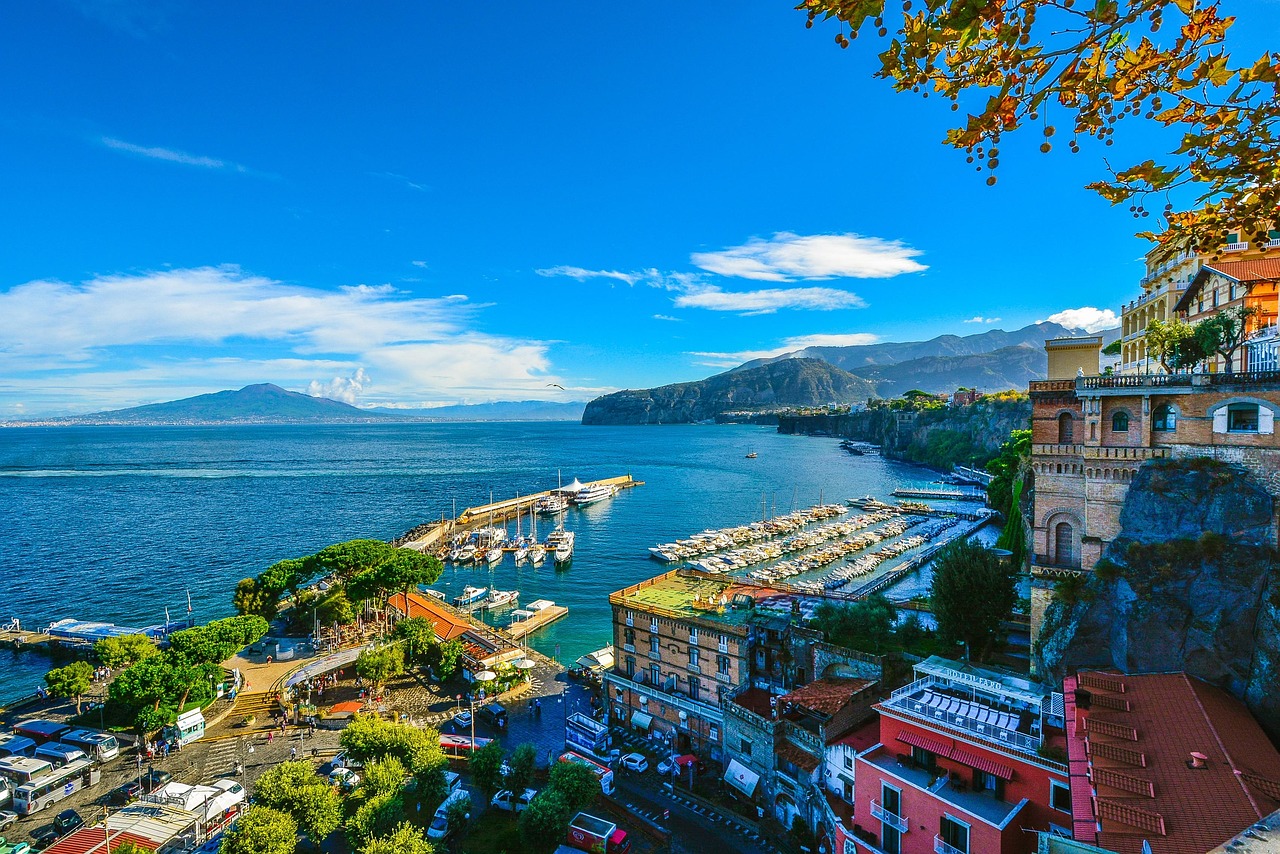
Why Visit Amalfi in 2026
Amalfi isn’t just a town; it feels like a vertical dream carved into cliffs, with pastel houses clinging to the rock and a cathedral that seems to float above a staircase of worn marble. I’ve been returning to Amalfi for over a decade, and every time, the first glimpse of the coastline – that mix of turquoise water, lemon groves, and terracotta roofs – still makes me stop and stare.
In 2026, Amalfi is in a sweet spot: tourism has fully returned, but the town has doubled down on sustainability and preserving local culture. Outdoor terraces are buzzing, the historic center is pedestrian-friendly, and there’s a renewed pride in regional food, traditional festivals, and artisanal crafts.
Whether you’re planning 3 days in Amalfi, a detailed 4 day itinerary for Amalfi, or a slow and indulgent 5 day itinerary for Amalfi, this travel guide for Amalfi is written to feel like a local friend walking you through town – sharing hidden gems in Amalfi, the best places to visit in Amalfi, the most satisfying local food in Amalfi, and honest travel tips for Amalfi you won’t always hear at the hotel reception.
I’ve structured this guide to help you plan step by step: from must-see attractions and cultural experiences to etiquette, budgeting, and practical travel advice. Expect detailed, story-driven sections on at least twenty of Amalfi’s most beautiful spots, layered with history, personal anecdotes, and tips that will help you enjoy the town like a seasoned traveler rather than a rushed day-tripper.
Table of Contents
- Why Visit Amalfi in 2026
- Amalfi at a Glance
- Neighborhoods & Areas of Amalfi
- 20+ Must-See Attractions in Amalfi (With Personal Stories)
- Suggested Itineraries: 3, 4 & 5 Days in Amalfi
- Local Food in Amalfi & Where to Eat
- Cultural Etiquette & Local Customs
- Nightlife, Entertainment & Cultural Experiences
- Best Day Trips from Amalfi
- Events & Festivals in 2026–2027
- Practical Travel Tips for Amalfi
- Summary & Best Time to Visit
Amalfi at a Glance
Amalfi is the historic heart of the Amalfi Coast, once a powerful maritime republic that rivaled Venice and Pisa. Today it’s a compact town wrapped around a small harbor and a dramatic main square, Piazza del Duomo.
- Region: Campania, Southern Italy
- Closest major hubs: Naples, Salerno
- Best for: Romantic getaways, food lovers, history buffs, slow travel, families who don’t mind stairs, and landscape photographers.
- Vibe: Intimate, walkable, scenic. Mornings feel like a village. Midday, cruise passengers pour in. Evenings are mellow and romantic again.
Neighborhoods & Areas to Explore in Amalfi
Centro Storico (Historic Center)
Most visitors spend the bulk of their time in the Centro Storico, a maze of narrow alleys and staircases fanning out from Piazza del Duomo. This is where I usually stay if I want to be in the middle of everything – you’ll be a few steps from the cathedral, pastry shops, and the sea.
Lone Waterfront Strip & Harbor Area
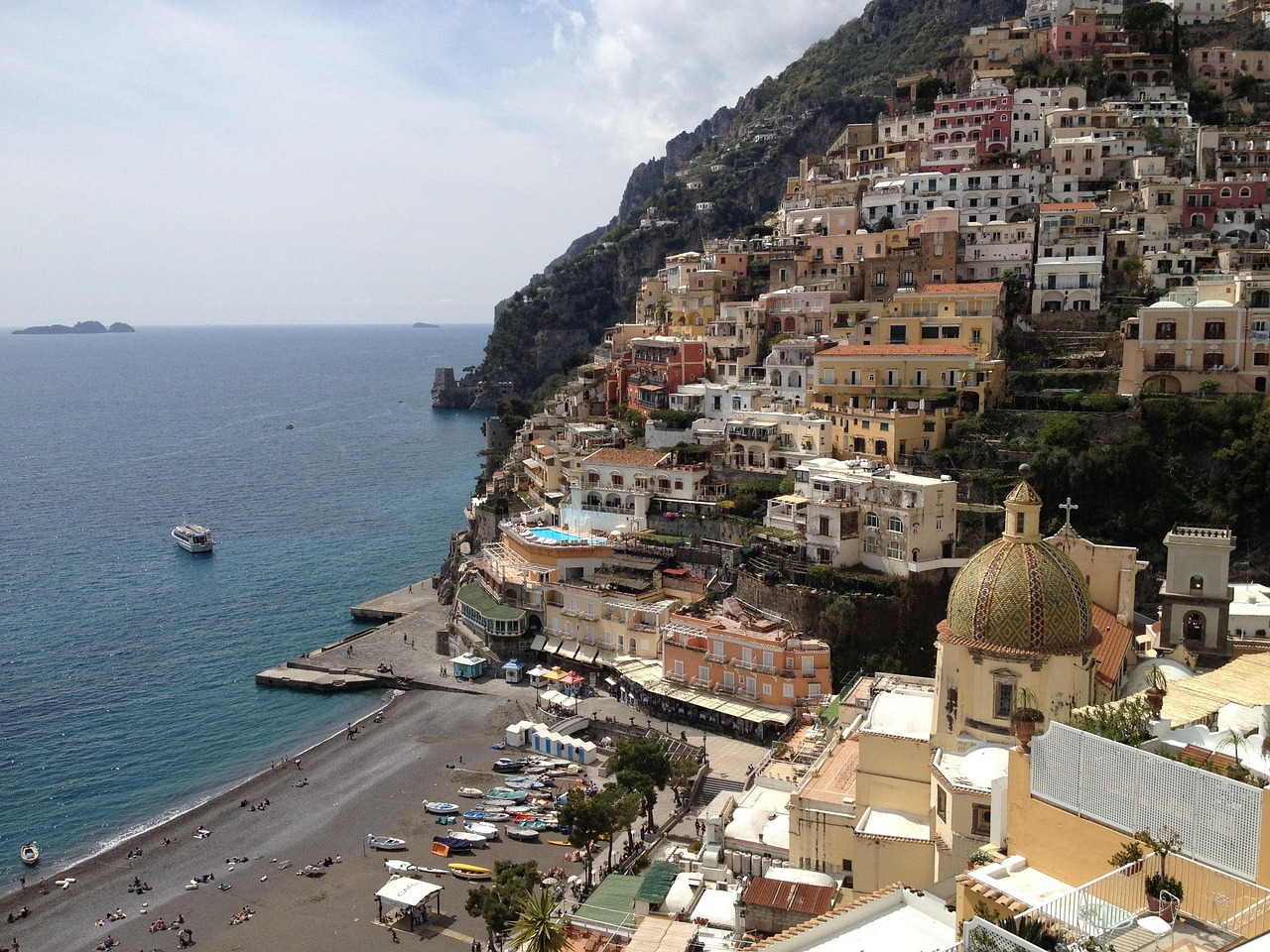
The harbor area, with its small marina and bus/ferry terminals, is the town’s transportation hub. It’s busy and practical, with great sea views and easy access to boat trips. This is ideal if you’re planning lots of day trips and don’t want to drag luggage up and down steep alleys.
Valle dei Mulini (Valley of the Mills)
Walking inland from the main square, the town narrows into the Valle dei Mulini, the old paper-making district. It feels dramatically different from the waterfront: quieter, lush, and slightly cooler in summer. I love staying here when I want a more local and peaceful base just 10–15 minutes’ walk from the piazza.
Lone Hillside Hamlets (Lone, Vettica, Pogerola)
Above Amalfi are the hamlets of Pogerola and Vettica. They’re properly uphill – you’ll either take a bus or tackle lots of stairs – but the reward is panoramic views and a much more local atmosphere. When I’m on a tighter budget, I often book a guesthouse up here; prices are generally lower, and sunsets are spectacular.
20+ Must-See Attractions in Amalfi (With Personal Stories & Tips)
This section dives into the must-see attractions in Amalfi – not as a checklist, but as places I’ve returned to again and again, with history, context, and small details that can shape your visit.
1. Duomo di Sant’Andrea (Amalfi Cathedral)
The Duomo di Sant’Andrea is the heart of Amalfi. Its striped facade and steep staircase dominate Piazza del Duomo. No matter how many times I’ve climbed those steps, I still pause halfway just to turn around and take in the square below – the hum of cafés, the smell of espresso, and the sound of kids chasing pigeons.
The cathedral complex includes several parts: the main church, the Cloister of Paradise, the crypt, and a small museum. The current building dates mostly from the 13th century, with later Baroque additions, and it was built on the site of an even older church. The mix of Arabic, Norman, Gothic, and Baroque influences reflects Amalfi’s history as a maritime crossroads.
My routine visit: I like to come around 9:30–10:00 a.m. in shoulder season (May or late September), when the steps are still relatively quiet. I’ll grab a coffee at a bar facing the steps (Bar Francese has a good vantage point), then head up to explore.
- Cloister of Paradise: A peaceful courtyard with slender, Moorish-style arches and palm trees. In the early morning, light filters in beautifully; I once sat here for half an hour reading and listening to the bells.
- The Crypt: Dedicated to St. Andrew, whose relics are kept here. The Baroque decoration is surprisingly lavish. Even if you’re not religious, it’s a powerful space.
- Main Nave: Look up at the ceiling, and don’t miss the bronze doors – they were cast in Constantinople in the 11th century.
Practical tips:
- Dress code: Shoulders and knees covered. I’ve seen people turned away on hot days; carry a light scarf.
- Tickets: There’s a small combined ticket for the cloister, crypt, and museum. The main nave is often free, but this can change by season.
- Photography: Photos are generally allowed without flash, but be respectful during services.
2. Piazza del Duomo
Piazza del Duomo is Amalfi’s living room. It’s where everything and everyone seems to eventually converge – locals chatting, kids playing, waiters weaving through with trays of spritz. I often end my evenings here with a gelato or a limoncello, watching the cathedral gradually light up as dusk falls.
In the mornings, the piazza is calmer. Delivery trucks inch through the narrow roads, shopkeepers sweep their thresholds, and older residents sit on benches, catching up on the day’s gossip. By midday, it becomes a lively stage for people-watching.
What I like to do: Pick a café with a view of the steps, order a macchiato or an Aperol spritz depending on the hour, and just let time slow down. It’s not the cheapest place in town, but you’re paying for the atmosphere – and it’s worth it at least once.
Family-friendly: The square is largely pedestrian; kids can roam a bit, though keep an eye on the main road side.
3. Amalfi Waterfront & Marina Grande Beach
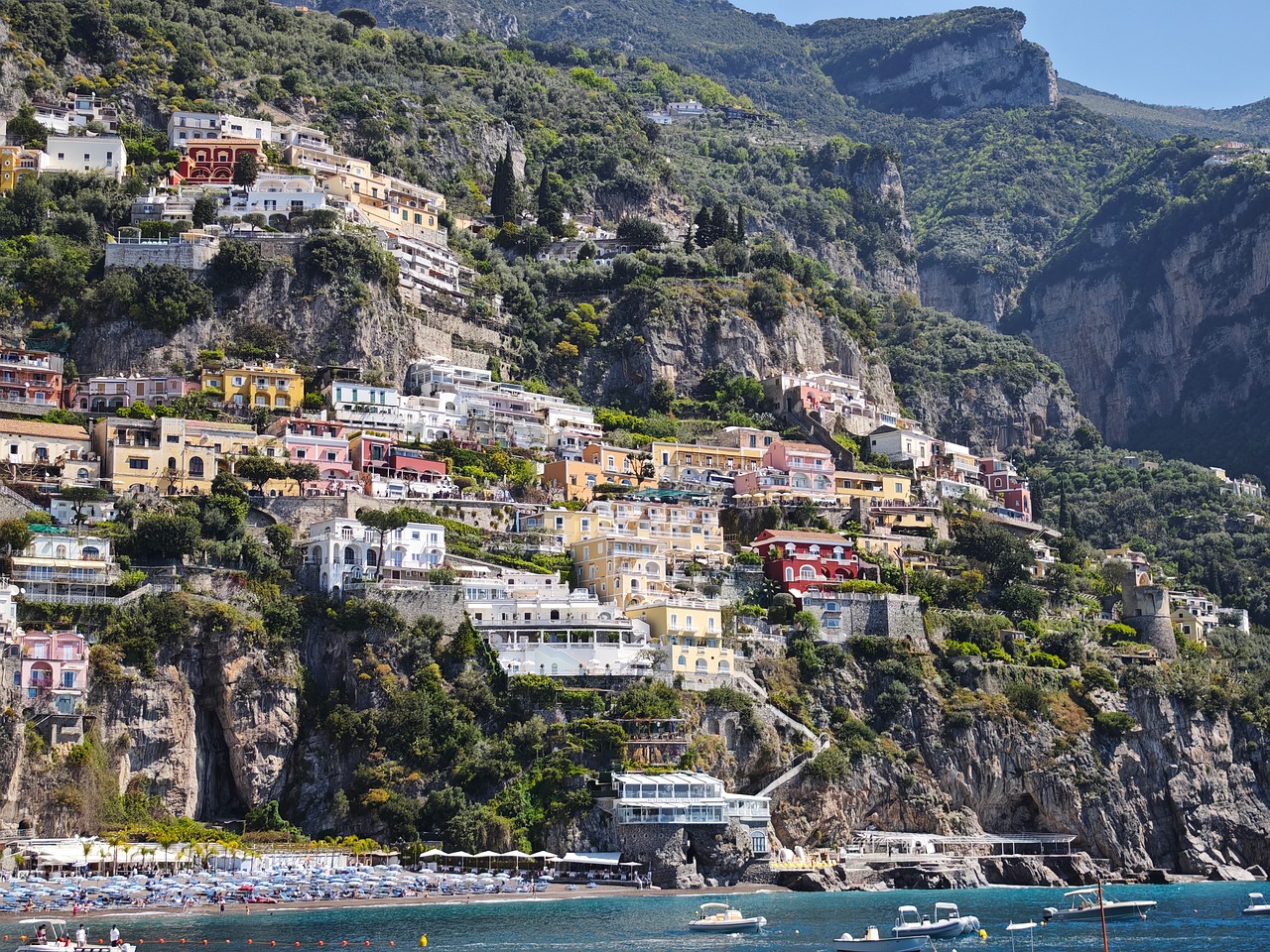
The waterfront is where I always feel the “holiday” part of Amalfi sink in. Marina Grande Beach is right in front of the town – a mix of public and private sections, lined with colorful umbrellas. It’s not the most secluded beach on the coast, but for a quick dip before dinner, it’s unbeatable.
My favorite time: Late afternoon, after 4:30 p.m., when day-trippers start to leave and the sunlight turns soft. I’ll often rent a sunbed for just a couple of hours, swim, and then walk back into town still slightly salty, straight to an aperitivo.
Tips:
- Private vs public: Private lidos charge a daily fee for an umbrella and sunbeds. The public section is free but can get crowded – bring a towel and water shoes (the beach is pebbly).
- Showers: Some lidos offer showers, changing rooms, and toilets, which can justify the cost if you’re spending several hours.
- Family angle: The sea here is usually calm and shallow near the shore, good for children with supervision.
4. Valle delle Ferriere (Nature Reserve & Waterfalls)
If you only associate Amalfi with sea views, the Valle delle Ferriere will surprise you. It’s a lush, almost tropical-feeling valley inland from the town, with waterfalls, old ironworks, and rare plants. On my first hike here, I remember being struck by how quickly the noise of the coast faded into birdsong and running water.
The trail starts near the old paper mills and gradually climbs into the valley. You’ll pass ruins, streams, and shaded paths. On hot summer days, this is one of the few places that feels genuinely cool.
Who it’s for: Nature lovers, hikers, and anyone needing a break from crowds. It’s a wonderful family outing if your kids are comfortable walking a couple of hours.
Tips & logistics:
- Footwear: Proper walking shoes or sturdy trainers. Parts of the path can be muddy or slippery.
- Water & snacks: There are no shops once you’re on the trail. I usually grab a panino and a bottle of water in town first.
- Guides & access: Some sections of the protected reserve require a guide or pre-booking; check locally as rules can change.
- Timing: Go early in summer to avoid midday heat.
5. Museo della Carta (Paper Museum)
Amalfi’s historic wealth was built not just on ships but on paper. The Museo della Carta sits in an old paper mill in the Valle dei Mulini, and it’s one of those modest, slightly old-fashioned museums that I find irresistible.
On my first visit, I ended up in a small group led by an elderly guide whose family had worked in the mill. He showed us how rags were turned into paper pulp, how the water wheels operated, and even let us make a sheet of Amalfi paper by hand. I still have mine tucked into a notebook.
Why go: It’s a compact, engaging stop that adds depth to your understanding of Amalfi beyond beaches and views. It’s also a fun, interactive visit for kids.
Tips:
- Walk: It’s about 10–15 minutes uphill from the main square; the walk itself is charming, through the old mill district.
- Souvenirs: The shop sells beautiful Amalfi paper products, from notebooks to wedding invitations. Prices are higher than generic souvenirs but the quality is excellent.
6. Arsenale della Repubblica (Old Shipyards)
Hidden just off the waterfront, the Arsenale della Repubblica is the old shipyard where Amalfi’s galleys were once constructed. Today it’s a small museum and event space, but if you stand under the stone vaults and imagine wooden hulls being built here, you get a sense of how powerful the town once was.
I like to pop in here in the late afternoon, when the sun is harsh outside and the cool interior feels refreshing.
7. Porto di Amalfi & Sunset Walk
The Porto di Amalfi is a working harbor where ferries, fishing boats, and small yachts sit side by side. One of my favorite rituals is an evening walk along the breakwater. The view back toward the town, with the Duomo lit up and houses climbing the hillside, is the postcard image of Amalfi.
Romantic moment: Bring a gelato or a takeaway drink, sit on the edge of the breakwater, and watch the sky change colors over the sea. It’s simple, free, and incredibly romantic.
8. Rione Vagliendola (Historic Quarter Above the Duomo)
Above the Duomo lies the Rione Vagliendola, a tangle of staircases and tiny lanes where laundry hangs between buildings and cats doze on doorsteps. Tour groups rarely venture up here, which makes it one of my favorite places to wander aimlessly.
I discovered this area by accident on a rainy afternoon, following a side staircase “just to see where it went.” Since then, I’ve made a point to get lost up here at least once every trip. You’ll find small chapels, quiet corners, and glimpses of the sea between buildings.
9. Spiaggia di Santa Croce (Hidden Beach by Boat)
Spiaggia di Santa Croce is one of Amalfi’s sweetest little escapes: a cove you can only reach by boat (either a small shuttle boat from the harbor or your own rental/kayak). The beach is tucked under cliffs, with clear water and a couple of rustic beach restaurants.
The first time I went was on a sweltering July morning. By 10:00 a.m., I was stepping off the boat onto the small wooden pier, and it felt like we’d jumped a decade back in time: simple chairs, grilled fish, and families who clearly came here every summer.
Tips:
- Go early or late: It’s small; arrive early for a quieter vibe or go after 3:00 p.m. when it thins out.
- Reserve lunch: In high season, call ahead if you want a table at one of the beach restaurants.
- Bring cash: Some places still prefer cash, and card machines can be unreliable by the water.
10. Chiesa di San Biagio & Hilltop Views
For a quieter, more contemplative side of Amalfi, hike up toward the Chiesa di San Biagio. It’s a modest church compared to the Duomo, but the journey there – up narrow lanes and viewpoints – is the real attraction.
One hazy October afternoon, I climbed up here alone, hearing only my footsteps and distant church bells. From near the church, you get a bird’s-eye view of the town, the harbor, and the coastline sweeping away toward Atrani and beyond.
11. Atrani (Neighboring Village, Walkable from Amalfi)
Atrani is technically a separate village, but it feels like Amalfi’s quieter sibling – and you can walk there in about 10 minutes through a tunnel and seaside path. I sometimes joke that Amalfi is where I go to be social, and Atrani is where I go to breathe.
The main square, Piazza Umberto I, is almost comically picturesque: a church, a few cafés, kids playing football, locals chatting. It’s a fantastic place to escape the crowds and get a sense of daily life on the coast.
12. Lemon Terraces & Lemon Farm Visits
Amalfi’s lemons are legendary – larger, more aromatic, and with a thicker peel than the lemons you’re probably used to. The hills behind the town are striped with terraced lemon groves, some of which you can visit on guided tours.
The first time I walked through a lemon grove at sunset, the scent was almost overwhelming – in the best way. Many small farms now offer tours that include a walk among the terraces, explanations of traditional cultivation methods, and tastings of lemon products like limoncello, marmalade, and lemon cake.
13. Former Cappuccini Monastery & Panoramic Terrace
Perched above Amalfi is a former Cappuccini monastery, now partly a hotel. Even if you’re not staying there, climbing up to the area (or having a drink at the hotel bar if open to non-guests) rewards you with sweeping views of the town and sea.
One of my most memorable evenings was nursing a single glass of wine here, watching a storm roll in over the water, lightning silently flickering on the horizon.
14. Pogerola (Hilltop Hamlet Above Amalfi)
Pogerola is a sleepy hamlet above Amalfi with killer views and a refreshingly local feel. It’s reached by a twisting road (or a long set of stairs if you’re ambitious). I’ve stayed up here twice when I wanted to save money and escape the crowds.
The village has a couple of restaurants with terraces overlooking the coast. Dinners here are slower, cheaper, and filled with Italian conversations rather than tourist chatter.
15. Vettica Minore & Coastal Views
Vettica Minore is a small area west of Amalfi with scattered houses, B&Bs, and a few tucked-away viewpoints. It’s ideal if you want to be slightly outside the main town but still bus-connected. Several cliffside paths here offer some of my favorite sunset walks.
16. Church of San Pancrazio & Sea Views
The Church of San Pancrazio, set on a hill near Vettica, is one of those small, quiet churches where you might sit alone for half an hour, listening to your own breathing and distant waves. The views from the terrace outside stretch along the coast.
17. Marina Coppola & Fishing Boats
On the far side of the harbor, smaller marinas and boat docks give you a glimpse of Amalfi’s working side. I love walking here early in the morning, when fishermen are cleaning their nets and the smell of the sea is sharp.
18. Local Cooking Classes & Food Experiences
One of the best cultural experiences in Amalfi I’ve had was a half-day cooking class in a family home in the hills above town. We made fresh pasta, stuffed zucchini flowers, and a lemony dessert, all washed down with local wine.
Look for small, family-run classes rather than large commercial ones if you want more conversation and personal attention. These often include a visit to a garden or small farm.
19. Coastal Boat Excursions from Amalfi
Seeing the Amalfi Coast from the water is non-negotiable in my book. From Amalfi, you can join group boat tours or rent a small boat (with or without a skipper) to cruise along the coast, stop in hidden coves, and swim off the boat.
One July evening, I joined a sunset cruise with a small group. We watched the cliffs glow golden, swam in a quiet bay, and toasted the evening with local prosecco. It remains one of my favorite memories of the coast.
20. Amalfi by Night: Lantern-Lit Alleys & Late Walks
Don’t underestimate how different Amalfi feels after dark. Cruise visitors are gone, day-trippers have caught their last buses, and the alleys are lit softly by lanterns and window light. I like to wander without a map, following whichever staircase seems inviting.
On several trips, my best “hidden gem” discoveries – tiny shrines, quiet squares, locals playing cards in tucked-away corners – have all happened on these aimless nighttime walks.
Suggested Itineraries: 3, 4 & 5 Days in Amalfi
These itineraries are flexible templates. You can compress them into 3 days in Amalfi for a quick, intense stay, or stretch to a 4 day itinerary for Amalfi or a leisurely 5 day itinerary for Amalfi. I’ll share how I typically structure my own trips.
3 Days in Amalfi: Classic Highlights
If you only have 3 days in Amalfi, focus on the core town, one hiking/nature experience, and one boat-based day.
- Day 1: Duomo, Piazza del Duomo, waterfront, paper museum, evening wander.
- Day 2: Valle delle Ferriere hike, lemon terraces, sunset at the port.
- Day 3: Boat excursion (coast or Capri) + Atrani in the late afternoon.
4 Days in Amalfi: Adding Depth
With 4 days in Amalfi, you can slow down a little, add a cooking class or extra beach time, and explore hilltop hamlets.
- Day 1: Historic center and Duomo in depth.
- Day 2: Valle delle Ferriere and paper museum.
- Day 3: Boat day + Atrani.
- Day 4: Pogerola or Vettica, sunset views, and a long dinner.
5 Days in Amalfi: Slow & Savor
For a full 5 day itinerary for Amalfi, I like to build in full “do nothing” afternoons, extra swims, and cultural experiences like cooking classes or lemon farm visits.
- Day 1: Duomo, Piazza del Duomo, and waterfront (arrive, settle in).
- Day 2: Valle delle Ferriere + paper museum.
- Day 3: Boat excursion + hidden beach (like Santa Croce).
- Day 4: Lemon terraces, Pogerola / Vettica, sunset dinner.
- Day 5: Atrani, free time for shopping, last swim, and nighttime wander.
Local Food in Amalfi & Where to Eat
Food is where Amalfi really shines. Seafood, lemons, tomatoes, and olive oil are the pillars. Here are some classics to look for and how I like to enjoy them.
Must-Try Dishes & Drinks
- Scialatielli ai frutti di mare: Thick, handmade pasta with mixed seafood. My go-to order on the first night.
- Spaghetti alle vongole: Simple, perfect clams with garlic, oil, and parsley.
- Delizia al limone: A dome-shaped lemon cake that tastes like sunshine. Great with an afternoon espresso.
- Granita al limone: Lemon ice – I often grab one mid-morning while walking.
- Limoncello: The famous lemon liqueur, best sipped slowly after dinner.
- Pesce alla griglia: Grilled catch of the day, sometimes so fresh the waiter tells you the name of the fisherman.
Where I Like to Eat (Examples & Types)
- Seafront trattorie: Around Marina Grande. Expect slightly higher prices but great views. I usually do one “view dinner” per trip.
- Backstreet osterie: A few blocks inland from the main square, you’ll find simpler, more local spots. This is where I go to save money and eat like a regular.
- Pasticcerie (pastry shops): For sfogliatelle, cannoli, and delizia al limone. I’ve often replaced breakfast with a pastry and cappuccino at the counter.
- Pizza: While the coast isn’t as pizza-famous as Naples, most places still serve a decent margherita. Great budget dinner option.
Money-Saving Food Tips
- Stand at the bar: In cafés, standing at the counter is cheaper than sitting at a table in the piazza.
- Fixed-price lunch menus: Look for “menu turistico” or lunch specials slightly off the main square.
- Picnics: Grab focaccia, cheese, and fruit from small groceries and picnic on the breakwater or in a quiet corner.
Cultural Etiquette & Local Customs in Amalfi
Amalfi is used to visitors, but it’s still a small town with its own rhythms and unwritten rules.
- Dress respectfully in churches: Shoulders and knees covered when entering the Duomo or other churches.
- Quiet hours: Locals take afternoon rest seriously, especially in shoulder seasons. Avoid loud noise in residential alleys between roughly 2:00–4:00 p.m. and late at night.
- Coffee culture: Order and drink quickly at the bar, especially in the morning; lingering is more for table service.
- Greetings: A simple “Buongiorno” (morning/early afternoon) or “Buonasera” (evening) goes a long way with shopkeepers and waiters.
- Tipping: Not obligatory but appreciated. Rounding up the bill or leaving 5–10% for good service is common.
Nightlife, Entertainment & Cultural Experiences in Amalfi
Amalfi’s nightlife is mellow and atmospheric rather than wild. This isn’t a clubbing town; it’s a place for late dinners, wine bars, and evening walks.
- Wine bars: A few small enoteca-style spots in the historic center pour local Campanian wines. I like to try a different white each night with seafood.
- Piazza evenings: Sitting in Piazza del Duomo with a drink or gelato, listening to buskers and watching the world go by.
- Cultural events: Summer often brings small concerts in churches or squares, and occasional performances in the Arsenale or cloisters.
Day Trips & Nearby Attractions from Amalfi
Amalfi is a great base for exploring the wider coast and nearby highlights.
- Ravello: Hilltop town famous for its gardens (Villa Rufolo, Villa Cimbrone) and music festival. Take the bus from Amalfi; allow a full day to wander, linger in gardens, and enjoy the views.
- Positano: Iconic cliffside town, reachable by ferry or bus. I prefer the ferry for the views and to avoid traffic.
- Capri: Island day trip by boat from Amalfi or nearby ports. Visit the town of Capri, Anacapri, and, if conditions allow, the Blue Grotto.
- Salerno: Less touristy city with a lovely promenade, medieval center, and good connections to Naples and beyond.
Events & Festivals in Amalfi (2026–2027)
Amalfi’s calendar blends religious processions, cultural festivals, and summer events. Dates can shift slightly each year, so confirm closer to your trip, but in 2026–2027 you can expect:
- Feast of St. Andrew (Festa di Sant’Andrea): Celebrated twice a year (typically late June and late November) with processions, fireworks, and music.
- Amalfi Music & Arts Events: Summer evenings in 2026 will feature small concerts in cloisters, churches, and squares, often tied into the broader Amalfi Coast festival circuit.
- Regatta of the Ancient Maritime Republics: This historic boat race rotates between Amalfi, Pisa, Genoa, and Venice. If 2026 or 2027 is Amalfi’s turn, the town will explode with color, pageantry, and medieval costumes for a weekend.
Practical Travel Tips for Amalfi
How to Get to Amalfi
- By air: Fly into Naples International Airport (NAP).
- By train: From Naples or Rome, take a train to Salerno or sometimes Sorrento, then continue by bus or ferry.
- By ferry: In season (roughly April–October), ferries run from Salerno, Positano, Capri, and other coastal points directly to Amalfi.
Getting Around Amalfi & the Coast
- On foot: Amalfi itself is very walkable, but expect many stairs.
- Bus: SITA buses connect Amalfi to Positano, Sorrento, Ravello, and Salerno. They can be crowded in high season.
- Ferries: My preferred way in summer – faster and more scenic than buses on many routes.
- Car rental: Possible, but think carefully. Roads are narrow and parking in Amalfi is expensive and limited. For most travelers, public transport + boats is less stressful.
Money-Saving Strategies
- Stay slightly uphill (Valle dei Mulini, Pogerola, Vettica) for lower prices and better views.
- Eat main meals away from the waterfront and main square.
- Use public ferries instead of private boat taxis when possible.
- Travel in shoulder seasons (May–June, late September–October) for better value and fewer crowds.
SIM Cards & Connectivity
- Local SIM: TIM, Vodafone, and WindTre all have shops in nearby cities (Salerno, Sorrento, Naples). You can buy prepaid tourist SIMs with data for 1–4 weeks.
- eSIM: If your phone supports it, consider an Italian or Europe-wide eSIM to avoid hunting for a shop.
- Wi-Fi is common in hotels and many cafés, but speeds can vary, especially up in hillside hamlets.
Visas & Entry Requirements
- Amalfi is in Italy, part of the Schengen Area. Many nationalities can enter visa-free for short stays (up to 90 days in 180), but always check the latest rules for your passport.
- From 2026, Europe-wide entry schemes may require online pre-authorization for some travelers; verify details before you go.
Driving & Foreign Licenses
- Most non-EU visitors will need their home country license plus an International Driving Permit (IDP) to rent and legally drive.
- Parking in Amalfi is scarce and expensive; many visitors park in nearby towns and use buses/ferries.
Best Seasons & Weather
- Spring (April–June): My favorite. Wildflowers, mild temperatures, active hiking weather, and everything open.
- Summer (July–August): Hot, busy, vibrant. Best for swimming, boat trips, and nightlife, but expect crowds and higher prices.
- Autumn (September–October): Warm seas, fewer crowds, excellent foods (figs, grapes). Ideal for a mix of hiking and swimming.
- Winter (November–March): Quiet, some hotels and restaurants closed, more rain. Good for very slow, atmospheric travel if you don’t need beach time.
Summary & Final Recommendations
Amalfi is small, but it’s a place you can keep rediscovering. Whether you’re following a tight 3 day itinerary for Amalfi or easing into a leisurely 5 days in Amalfi, focus less on ticking every box and more on savoring a few things fully: a long dinner of seafood pasta and local wine, a quiet morning in the Duomo, a swim in clear water, a hike through the Valle delle Ferriere, and a sunset walk along the port.
Best times to visit: Late April to early June and late September to mid-October for a balance of pleasant weather, open services, and manageable crowds. Visit in summer if you prioritize sun, sea, and lively evenings; choose spring or autumn for more relaxed exploration and hiking.
If you let Amalfi set the pace – slower, more sensory, more present – you’ll leave not only with photos of its must-see attractions, but with the feeling of having briefly lived inside one of the Mediterranean’s most enchanting corners.