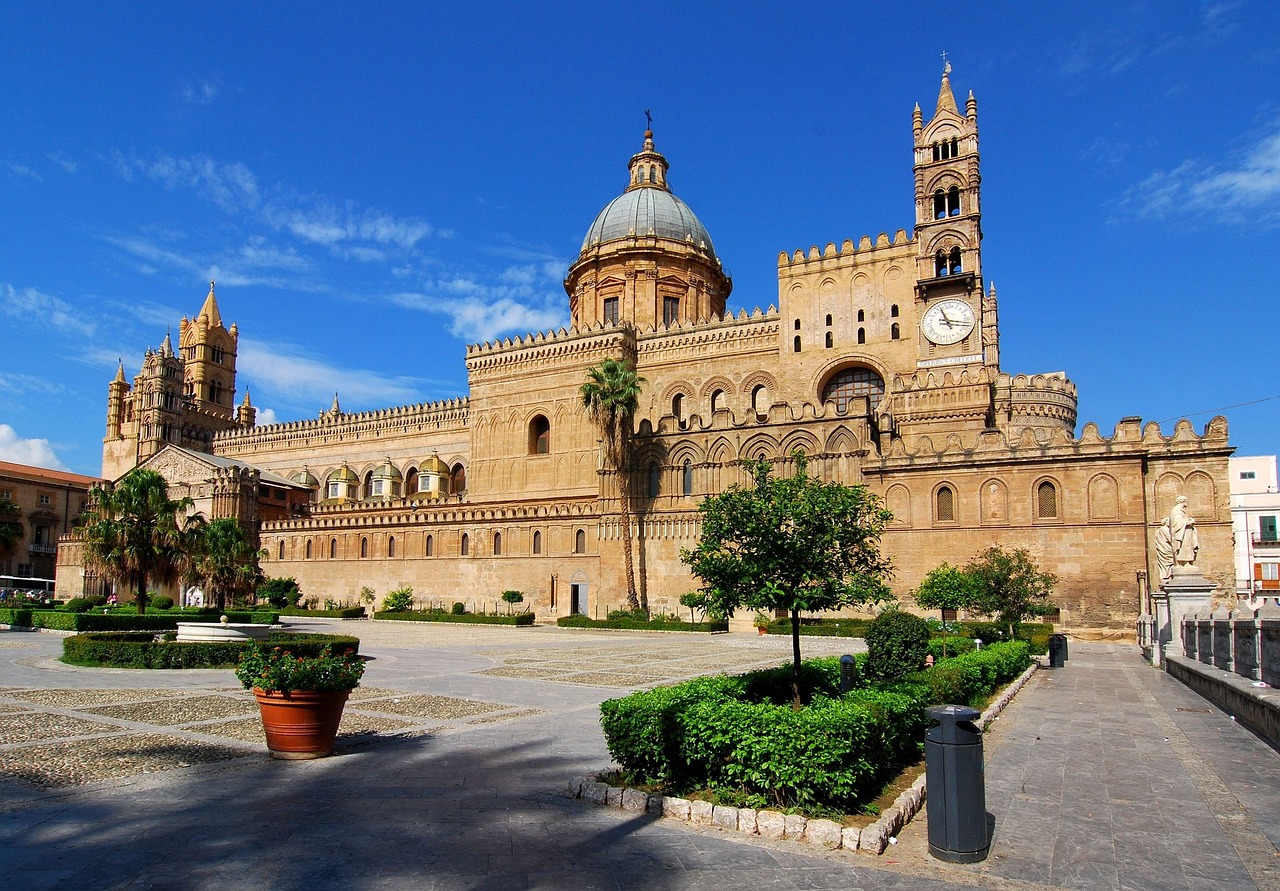
Why Visit Palermo in 2026
Palermo is a beautiful contradiction. It’s chaotic and generous, crumbling and magnificent, sunburned and perfumed with orange blossom. This is a city where Arab domes sit next to Baroque churches, where grandmothers gossip under laundry lines, and where every corner seems to smell like espresso, fried street food, or the sea.
I’ve been coming back to Palermo for over a decade, usually in shoulder seasons, and every time I arrive I get the same feeling: a noisy, warm hug from a city that refuses to be polished or predictable. It’s the kind of place that rewards curiosity and slowness. If you’re tired of perfectly curated, over-sanitized destinations, Palermo will feel like a revelation.
In 2026, Palermo is buzzing: new cultural projects, restored churches and palazzi, a refreshed waterfront, and a packed calendar of festivals from 2026–2027. It’s also a fantastic base for 3 days in Palermo, 4 days in Palermo, or even 5 days in Palermo, with easy day trips by train, bus, or boat.
This travel guide for Palermo is written as if I’m walking beside you: we’ll plan a detailed 3–5 day itinerary for Palermo, dive into the best places to visit, the most unforgettable local food in Palermo, and the small hidden gems in Palermo that most visitors miss. You’ll also find cultural etiquette, local customs, and the practical travel advice for Palermo that I usually give my own friends.
Table of Contents
- Why Visit Palermo in 2026
- Palermo at a Glance
- Suggested Itineraries (3–5 Days in Palermo)
- Neighbourhoods & Districts of Palermo
- 20 Must-See Attractions in Palermo (In Depth)
- Local Food in Palermo & Where to Eat
- Nightlife & Cultural Experiences in Palermo
- Best Day Trips from Palermo
- Events & Festivals 2026–2027
- Local Customs & Cultural Etiquette
- Practical Travel Tips for Palermo
- Summary & Best Time to Visit Palermo
Palermo at a Glance
Palermo is the capital of Sicily and one of the Mediterranean’s great crossroads. Greeks, Phoenicians, Arabs, Normans, Spanish – all left their fingerprints here. You see it in the Norman-Arab architecture, taste it in the spices of the street food, and hear it in the local dialect that dances between Italian, Arabic, and Spanish echoes.
It’s a walkable city, with most of the main things to do in Palermo clustered around the historic center: Quattro Canti, the Cathedral, the Norman Palace, the bustling markets. The sea is always close, and beaches like Mondello are a quick bus ride away.
If this is your first time, I recommend at least 3 days in Palermo. For a richer experience, plan 4 or 5 days in Palermo and include a couple of day trips.
Suggested Itineraries: 3–5 Days in Palermo
Below are flexible, story-based itineraries based on my own trips. You can compress them into a 3 day itinerary for Palermo or stretch them into a 4 day or 5 day itinerary for Palermo, depending on your pace.
3 Day Itinerary for Palermo (Highlights & Street Life)
If you only have 3 days in Palermo, focus on the historic core, street food, and one coastal escape. Here’s how I usually guide first-timers when they have a long weekend.
Day 1: Palermo’s Historic Heart & Markets
I love starting Palermo at street level, with your senses fully switched on. Drop your bags, grab a quick espresso at the nearest bar (standing up at the counter like a local), and walk straight into the old city.
Morning: Quattro Canti, Pretoria Fountain & Santa Caterina
Begin at Quattro Canti, the elegant Baroque crossroads that divides Palermo’s historic center into four ancient quarters.
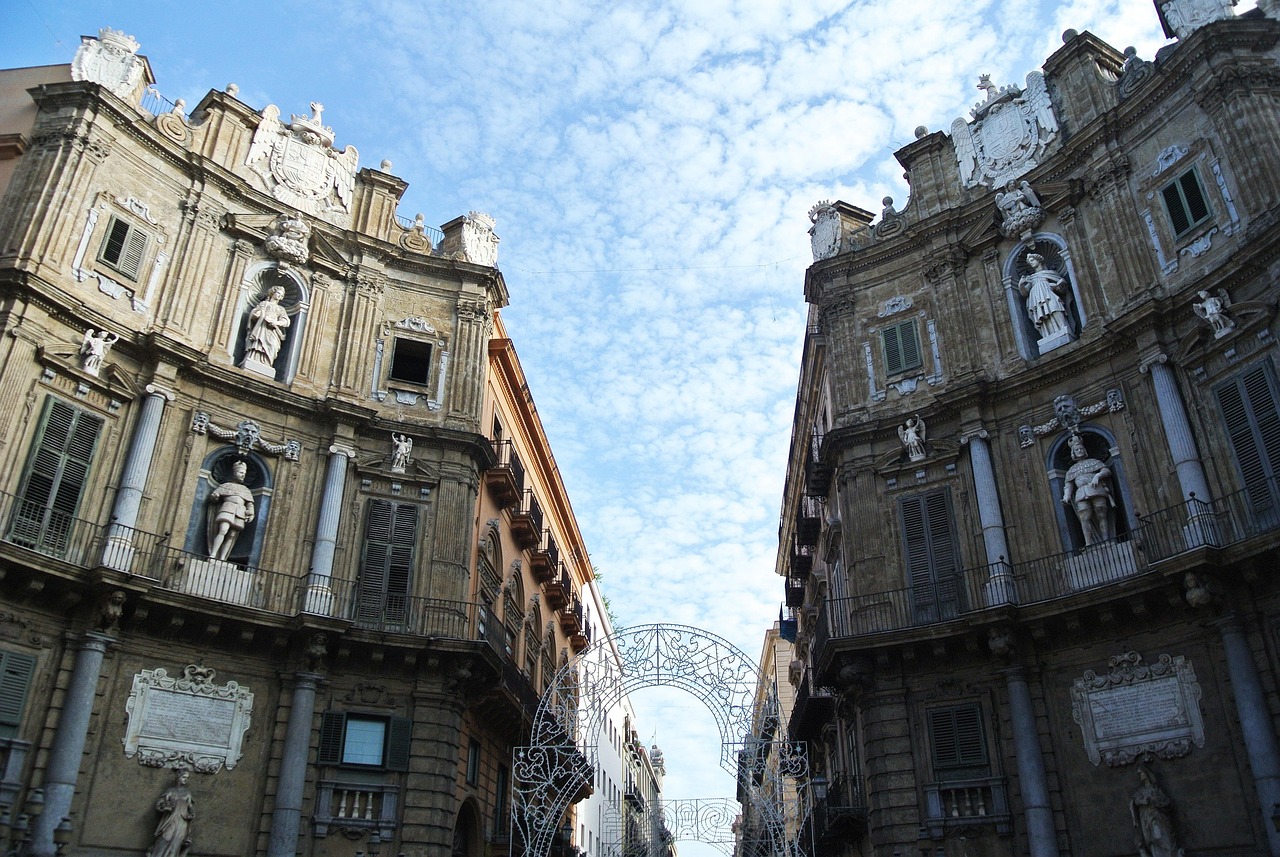
I usually come here around 9am, when the light hits the façades just right and the tour groups haven’t fully arrived. From here, it’s a short walk to the surreal Pretoria Fountain, nicknamed the “Fountain of Shame” for its abundance of marble nudity.
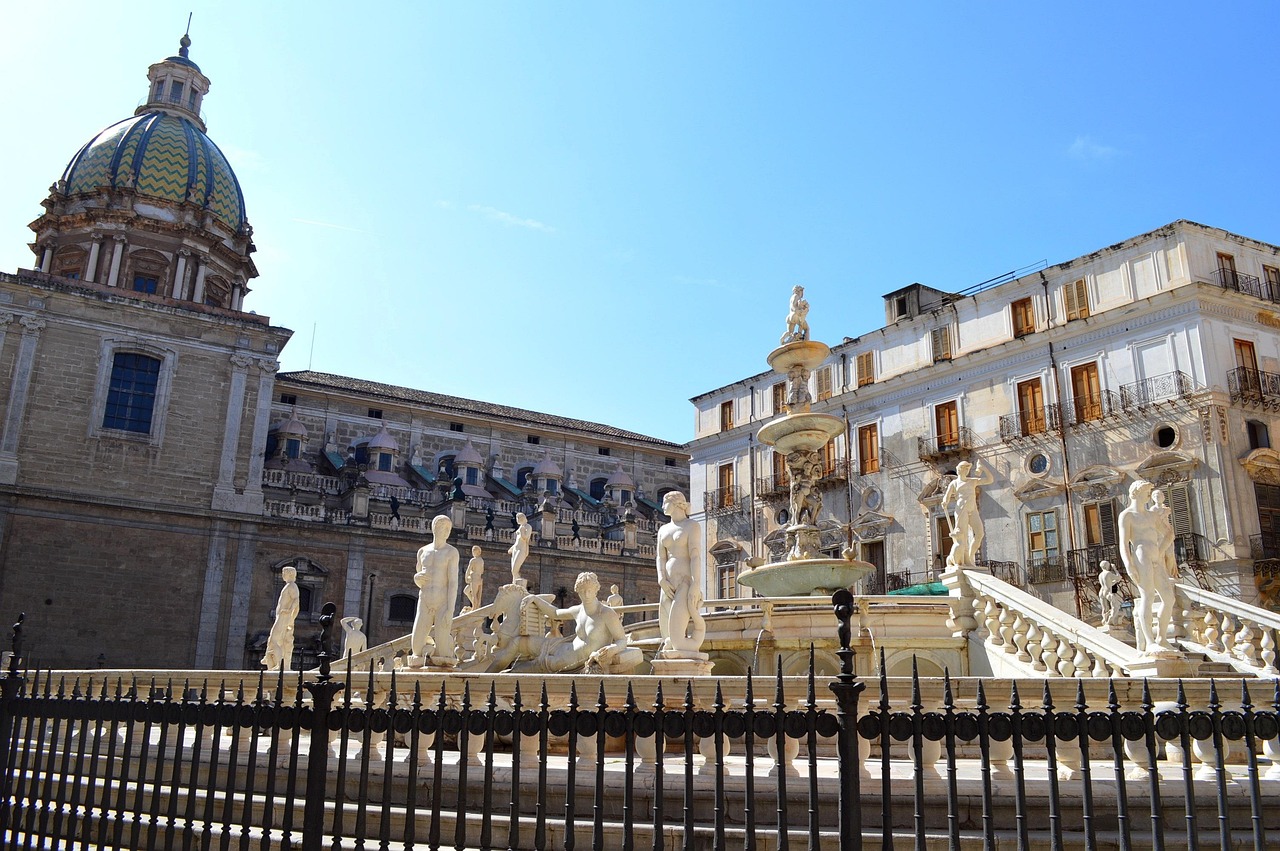
Duck into Chiesa di Santa Caterina next door. The church’s interior is a Baroque sugar explosion, and the convent bakery in the cloister sells traditional desserts made from ancient recipes. My personal ritual: a slice of cassata and a coffee in the quiet cloister while the city hums outside.
Midday: Ballarò Market
From Piazza Pretoria, wander 10 minutes to Mercato di Ballarò, Palermo’s loudest, rawest, and most beloved street market.
I still remember my first time here years ago, overwhelmed by the vendors singing their offers in Sicilian, piles of swordfish, pyramids of tomatoes, fried snacks sizzling in giant pans. This is where you should start your education in local food in Palermo:
- Pane e panelle – chickpea fritters in bread, cheap and addictive.
- Arancine – rice balls stuffed with ragù or butter and ham.
- Crocchè – potato croquettes, often eaten with panelle in the same sandwich.
Tip: ask for “un panino misto” and let the vendor decide the mix. Expect to pay a few euros and to leave completely full.
Afternoon: Palermo Cathedral & Rooftop Views
Walk up Via Maqueda or Via Vittorio Emanuele to the monumental Palermo Cathedral.
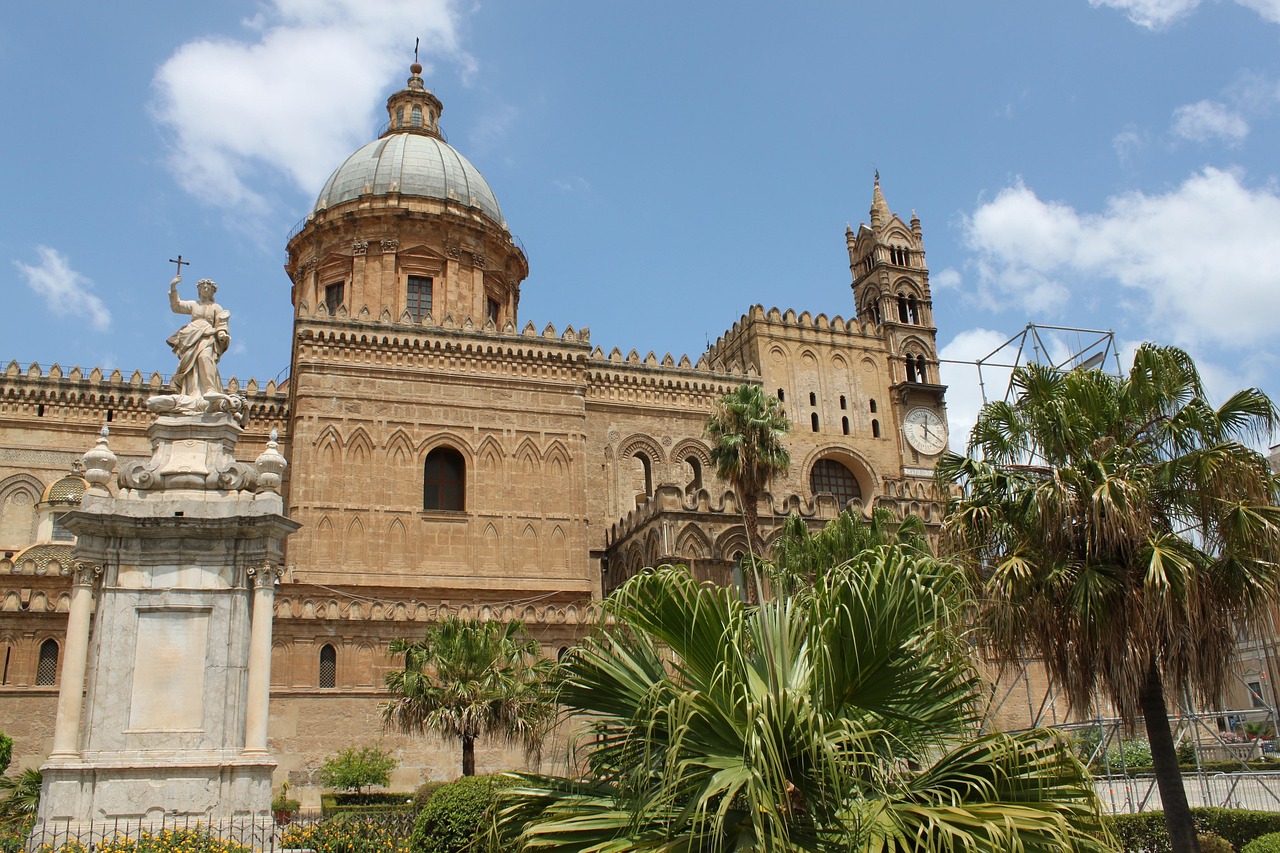
This cathedral is a visual summary of the city’s history: Norman foundations, Gothic arches, Baroque details, Neoclassical touches. Inside, you’ll find royal tombs, including Emperor Frederick II. But my favorite part is the rooftop walk. Climb up (modest extra fee, but worth it) and stroll along the terraces for one of the best views of Palermo: terracotta roofs, domes, and the mountains framing the city.
Evening: Aperitivo & Dinner in the Old Town
For your first evening, stay central. I like finding an outdoor table somewhere along Via Maqueda or near Piazza Bellini, ordering a spritz or a glass of local Grillo wine, and people-watching as the city’s night shift wakes up.
For dinner, try a traditional trattoria in the Kalsa district (we’ll talk more about neighbourhoods later). Order a plate of pasta con le sarde (pasta with sardines, fennel, pine nuts, and raisins) and grilled local fish. Don’t be shy about asking what’s fresh; Palermitani are proud of their seafood.
Day 2: Palaces, Cappella Palatina & Kalsa by Night
Morning: Palazzo dei Normanni & Cappella Palatina
On your second day, start early at Palazzo dei Normanni (Norman Palace), home to the Cappella Palatina, one of Europe’s most astonishing chapels.
Arrive around opening time to avoid queues. The Cappella Palatina is small but absolutely packed with gold mosaics – scenes from the Bible rendered in shimmering Byzantine style under an intricate wooden ceiling with Arabic muqarnas. I’ve visited half a dozen times and still find new details in the mosaics every visit.
Take your time: sit on a pew, let your neck ache a little from staring up, and imagine the cultural fusion that built this place: Arab craftsmen, Byzantine mosaicists, Norman kings.
Midday: San Giovanni degli Eremiti & Lunch
From the palace, it’s a short walk to San Giovanni degli Eremiti, famous for its cluster of red domes and peaceful cloister garden.
In spring, the garden explodes with bougainvillea; in summer, it’s a rare patch of shade. This is a good spot to slow down, especially if you’re traveling with kids who need a breather.
For lunch, I often stop at a simple trattoria nearby for anelletti al forno (ring-shaped baked pasta) or a plate of caponata (Sicilian sweet-and-sour eggplant). Portions are generous; sharing is wise.
Afternoon: Strolling Via Vittorio Emanuele & Churches
Spend the afternoon wandering Via Vittorio Emanuele, ducking into whichever churches catch your eye. Two I always recommend:
- Martorana (Santa Maria dell’Ammiraglio) – famous for its blend of Byzantine mosaics and later Baroque additions.
- San Cataldo – iconic three red domes and austere interior that feels almost monastic.
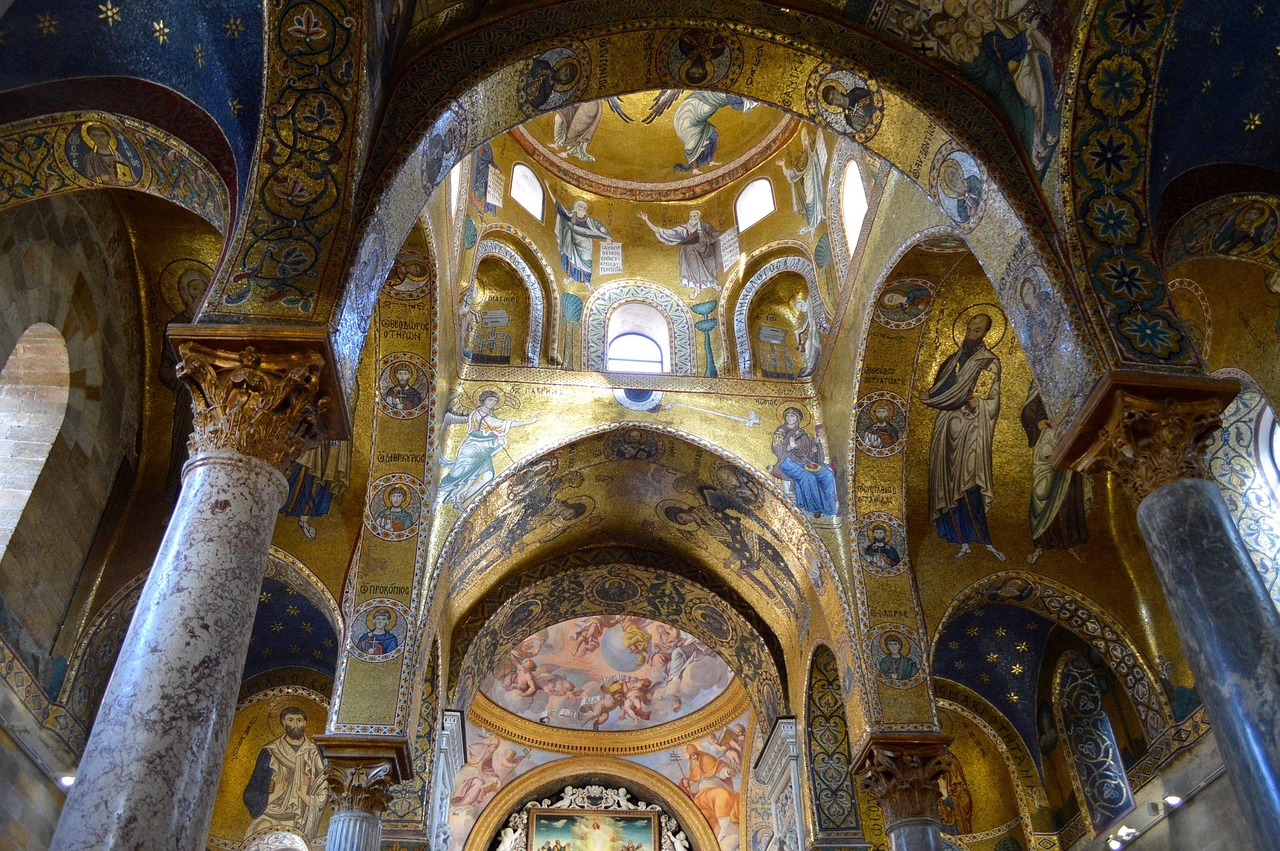
Buy a multi-church ticket if available; it usually saves a few euros and covers several major sites.
Evening: Kalsa, La Cala & Seafood Dinner
For your second night, head to the Kalsa district and down towards La Cala, the old harbor. In the last years, this area has transformed from neglected to lively, with bars and restaurants lining the marina.
Have aperitivo overlooking the boats, then wander into the narrow streets of Kalsa for dinner. This is a romantic area in the evening, especially for couples: lantern-lit courtyards, peeling palazzi, and unexpected art galleries. It’s also surprisingly family-friendly early in the evening, when kids play football in the piazzas.
Day 3: Mondello Beach or Monreale + Evening Street Food Tour
Option A: Mondello Beach (Relaxing & Family-Friendly)
If the weather is warm (late spring to early autumn), dedicate your third day to the sea at Mondello, Palermo’s city beach.
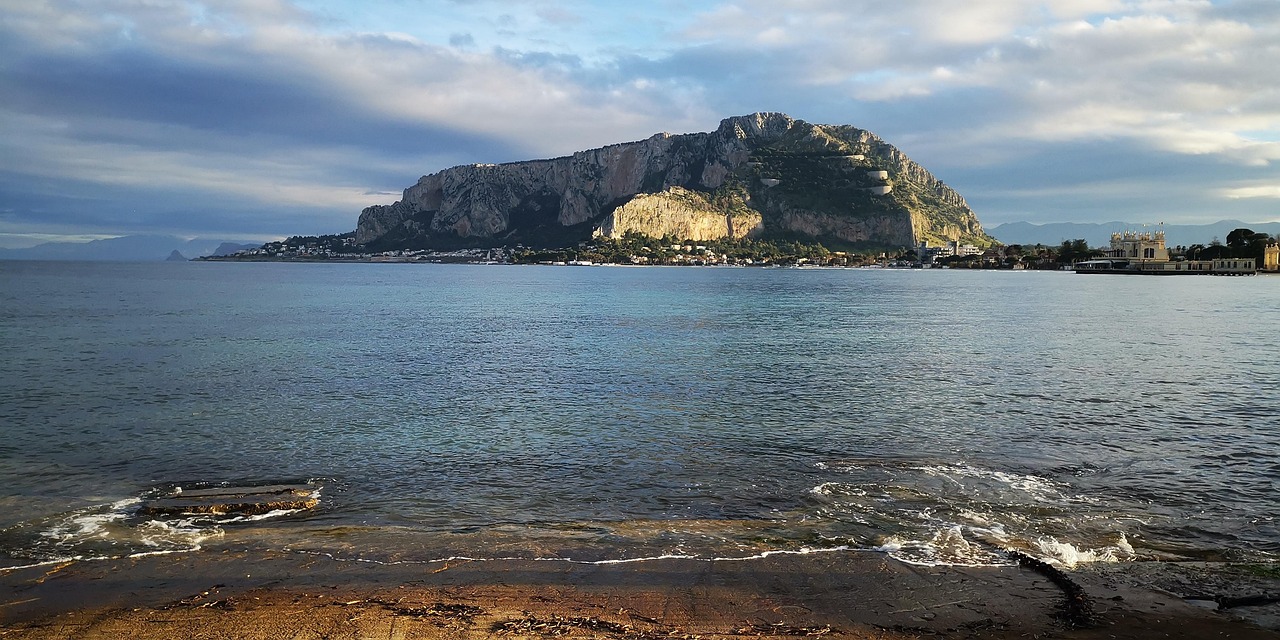
Take bus 806 from Piazza Sturzo or a rideshare. The ride can be busy in peak season, so go early. Once there, you’ll find shallow, turquoise water perfect for kids, Art Nouveau villas, and beach clubs renting sunbeds and umbrellas. I usually alternate between a paid lido (for comfort) and the free public sections (for people-watching).
Lunch on the promenade: grilled fish, seafood salad, or a simple panino with panelle. Don’t skip a gelato break.
Option B: Monreale (Art & Panoramic Views)
If you prefer culture over sand, head to Monreale, a hilltop town overlooking Palermo, famous for its cathedral.
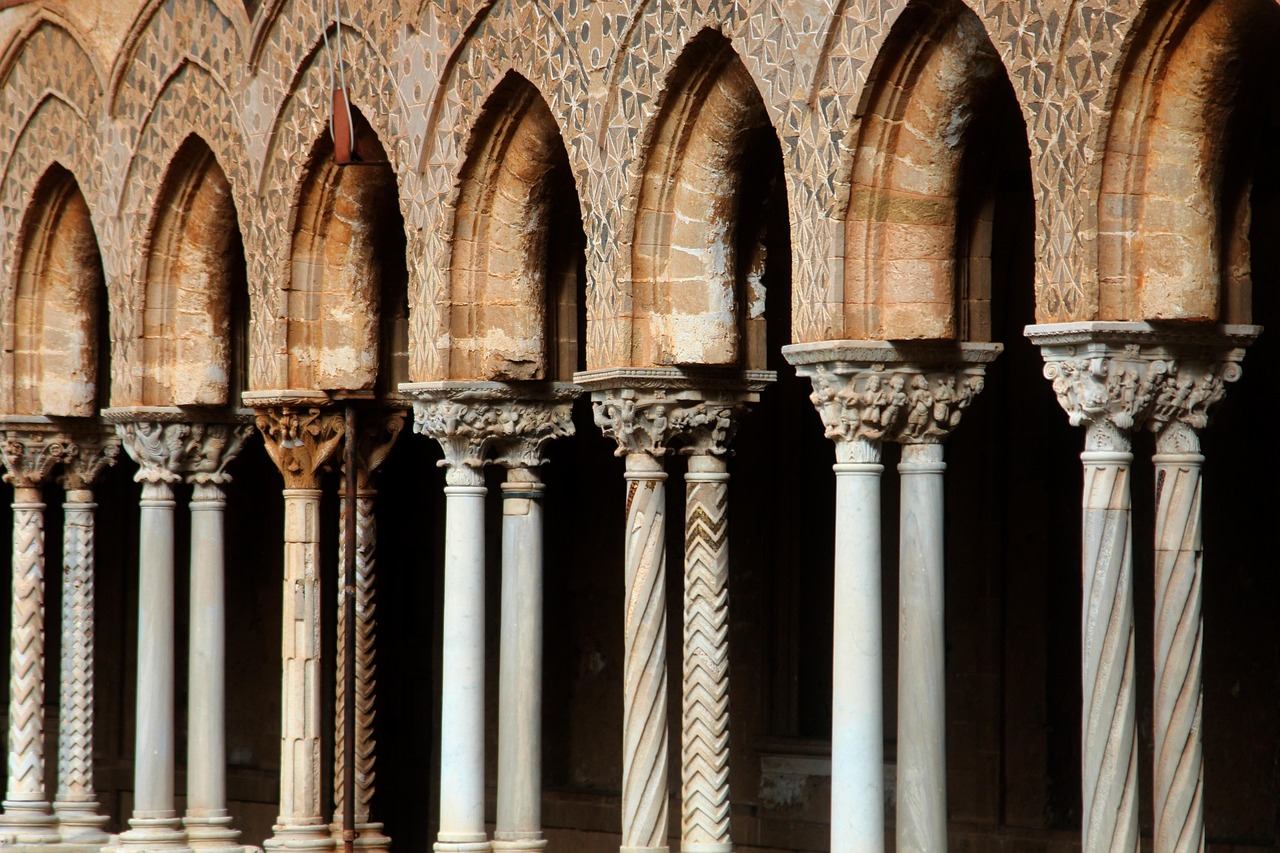
Take bus 389P from Piazza Indipendenza or a taxi if you’re short on time. The Monreale Cathedral rivals Cappella Palatina in beauty: vast golden mosaics covering walls and ceilings, telling biblical stories in shimmering detail. The cloister is one of my favorite places in Sicily – delicate columns, each carved differently, wrapped around a silent garden.
After visiting, grab lunch in town (many places serve solid, home-style Sicilian food) and enjoy the view over the Conca d’Oro valley. On clear days, you can see all the way to the sea.
Evening: Street Food & Nighttime Stroll
On your last night of a 3 day itinerary for Palermo, dive into the city’s street food one more time. I like to join a guided street food tour that covers Vucciria and surrounding streets – it’s a fun way to sample adventurous bites (like stigghiola, grilled intestines) with context and safety.
End with a slow stroll back along Via Maqueda, now fully pedestrianized and lively into the night.
4 Day Itinerary for Palermo (Add Monreale or Mondello)
With 4 days in Palermo, follow the 3-day itinerary above and add whichever Day 3 option you didn’t take: Mondello or Monreale. Use your extra time to wander less-visited corners like the Capo market, the Zisa district, or a deeper dive into museums.
5 Day Itinerary for Palermo (Slow Travel & Day Trips)
With 5 days in Palermo, you can really relax. Combine the 3 days in Palermo core itinerary with:
- A full day in Mondello and an afternoon in Monreale.
- One day trip (Cefalù, the Aeolian Islands, or Segesta).
- Slower exploration of neighbourhoods like Albergheria, Kalsa, and the modern Politeama area.
We’ll talk about day trips in detail below.
Neighbourhoods & Districts to Explore in Palermo
Palermo’s magic lies not only in its must-see attractions but also in its distinct neighbourhoods. Here’s how I think of them, based on countless stays in different parts of the city.
Centro Storico (Historic Center)
This is the dense web of streets around Quattro Canti, the Cathedral, and the big markets. It’s where most first-timers stay, and for good reason: you can walk everywhere, and you wake up to the sound of church bells and market sellers.
Kalsa
The Kalsa district is one of my personal favorites. Once an Arab quarter, it’s now a mix of crumbling palazzi, hip bars, small galleries, and locals hanging laundry from balconies. At night, Kalsa is lively but less touristy than the streets around Via Maqueda. For couples, it’s a wonderfully atmospheric base; for families, look for apartments on quieter side streets.
Albergheria
Home to Ballarò market and many university buildings, Albergheria feels very local and slightly rough around the edges. I usually stay here when I want to be close to the markets and don’t mind late-night noise. It’s an excellent area for budget travelers and food lovers.
La Loggia / Vucciria
This area around Vucciria market is famous for its nightlife – street bars, live music, late-night snacks. It can be noisy until the early hours. Stay here if you’re after nightlife; avoid if you’re a light sleeper or traveling with small kids.
Politeama & Libertà
North of the old town, this is Palermo’s more “modern” side: wide boulevards, boutiques, and residential buildings. It’s less atmospheric but more orderly. I like staying near Piazza Politeama when I want easy airport bus access and quieter nights.
Mondello
A seaside suburb about 20–30 minutes from the center, Mondello is ideal if your vision of Sicily involves waking up near the beach. In high season, it’s crowded and festive; in shoulder seasons, it’s calm and almost dreamy. With 5 days in Palermo, a split stay (city + Mondello) can be perfect.
20 Must-See Attractions in Palermo (In Depth)
Below are twenty of the best places to visit in Palermo, each with a mini-article including history, significance, and personal tips. These are the anchors around which you can build any 3–5 day itinerary for Palermo.
1. Palermo Cathedral (Cattedrale di Palermo)
The Cathedral is Palermo’s architectural time capsule. Started in the 12th century, it has absorbed so many styles – Norman, Gothic, Baroque, Neoclassical – that walking around it feels like flipping through a history book.
Inside, I always visit the royal tombs: the sarcophagus of Frederick II is particularly impressive. Don’t miss the treasury, where you can see precious relics and jewels, including the crown of Constance of Aragon.
My routine: I usually come mid-morning, visit the interior and tombs first, then save the rooftop terraces for last. The climb is via a narrow staircase, but the reward is a 360-degree panorama over the city and mountains. It’s one of the most photogenic spots in Palermo; perfect for skyline shots.
Tips:
- Dress modestly (shoulders covered, no very short shorts) – they sometimes enforce this in peak season.
- Buy the combined ticket that includes rooftops, tombs, and treasury; it’s better value than separate entries.
- Morning light is best for photos of the façade; late afternoon is magical from the rooftops.
2. Palazzo dei Normanni & Cappella Palatina
The Norman Palace is Europe’s oldest royal residence still in use, now housing the Sicilian Regional Assembly. But the real star is the Cappella Palatina, the royal chapel built in the 12th century.
Every time I enter, the gold of the mosaics feels almost overwhelming. You’re wrapped in scenes of creation, prophets, and saints; the floor is inlaid with intricate marble; the ceiling is a masterpiece of Islamic-style carved wood. It’s a rare, tangible reminder of when cultures cooperated to produce something transcendent.
Tips:
- Check opening hours in advance; parts of the palace may close when parliament is in session.
- Book tickets online in peak months (May–September) to avoid long waits.
- Allow at least 1.5–2 hours; you’ll want time to sit and take it in.
3. Quattro Canti (Piazza Vigliena)
Quattro Canti is the Baroque “theater” of Palermo: four curved façades facing each other at the intersection of the city’s two main streets. Each side represents a season, a Spanish king, and a patron saint of Palermo.
I often pass through this square half a dozen times a day. One evening last year, a violinist set up in the center and played as golden hour lit up the stone – a reminder that Palermo’s beauty often comes with a soundtrack.
Tips: Come early morning for photos with minimal crowds, then again at night when the façades glow under streetlights.
4. Fontana Pretoria
This extravagant 16th-century fountain sits in Piazza Pretoria, just a few steps from Quattro Canti. When it was installed, locals were scandalized by the nude statues and nicknamed it the “Fountain of Shame.” Today, it’s one of Palermo’s most photogenic spots.
I like coming here in the late afternoon, when kids climb around the edges and local teenagers lean against the balustrade gossiping. It feels like a living stage set.
5. Martorana & San Cataldo
These two churches share the same square but offer very different moods. Martorana dazzles with Byzantine mosaics and Baroque frescoes; San Cataldo is austere, with its famous three red domes and simple stone interior.
On one winter trip, I ducked into San Cataldo during a sudden rainstorm. The sound of rain outside, the cool stone, and the smallness of the space made it feel like a sanctuary from time, not just weather.
Tip: Get the combined ticket that covers several churches in the area; it’s cheaper and encourages you to see more than you might otherwise.
6. Ballarò Market
Mercato di Ballarò is Palermo at its most vivid: vegetables piled like color explosions, fish laid out on crushed ice, scooters weaving through shoppers, vendors singing their prices in dialect.
Over the years, I’ve seen Ballarò become slightly more polished but it’s still very real – you’ll see students, families, and grandmothers doing their actual shopping alongside visitors.
What to eat:
- Pane e panelle – ask for it hot.
- Pane ca’ meusa (spleen sandwich) – for adventurous eaters; rich and intense.
- Fresh fruit cups or pomegranate juice in season.
Tips:
- Go in the morning for full activity; afternoons are quieter.
- Keep an eye on your belongings; it’s busy and pickpockets know it.
- Don’t haggle aggressively over tiny amounts; this isn’t a tourist bazaar. Respect the vendors’ work.
7. Vucciria Market
Vucciria used to be Palermo’s primary food market; now it’s more of a nightlife hub with a few daytime stalls and lots of street art. At night, bars spill onto the street, music plays, and locals mix with visitors at plastic tables packed into tiny alleys.
I think of Vucciria as Palermo’s outdoor living room. It’s not polished, but that’s the point. This is where I end up at 1am eating grilled octopus or a last-minute arancina I absolutely don’t need.
Tip: Come by day to see the famous “La Vucciria” painting (when on display) and the neighborhood’s murals; come back at night if you enjoy crowds and noise.
8. Capo Market
Smaller than Ballarò but equally atmospheric, Capo Market runs behind the Teatro Massimo area. I often come here when I want something a bit calmer but still local.
You’ll find spices, olives, fish, and stalls selling ready-to-eat treats. A favorite memory: a vendor insisting I taste three different types of sun-dried tomatoes “so I could learn the difference,” then refusing extra payment because “it’s culture, not merchandise.”
9. Teatro Massimo
Teatro Massimo is one of Europe’s largest opera houses and a symbol of Palermo’s cultural ambitions. Its grand staircase and neoclassical façade are instantly recognizable (film buffs will recall its role in “The Godfather Part III”).
I always recommend the guided tour: you’ll see the gilded auditorium, rehearsal rooms, and maybe catch a glimpse of stage sets being prepared. If you can, book tickets to an opera, ballet, or concert; the acoustics are marvelous.
Tip: Dress smart-casual for performances. You don’t need black tie, but locals do make an effort.
10. Kalsa District & Piazza Marina
The Kalsa district is one of Palermo’s oldest neighbourhoods, once the seat of Arab emirs. Today, it’s an irresistible mix of history and bohemian energy: ivy-covered palazzi, art galleries, bars, and small restaurants.
At the heart of Kalsa is Piazza Marina, with its shady Giardino Garibaldi and enormous ficus trees whose roots look like something from a fantasy novel. On Sundays, there’s often an antique and flea market here where I’ve lost whole mornings browsing old postcards and vintage jewelry.
11. Catacombs of the Capuchins (Catacombe dei Cappuccini)
This is one of Palermo’s most macabre and unforgettable attractions. In the Catacombe dei Cappuccini, thousands of mummified bodies line the walls, dressed in their Sunday best, some dating back centuries.
The first time I visited, I was prepared for horror. Instead, it felt strangely peaceful, a stark but honest confrontation with mortality. It’s not for everyone, and I wouldn’t bring young children, but it is a powerful cultural site.
Tips:
- Photography is usually forbidden; respect the rules.
- Dress modestly; this is a religious site.
- It’s a bit outside the center; bus or taxi is easiest.
12. San Giovanni degli Eremiti
Those red domes are one of Palermo’s postcard images, but the real treasure here is the cloister garden. Overgrown in the best way, draped with flowers in spring, it’s a quiet break from the city noise. I often bring a takeaway coffee and sit here between bigger sightseeing stops.
13. Monreale Cathedral & Cloister
Technically outside Palermo, but so essential I count it as part of any complete travel guide for Palermo. Built in the 12th century, the Monreale Cathedral is clad in golden mosaics that cover over 6,000 square meters. The Christ Pantocrator in the apse is mesmerizing.
The cloister, with its twin columns and carved capitals, is a photographer’s dream. I like to walk the perimeter slowly, zooming in on the small carved scenes – some sacred, some surprisingly playful.
14. Mondello Beach
When Palermitani need to breathe, they go to Mondello. The bay is shallow, with clear turquoise water and a backdrop of Monte Pellegrino. At the center stands an elegant Art Nouveau building on stilts, once a luxury bathing establishment, now a landmark.
On summer weekends, it’s crowded and energetic – perfect if you want to feel part of local life. For a quieter experience, come on a weekday or in late September.
15. Foro Italico & Waterfront Promenade
The Foro Italico is a long seafront lawn and promenade where locals walk dogs, jog, or sit on the rocks watching the waves. In recent years, Palermo has invested more in its waterfront, and by 2026 the promenade feels more polished but still informal.
I like coming here around sunset with a takeaway gelato, watching couples, families, and teenagers all sharing the same open space. It’s a reminder that in Palermo, the sea is always near, even if the city center feels urban.
16. Palazzo Chiaramonte Steri
Palazzo Steri is a medieval palace on Piazza Marina with a dark history: it served as the headquarters of the Spanish Inquisition. On guided tours, you’ll see prisoner graffiti in the cells – drawings, prayers, names scratched into the walls centuries ago.
It’s haunting but also fascinating, and it adds a deeper layer to the otherwise charming Kalsa area.
17. Oratory of the Rosary of Santa Cita & San Domenico
For art lovers, the small Oratorio del Rosario di Santa Cita is a hidden gem. The interior is lined with extraordinary white stucco figures by Giacomo Serpotta, swirling and almost alive. Nearby, the Church of San Domenico is an imposing Baroque space often used for important ceremonies.
I stumbled into Santa Cita by accident on a scorching afternoon and ended up staying almost an hour, mesmerized by the details. It’s rarely crowded, making it a lovely, contemplative stop.
18. La Zisa
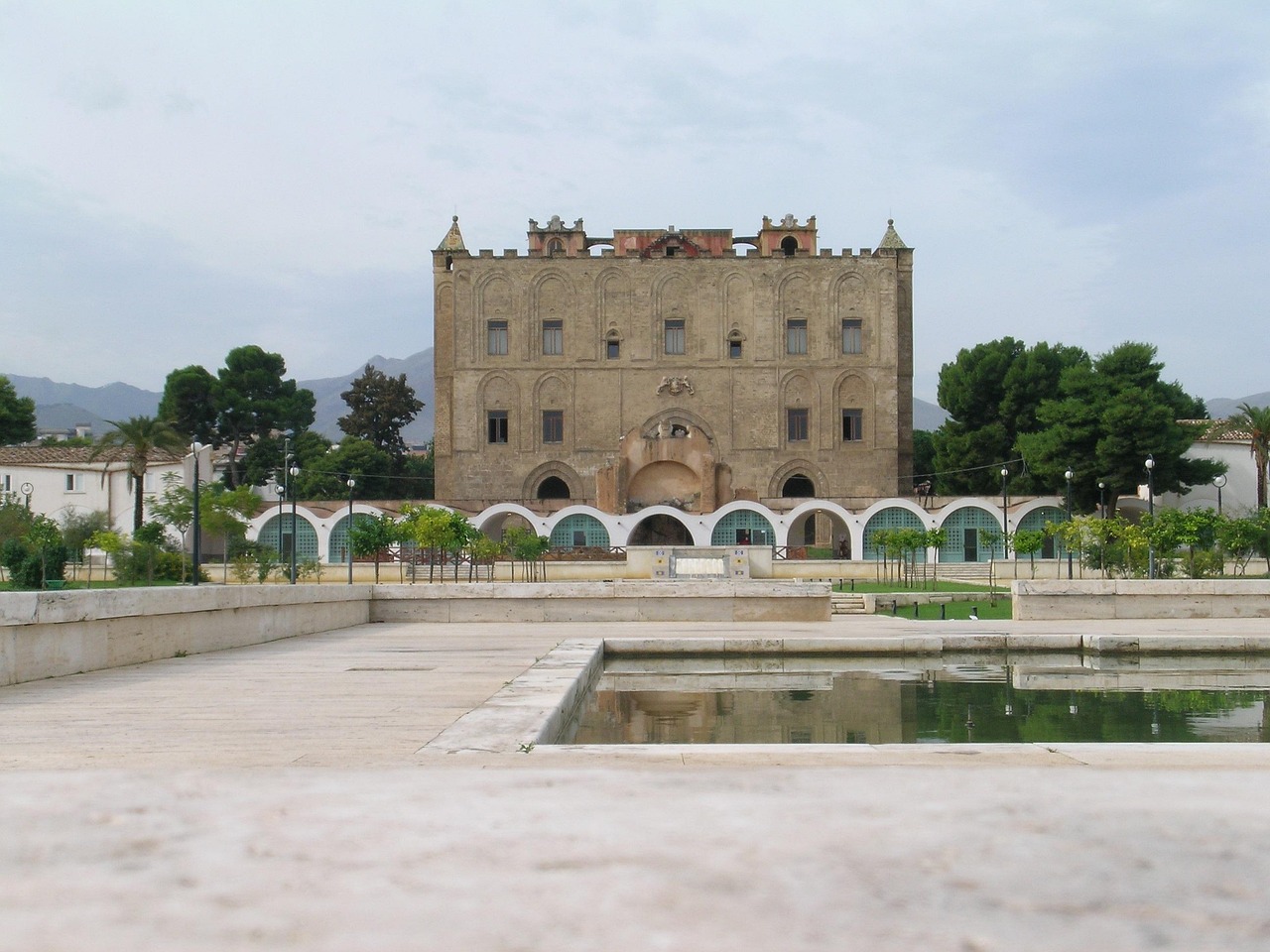
La Zisa is a former royal summer residence in Arab-Norman style, slightly outside the main tourist core. Its name derives from the Arabic “al-Aziz” (the splendid). Inside, you’ll find cooling halls, Islamic-inspired decorations, and a small garden with water channels.
It’s part of the Arab-Norman Palermo UNESCO site, but far less visited than the Cathedral or Cappella Palatina. I like coming here when I want a quieter, more meditative dose of history.
19. Regional Archaeological Museum (Museo Archeologico Regionale Antonino Salinas)
If you’re curious about Sicily’s deeper past, from Phoenicians to Greeks and Romans, this museum is a treasure chest. The courtyard alone, with its cloister and scattered statues, is worth a visit.
On one particularly hot August afternoon, I spent three blissful, air-conditioned hours here learning about ancient Selinunte and Motya, then emerged into the evening feeling like I’d time-traveled.
20. Monte Pellegrino & Sanctuary of Santa Rosalia
Monte Pellegrino is the mountain you see in so many skyline images of Palermo. Locals call it “the most beautiful promontory in the world,” echoing Goethe. At its summit stands the Sanctuary of Santa Rosalia, patron saint of Palermo, built into a cave.
You can hike up (a popular pilgrimage route), drive, or take a bus. At the top, you’ll get sweeping views of the city and sea. It’s one of my favorite sunset spots.
Local Food in Palermo & Where to Eat
Palermo is one of Europe’s great street food capitals. Eating here is half the experience of visiting. Over the years, I’ve developed a small list of must-try dishes and reliable spots.
Must-Try Dishes
- Arancine – Fried rice balls (note the feminine form “arancina” in Palermo). Try ragù (meat), burro (ham & cheese), or seasonal specials.
- Pane e panelle – Chickpea fritters in a bun, often with crocchè (potato croquettes).
- Pane ca’ meusa – Spleen sandwich, often finished with lemon or cheese; intense but beloved.
- Pasta con le sarde – Pasta with sardines, wild fennel, pine nuts, raisins, and often breadcrumbs.
- Caponata – Sweet-and-sour eggplant stew; every nonna has her own version.
- Sarde a beccafico – Stuffed sardines rolled with breadcrumbs, pine nuts, and raisins.
- Cannolo – Crispy pastry tube filled with ricotta cream; ask for it filled on the spot.
- Granita & brioche – Slushy fruit or coffee ice eaten with a soft brioche bun, especially for breakfast in hot months.
Where to Eat (Personal Favorites)
Because places can change quickly, always check recent reviews, but here are types of places and areas I gravitate toward:
- Street food: Stalls in Ballarò, Capo, and Vucciria; dedicated friggitorie (fried food shops) around Via Maqueda.
- Traditional trattorie: In Kalsa and near Piazza San Domenico, look for short menus, handwritten daily specials, and locals inside.
- Seafood: Around La Cala harbor and in Mondello, where fresh catch is usually excellent.
- Pastry & gelato: Historic pastry shops near Teatro Massimo and around Via Roma; gelaterie in Politeama area and along Via Libertà for evening strolls.
Saving Money on Food
- Eat your main meal at lunch; many places have cheaper lunch menus.
- Street food dinners can easily stay under €10–€12 per person.
- Order house wine (vino della casa) by the carafe – usually good and inexpensive.
- Avoid restaurants with overly touristy menus translated into ten languages and staff aggressively beckoning you in.
Nightlife & Cultural Experiences in Palermo
Palermo at night is social rather than clubby. The best cultural experiences in Palermo after dark involve piazzas, open-air bars, and late dinners.
Evening Passeggiata
Join locals for the passeggiata (evening stroll) along Via Maqueda, Via Ruggero Settimo, or Via Libertà. Families, teenagers, and elderly couples all walk side by side, often with ice creams in hand.
Bars & Aperitivo
- Vucciria & La Loggia: Lively street bars, cheap drinks, young crowd.
- Kalsa: More relaxed bars and wine spots, some with live music.
- Politeama: Slightly more upscale cocktail bars and wine bars.
Performing Arts
- Teatro Massimo: Opera, ballet, and concerts year-round.
- Teatro Politeama: Symphonic concerts and shows.
- Smaller theatres and cultural centers around Kalsa and the historic center frequently host plays, jazz, and contemporary performances.
Family-Friendly Evenings
Many piazzas become safe, car-free playgrounds in the evening. Piazza Marina, Piazza Bellini, and small squares in Kalsa often have kids playing late into the night – a very Sicilian scene.
Best Day Trips from Palermo
With 4 or 5 days in Palermo, you can easily add a day trip. Here are a few of my go-to recommendations.
Cefalù
A charming seaside town about an hour by train from Palermo. Perfect for a mix of beach time, medieval streets, and a stunning Norman cathedral with mosaics. Climb La Rocca for a panoramic view if you’re up for a hike.
Segesta
Home to an ancient Greek temple and hillside theatre with sweeping views. Best reached by bus or car; combine with nearby hill towns if driving.
Aeolian Islands (long day or overnight)
In summer, organized day trips sometimes run from Palermo to the Aeolian Islands, especially Vulcano and Lipari. I personally recommend an overnight stay if possible – sunsets and quiet mornings are magical there.
Events & Festivals in Palermo 2026–2027
Palermo loves a good festa. If you can, time your visit to catch one of these:
- Festa di Santa Rosalia (July 10–15, annually): The city’s biggest celebration, honoring its patron saint. Expect processions, fireworks, street food stalls, and concerts. In 2026, additional cultural events are planned around the 400+ years of devotion to Santa Rosalia.
- Palermo Pride (early summer 2026 & 2027): Colorful parades and cultural events celebrating LGBTQ+ communities.
- Manifesta legacy projects: Since hosting Manifesta in 2018, Palermo has continued to develop contemporary art events and exhibitions, many of which continue in 2026–2027 in Kalsa and the harbor area.
- Settimana delle Culture (Culture Week): Usually in spring, a week of exhibitions, concerts, and open-doors at palazzi not normally accessible.
- Christmas & New Year 2026–2027: Nativity scenes, lights in the historic center, and public concerts in main squares.
Local Customs & Cultural Etiquette in Palermo
Understanding local customs in Palermo makes your trip smoother and more respectful.
Greetings & Politeness
- Say Buongiorno (good morning) or Buonasera (good evening) when entering shops or cafés.
- Per favore (please) and Grazie (thank you) go a long way.
- Handshakes are common with strangers; cheek kisses are for friends and family.
Dining Etiquette
- It’s normal to linger over meals; you won’t be rushed out.
- Ask for the bill: Il conto, per favore. It won’t appear automatically.
- Tipping is appreciated but not mandatory – rounding up or leaving 5–10% for good service is fine.
Dress & Behavior
- Dress modestly in churches (covered shoulders, no very short shorts).
- Topless sunbathing is not common on public beaches.
- Palermo is expressive and loud; don’t confuse volume with anger.
Practical Travel Tips for Palermo
When to Go & Seasons
- Spring (April–June): Ideal for sightseeing; warm but not too hot, wildflowers in full bloom.
- Summer (July–August): Hot and humid; best if you plan lots of beach time. City can feel sticky mid-day.
- Autumn (September–October): My favorite; sea still warm, crowds thinner, temperatures pleasant.
- Winter (November–March): Mild but can be rainy; fewer tourists, lower prices, good for cultural trips.
Getting Around
- Walking: The historic center is compact; you’ll walk most places.
- Buses: AMAT buses cover the city. Tickets available at kiosks, tobacconists, or via app; validate when boarding.
- Airport transfer: Bus from the airport to Politeama/central area, or the train to Palermo Centrale.
- Taxis & rideshare: Use official taxis or reputable apps; confirm approximate price before starting.
Car Rental & Driving
Driving in central Palermo can be stressful: narrow streets, limited ZTL (restricted zones), and assertive local driving. For a short stay focused on the city, I don’t recommend a car. For wider day trips (Segesta, inland villages), rent a car but keep it parked outside the crowded core.
Foreign driver’s licenses from many countries (including EU, UK, US, Canada, Australia) are generally accepted for short stays; check if you need an International Driving Permit depending on your nationality and rental company policies.
Money-Saving Tips
- Stay in apartments with kitchens and shop at markets for some meals.
- Use public buses and trains instead of taxis when possible.
- Look for combo tickets for churches and museums.
- Drink tap water; it’s generally safe, and fountains in some areas are drinkable (check signage).
SIM Cards & Connectivity
For 2026, main Italian providers (TIM, Vodafone, WINDTRE, Iliad) all offer tourist-friendly prepaid plans with generous data. You can:
- Buy a physical SIM at provider shops in the center or at the airport (bring passport).
- Use an eSIM if your phone supports it; some providers let you activate online before arrival.
Safety
Palermo feels generally safe, especially in main areas. Standard city precautions apply:
- Watch bags and phones in markets and on buses.
- Avoid poorly lit backstreets late at night if alone.
- Keep valuables at your accommodation; carry only what you need.
Visa Requirements
Italy is part of the Schengen Area. For 2026:
- EU/EEA/Swiss citizens can travel freely with ID.
- Citizens of many countries (e.g., US, Canada, UK, Australia, New Zealand, Japan) can enter visa-free for short stays (usually up to 90 days) but may be subject to updated ETIAS requirements when implemented; check the latest rules before travel.
- Others may need a Schengen visa in advance; contact your local Italian consulate for specifics.
Hidden Tips from Many Visits
- Start early: Visit major sights (Cappella Palatina, Cathedral rooftops, Ballarò) at opening time to beat both sun and crowds.
- Siesta hours: Many small shops close mid-afternoon; use this time for long lunches, museums, or a nap.
- Carry coins: Useful for bus tickets, small coffees, and tipping street musicians or church donation boxes.
- Ask locals: Palermitani love giving advice on where to eat or what to see; you might discover your favorite hidden trattoria this way.
Summary & Final Recommendations
Palermo in 2026 is a city in full voice: historic, messy, luminous, and increasingly confident on the European cultural stage. Whether you spend 3 days in Palermo, plan a more relaxed 4 day itinerary for Palermo, or indulge in a 5 day itinerary for Palermo with day trips, the city will reward you if you slow down and let it in.
Build your days around a mix of must-see attractions in Palermo (the Cathedral, Cappella Palatina, Monreale), everyday street life (markets, piazzas, waterfront), and cultural experiences in Palermo (theatre, festivals, neighbourhood wandering). Eat widely, from street stalls to family-run trattorie. Respect local customs, and you’ll feel less like a visitor and more like a temporary Palermitana or Palermitano.
Best times to visit Palermo: Late April–June and September–October for the ideal blend of weather, crowds, and open attractions. Summer is wonderful if you prioritize beaches and don’t mind heat; winter is calm and atmospheric for culture-focused trips.
Every time I leave Palermo, I carry a little of its chaos and warmth with me – the glow of mosaics, the shout of market vendors, the taste of late-night arancine. I hope this guide helps you craft your own story here.