Why Visit Trieste in 2026
Trieste (Trieste in Italian, Trst in Slovene) is the city that Italians whisper about when they don’t want the crowds to hear. Wedged between the Adriatic Sea and the limestone cliffs of the Karst plateau, right on the border with Slovenia, it feels like a crossroads where empires once shook hands: Italian flair, Habsburg elegance, Slavic soul, and Balkan warmth all in one windy, coffee-scented city.
I’ve been coming back to Trieste regularly for more than a decade—long weekends, lazy summers, rainy winter coffee crawls—and every time I arrive at Piazza Unità d’Italia and see the sea licking the edge of the square, I get the same rush: how is this place still so under the radar?
In 2026, Trieste is especially worth your time: the city is investing in its waterfront, the cultural calendar is packed, and the food scene is quietly exploding with neo-trattorias and natural-wine bars tucked into Habsburg-era streets.
What Makes Trieste Special
- Austro-Italian atmosphere: Think Vienna on the sea: grand cafés, Secessionist facades, and elegant promenades—plus Italian gelato, aperitivo, and golden Adriatic light.
- Coffee capital of Italy: Illy was born here, and Trieste is still the beating heart of Italy’s coffee trade. Locals have a unique coffee vocabulary you won’t find anywhere else.
- Wild coastline minutes from the city: You can hop from piazzas to rocky coves, castle-topped cliffs, and seaside bars in a 15–20 minute bus ride.
- Real borderland culture: You’ll see Italian, Slovenian, Friulian, and even traces of Croatian and German influences in food, language, and customs.
- Low-key and authentic: Trieste still feels like a working city, not a theme park. You’ll share the streets with students, ship workers, and retirees walking tiny dogs along the Rive.
Why Consider 3–5 Days in Trieste
If you’re planning 3 days in Trieste, you can comfortably see the major sights and get a feel for the city’s café culture. With 4 days in Trieste, you can add a coastal castle, a karst village, and maybe a cave. With 5 days in Trieste, you have enough time to slow down, wander neighborhoods, and take a full day trip into wine country or over the border into Slovenia.
Table of Contents
- Why Visit Trieste
- Suggested 3–5 Day Itineraries (with Personal Stories)
- 20 Must-See Attractions in Trieste (In-Depth)
- Neighborhoods & Areas to Explore
- Local Food & Drink: What and Where to Eat
- Nightlife, Entertainment & Cultural Experiences
- Day Trips & Nearby Attractions
- Cultural Etiquette & Local Customs
- Practical Travel Tips for Trieste (2026–2027)
- Major Events & Festivals 2026–2027
- Summary & Best Seasons to Visit
Suggested Itineraries: 3–5 Days in Trieste
These itineraries are built from trips I’ve actually done—some solo, some with friends, one with my parents in tow. Use them as flexible blueprints whether you’re planning a 3 day itinerary for Trieste, a 4 day itinerary for Trieste, or a full 5 days in Trieste.
Overview: How Many Days in Trieste?
- 3 days in Trieste: Historic center, waterfront, Miramare Castle, Carso cliffs, and a taste of local food.
- 4 days in Trieste: Add Grotta Gigante or Škocjan Caves, more neighborhood wandering, and an extra museum or two.
- 5 days in Trieste: Add a full day trip (Collio wine region, Muggia, Slovenian coast) and really settle into the rhythm of the city.
Day 1: First Taste of Trieste – Piazza Unità, Waterfront & Historic Center
Most of my visits to Trieste begin the same way: drop bags, splash water on face, and walk straight downhill until the street opens up into the vast marble stage of Piazza Unità d’Italia, the sea glittering at its edge. Day 1 is all about this heart of the city and getting oriented.
Morning: Coffee Ritual & Piazza Unità d’Italia
Start at Piazza Unità d’Italia, the largest seafront square in Europe. The city hall and ornate palazzi look almost too theatrical, especially in the soft morning light.
For your first coffee, duck into Caffè degli Specchi, the historic café right on the square.
- What to order: Here, a normal espresso is not called “espresso.” Ask for a nero (straight espresso), capo in b (a small cappuccino in a glass), or gocciato (espresso with a drop of milk).
- Personal note: I still remember my first confused look from a waiter when I asked for a “cappuccino” like a tourist. You’ll win hearts immediately if you use local terms.
Late Morning: Stroll the Rive & Molo Audace
From Piazza Unità, walk onto Molo Audace, the long stone pier stretching into the Gulf of Trieste. On clear days, you can see the outline of Istria and Slovenia in the distance.
- Family-friendly: Kids love spotting ships and throwing pebbles into the water off the pier’s edge.
- Romantic tip: Come back here at sunset one evening—local couples sit with their legs dangling above the water, sharing takeaway gelato.
Lunch: Local Bite Near the Waterfront
For lunch, I often steer friends to a simple osteria or buffet (Triesteine-style tavern). Around the waterfront and the Old Port you’ll find:
- Buffet da Pepi: One of the city’s classics, famed for boiled meats and sauerkraut in Habsburg style. Try the caldaia mista (mixed boiled meats) if you’re hungry.
- Budget tip: Share a plate and add a side of jota (bean and sauerkraut soup) for a cheap, hearty meal.
Afternoon: Old Town & Roman Ruins
From the square, slip into the narrow streets behind it and climb gently towards the Roman Theatre and the old town (Città Vecchia). I like to get “lost” here on the first day—it’s the best way to understand Trieste’s layers of history.
- Roman Theatre: Free to view; sit on the steps for a few minutes and imagine Roman actors performing with the sea as backdrop.
- Via del Ponte & Cavana: Wander these lanes packed with bars, little shops, and old façades. Cavana comes alive at night, so it’s good to scout early.
Sunset & Evening: Aperitivo in Cavana
By now, you’ve earned an aperitivo. I like to settle at a table in Piazza Cavana or along Via Cavana, order a Spritz Aperol or a local white wine (Malvasia or Vitovska), and watch the mix of locals and visitors.
- Dinner idea: Try a seafood trattoria in the area—ask for the catch of the day or fritto misto (mixed fried seafood).
- Tip: In Trieste, dinner starts later than in northern Europe but a bit earlier than in southern Italy; 19:30–21:00 is normal.
Day 2: Castles & Coast – Miramare and Barcola
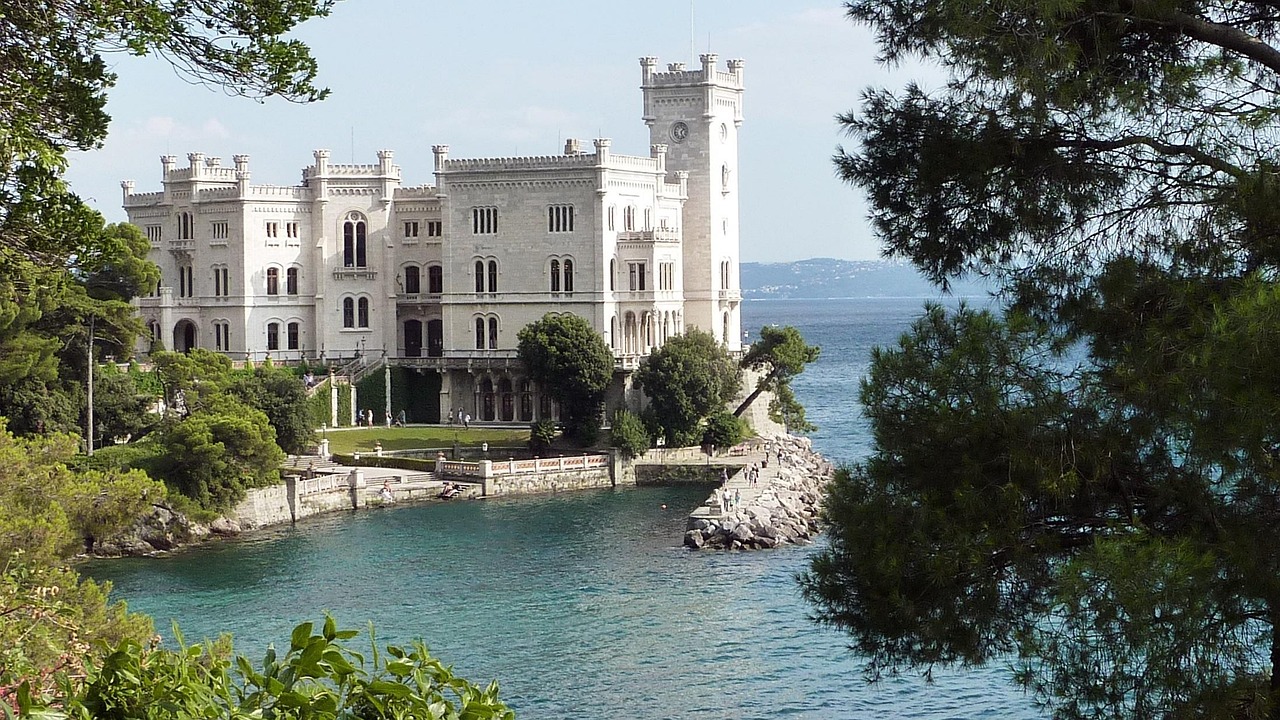
Day 2 is for sea air and fairy-tale castles. Every time I leave Trieste without visiting Miramare Castle, I regret it. Add the waterfront promenade at Barcola and you’ve got one of the city’s most iconic days.
Morning: Miramare Castle & Park
Take bus 6 from the center (or 36 on some routes) towards Miramare. Get off near the entrance to the park and walk down through the trees until the castle appears, gleaming white on a rocky promontory.
- History in brief: Built in the mid-19th century for Archduke Ferdinand Maximilian of Habsburg and his wife Charlotte of Belgium, it’s equal parts romantic and tragic (Maximilian was later executed in Mexico).
- What I love: The contrast between the polished interior—Maximilian’s study, the library—and the wildness of the sea crashing below.
Give yourself at least 2–3 hours for the castle and the park. I like to walk the Sentiero dei Lecci path above the castle for different views and then loop back along the water.
Lunch: Picnic or Seaside Snack
On warmer days, grab a sandwich from a bakery in town before you leave and picnic in the park overlooking the sea. There are also small cafés near the castle where you can get a simple pasta or salad.
Afternoon: Barcola – Trieste’s Seaside Living Room
From Miramare, walk or bus back towards the city along Barcola, the long waterfront promenade where Triestines sunbathe, swim, play cards, and drink coffee from spring to autumn.
- Family-friendly: The concrete terraces make it easy for kids to dip in and out of the water; bring water shoes for rocky spots.
- Saving tip: This is Trieste’s free “beach”—no need to pay for sunbeds unless you want extra comfort at a private lido.
Evening: Gelato & Seaside Sunset
Grab a gelato from one of Barcola’s kiosks and find a spot on the wall. The light over the Gulf of Trieste at sunset is one of my favorite sights in Italy, especially when the sky turns pink behind Miramare.
Day 3: Hilltop Views, San Giusto & Literary Cafés
On your third day, climb up above the city to San Giusto for sweeping views, then sink back into Trieste’s café culture and literary history. This works beautifully as the final day of a 3 day itinerary for Trieste.
Morning: San Giusto Castle & Cathedral
It’s a short but steep walk from the center to Castello di San Giusto and the Cattedrale di San Giusto. I usually go up via Via della Cattedrale, ducking into side alleys for little viewpoints.
- Cathedral: Mix of Romanesque and Gothic, with beautiful mosaics inside. Quiet, atmospheric, and free to enter.
- Castle: Thick stone walls, ramparts you can walk, and a small museum. The real prize is the 360° view of the city, port, and sea.
Lunch: Downhill to the Center
Walk back down to the center and aim for a casual lunch—maybe a slice of pizza al taglio (pizza by the slice) or a plate of gnocchi di pane (bread gnocchi) at a trattoria.
Afternoon: Literary Trieste & Café-Hopping
Trieste has a deep literary soul: James Joyce, Italo Svevo, and Umberto Saba all lived and wrote here. I love spending an afternoon tracing their footsteps between cafés and bookshops.
- Caffè San Marco: My favorite in the city. Wood-paneled, book-lined, students working on laptops, old men reading newspapers. Good for a late lunch or cake and coffee.
- Libreria Antiquaria Umberto Saba: Tiny bookshop once owned by poet Umberto Saba; still an evocative stop for book lovers.
Evening: Cavana or Canal Grande
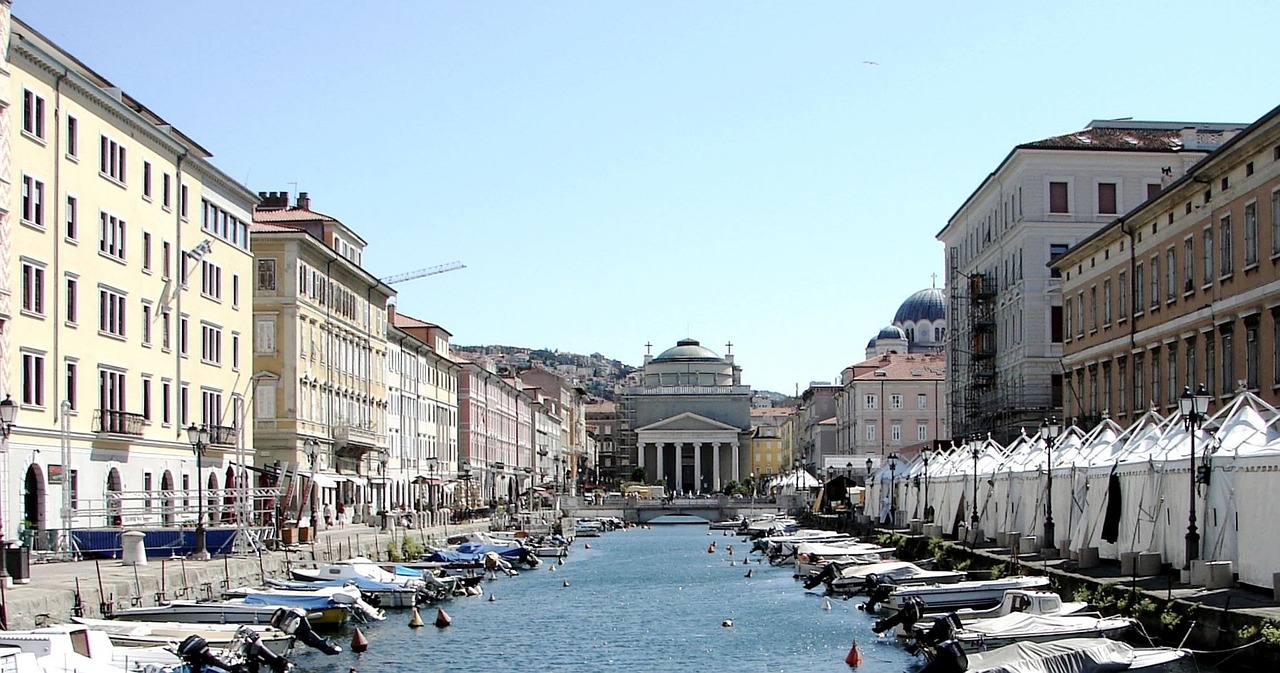
For your final evening (if you’re on a 3-day plan), choose between the bars of Cavana or the more open-air vibe along the Canal Grande. I often end my trips with a glass of local Prosecco or a spritz at a canal-side bar, watching the city lights shimmer on the water.
Day 4: Caves, Karst & Wine – Beyond the City Center
If you have 4 days in Trieste, use your extra day to see what makes this borderland region unique: dramatic caves, stone villages on the Karst plateau, and local wines that rarely travel far from here.
Option 1: Grotta Gigante & Prosecco Village
Grotta Gigante is one of the world’s largest tourist caves, and it’s only about 30 minutes from the city by bus. I’ve taken friends here who normally “don’t care about caves” and they left grinning like kids.
- Getting there: Bus 42/44 from Trieste; check 2026 schedules locally as they can shift seasonally.
- What to expect: Hundreds of steps down (and up!), huge stalactites, a constant cool temperature (around 11°C/52°F)—bring a light jacket.
After the cave, continue up to the village of Prosecco (yes, the wine shares the name, though much Prosecco now comes from elsewhere). This is more about views and stone houses than big sights.
Option 2: Škocjan Caves (Slovenia) – Cross-Border Adventure
With a full day and a bit of planning, you can cross into Slovenia to visit the Škocjan Caves, a UNESCO World Heritage site. They’re wilder and more dramatic than Grotta Gigante, with a roaring underground river and immense chambers.
- Getting there: Easiest with a rental car; otherwise combine train/bus via Sežana or Divača.
- Border tip: As of 2026, Slovenia is in Schengen. If you’re already in the EU/Schengen, there are no routine border checks; otherwise carry your passport.
Karst Villages & Osmize
On the Karst plateau above Trieste, small villages like Contovello (Kontovel), Opicina (Opčine), and Prosecco hide a wonderful local institution: the osmiza. These are seasonal, family-run farm taverns where farmers sell their own wine, cold cuts, and cheese in simple settings—often a courtyard with plastic tables and unbeatable views.
I still remember my first osmiza evening: sitting under a grape arbor, drinking rough but delicious Terrano wine, eating slices of home-cured prosciutto, listening to a mix of Italian and Slovene at neighboring tables. It felt like being let in on a local secret.
Day 5: Day Trip to Muggia or the Collio Wine Region
If you’re lucky enough to have a full 5 days in Trieste, spend your last day outside the city limits: either exploring the tiny, colorful town of Muggia across the bay or heading inland to the Collio wine region.
Option 1: Muggia – A Little Istrian Dream
Muggia is a pocket-sized old town on the opposite side of Trieste’s bay, with a distinctly Istrian feel: pastel houses, a pretty harbor, and a slower tempo.
- Getting there: Local ferry from Trieste (beautiful, cheap mini-cruise) or bus along the coast.
- What to do: Wander the old town alleys, climb to the little castle for a view, have a long seafood lunch by the harbor.
- Romantic: This is my go-to “escape” when I want to feel like I’ve gone much farther than I have.
Option 2: Collio Wine Region (Gorizia & Cormòns)
The Collio region, about an hour to 90 minutes from Trieste, is one of Italy’s great white wine areas: rolling hills, small wineries, and a blend of Italian and Slovene culture.
- Getting there: Easiest with a rental car. Trains/buses to Gorizia or Cormòns are possible but limit your flexibility.
- What to try: Ribolla Gialla, Friulano, Malvasia, and skin-contact “orange” wines from natural producers.
I’ve done this as a lazy day: one or two pre-booked winery visits, a long lunch at an agriturismo, then a gentle sunset drive back to Trieste with the sea waiting at the end.
20 Must-See Attractions in Trieste (In-Depth)
Below are 20 of the best places to visit in Trieste, each with context, history, and practical tips based on repeat visits. You can mix and match these into any 3–5 day itinerary for Trieste.
1. Piazza Unità d’Italia
Why go: This is Trieste’s living room and one of the most impressive squares in Europe. On one side: ornate 19th-century palazzi and the city hall; on the other: nothing but sea and sky.
History: The square took shape under Habsburg rule when Trieste was the Empire’s main port. Its current name—“Unity of Italy”—dates to after World War I, when the city became part of Italy.
My experience: I love coming here at different times of day: early morning when street sweepers are out and the square is empty; midday when cruise ship passengers mix with office workers; and late at night when the facades glow and the sea is inky black.
- Best time: Sunset or after dark for the lighting.
- Good for: First-time orientation, photos, people-watching, families (kids can run around safely).
- Tip: Step onto the small quay at the edge of the square for slightly different angles and fewer people in your photos.
2. Castello di Miramare & Park
Why go: A white, fairy-tale castle on the sea with lush gardens and panoramic views. It’s Trieste’s postcard image for a reason.
History: Built between 1856 and 1860 for Archduke Ferdinand Maximilian of Habsburg and his wife Charlotte. The interiors preserve their original furnishings, including naval-themed rooms and a richly decorated throne room.
My experience: My favorite visit was on a gray, windy day when the gulf was rough. The waves crashed dramatically below the terraces, giving the castle a moody, gothic feel—very different from the summer postcard image.
- Tickets: Paid entry for the castle; the surrounding park is free.
- Good for: Couples, families, photographers, history lovers.
- Tip: Go early to avoid tour groups. If you’re short on time or budget, skip the interior and enjoy the park and viewpoints for free.
3. Molo Audace
Why go: A simple stone pier that offers some of the best views in town. It feels like walking out into the middle of the gulf.
History: Named after the destroyer “Audace,” the first Italian ship to enter Trieste’s harbor in 1918, symbolizing the end of Habsburg rule.
My experience: This is my non-negotiable stop on every trip. I’ve been out here in summer heat, winter Bora winds, fog, and thunderstorms. Each weather mood transforms the experience.
- Best time: Golden hour and sunset; also atmospheric in winter storms if you have good windproof gear.
- Tip: Watch your footing in wet or windy conditions—the Bora can be fierce.
4. San Giusto Castle & Cathedral
Why go: Trieste’s hilltop acropolis: ruins, a cathedral, and a fortress with panoramic views over the city and sea.
History: The hill has seen Roman temples, medieval churches, and Habsburg fortifications. The current castle dates mainly to the 15th–17th centuries, while the cathedral combines earlier structures, with Romanesque-Gothic elements and stunning mosaics.
My experience: I love coming up here with a takeaway coffee, sitting on the castle walls, and mapping my mental version of Trieste: there’s Barcola, there’s Miramare, there’s Muggia’s outline across the gulf.
- Tickets: Small fee for the castle and museum; cathedral is free (donations welcome).
- Tip: Wear good shoes—the streets up/down can be steep and slippery in rain.
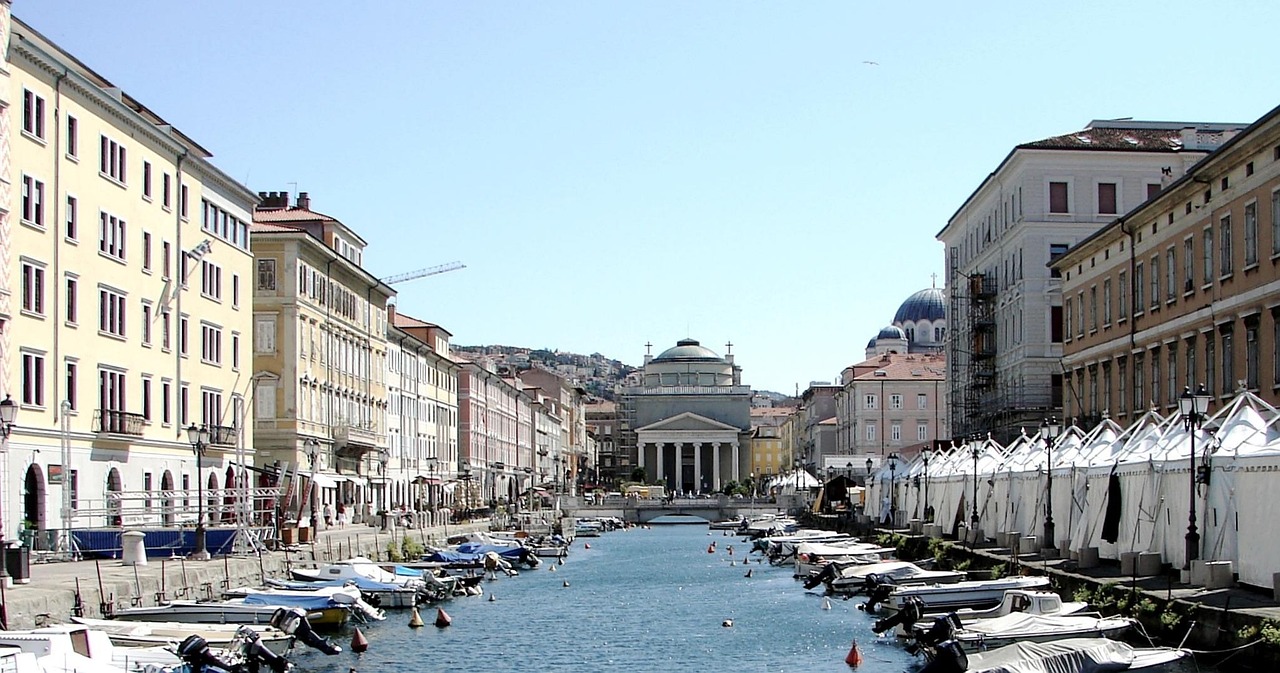
5. Canal Grande & Ponte Rosso
Why go: Trieste’s mini-version of Venice’s canals, lined with cafés and bookshops, and watched over by the dome of the Serbian Orthodox church.
History: The canal was built in the 18th century to allow boats to unload goods directly into the city. Now, it’s a scenic, pedestrian-friendly area with a statue of James Joyce crossing the bridge.
My experience: This is where I often start or end my evenings. I’ve sat here in winter with a hot chocolate, watching Christmas lights reflect on the water, and in summer with a spritz, listening to buskers play on the bridge.
- Good for: Casual strolls, photography, aperitivo, families.
- Tip: Look up at the facades—many still have subtle Habsburg-era details that reward a slower gaze.
6. Caffè San Marco
Why go: The quintessential Triestine literary café: a blend of history, caffeine, and culture.
History: Opened in 1914, it quickly became a hub for intellectuals and writers, including Italo Svevo and James Joyce. It’s survived wars, regimes, and trends, and now combines a café, restaurant, and bookshop.
My experience: I’ve written entire articles here, fueled by capo in b and slices of strudel. It’s the place where I feel most connected to Trieste’s quiet, reflective side.
- Good for: Solo travelers (you won’t feel awkward), readers, digital nomads, long conversations.
- Tip: Check the back for small exhibitions or events; in 2026, they continue to host readings and talks.
7. Barcola Promenade
Why go: This is where Trieste goes to sunbathe, swim, and socialize along the sea.
History: Developed in the 19th and 20th centuries as a leisure area, Barcola has become integral to the city’s identity—especially with the annual Barcolana regatta turning the gulf into a forest of sails.
My experience: I’ve spent entire days here with friends, rotating between swimming, reading, napping, and snacking from the kiosks. It’s incredibly democratic: teenagers, families, retirees, office workers—all sharing the same concrete “beach.”
- Good for: Families, swimmers, budget travelers (free beach!), runners.
- Tip: Bring a towel or mat; the surfaces are hard. In peak summer, go early to claim a good spot.
8. Grotta Gigante
Why go: A colossal underground chamber that makes you feel like you’ve stepped into a fantasy novel.
History: Opened to visitors in 1908, Grotta Gigante boasts one of the world’s largest cave chambers open to tourists. It’s also home to scientific instruments used to study micro-movements of the Earth’s crust.
My experience: The descent down the metal stairs, slowly watching the ceiling rise above you, is unforgettable. I always feel tiny here—in a good way.
- Good for: Families (kids over a certain age/fitness level), adventurers, geology buffs.
- Tip: There are lots of steps and it can be tiring on the way back up. Not ideal if you have serious knee or mobility issues.
9. Risiera di San Sabba
Why go: A sobering former Nazi concentration camp and rice-husking plant turned memorial and museum.
History: Used during World War II as a detention, transit, and extermination camp by Nazi forces, primarily for political prisoners, partisans, and Jews. Today it stands as a national monument and site of remembrance.
My experience: This is not an easy visit, but it’s one I consider essential. Walking through the cells and courtyards in silence, reading testimonies, puts Trieste’s complex 20th-century history in sharp focus.
- Good for: History-minded travelers; older teens and adults.
- Tip: Allow quiet time afterwards; I usually follow this with a reflective walk rather than another busy sight.
10. Museo Revoltella – Modern Art & Habsburg Elegance
Why go: Part opulent 19th-century residence, part modern art museum, and one of Trieste’s cultural highlights.
History: Donated to the city by Baron Pasquale Revoltella, a wealthy businessman connected to the Suez Canal project. The museum showcases Italian art from the 19th and 20th centuries, plus period rooms from the baron’s home.
My experience: I was surprised by how much I enjoyed this museum—the mix of grand salons, quirky furniture, and modern art is unexpectedly harmonious. The rooftop terrace has a lovely view over the harbor.
- Good for: Art lovers, architecture fans, rainy days.
- Tip: Check combined tickets or free-entry days in 2026; Trieste often has cultural promotions.
11. Città Vecchia & Cavana District
Why go: The most atmospheric part of the old town, now buzzing with bars, restaurants, and little shops.
History: Once a neglected quarter, Cavana has been revived over recent decades. The area still preserves medieval street patterns, but with a modern, bohemian energy.
My experience: I’ve done everything here: coffee in the morning, long aperitivi at sunset, late-night cocktails, and lazy Sunday lunches. It’s my default answer when someone asks, “Where should we go tonight?”
- Good for: Nightlife, people-watching, food, atmosphere.
- Tip: Wander side alleys, not just the main squares—you’ll find quieter wine bars and more local spots.
12. Serbian Orthodox Church of Saint Spyridon
Why go: A spectacular, blue-domed church anchoring one end of the Canal Grande, with an interior that glows with icons and gold.
History: Built in the 19th century for the city’s Serbian Orthodox community, it reflects Trieste’s position as a cosmopolitan port open to many faiths.
My experience: Stepping inside feels like stepping into another world—incense, candlelight, and the soft murmur of prayers. It’s a powerful contrast to the rational, commercial energy of the canal outside.
- Good for: Architecture and culture lovers, quiet reflection.
- Tip: Dress modestly; avoid taking photos during services.
13. Trieste’s Historic Coffee Houses
Why go: Coffee here is not just a drink; it’s a way of life and a key cultural experience in Trieste.
History: As the main port of the Austro-Hungarian Empire on the Adriatic, Trieste became a coffee-import hub. A whole ecosystem of roasting, trading, and café culture grew up around it, culminating in brands like Illy.
My experience: I like to café-hop: a nero at Caffè degli Specchi, a capo in b at San Marco, and maybe a gocciato at a more modern bar. By the end of the day I’m over-caffeinated but very happy.
- Good for: Everyone, but especially coffee fans and people-watchers.
- Tip: At the bar (standing), prices are lower than table service. Learn the local coffee lingo for fun and to blend in.
14. Opicina & Karst Viewpoints
Why go: For sweeping views over the city, sea, and the borderlands behind them.
History: The Opicina area sits on the Karst plateau above Trieste. Historically, it was linked to the city by a historic tram (temporarily out of service for several years; check 2026 updates locally).
My experience: I’ve come up here to escape summer heat, watch storms roll in from the sea, and sit in simple village bars with a glass of local wine.
- Good for: Hikers, photographers, sunset chasers.
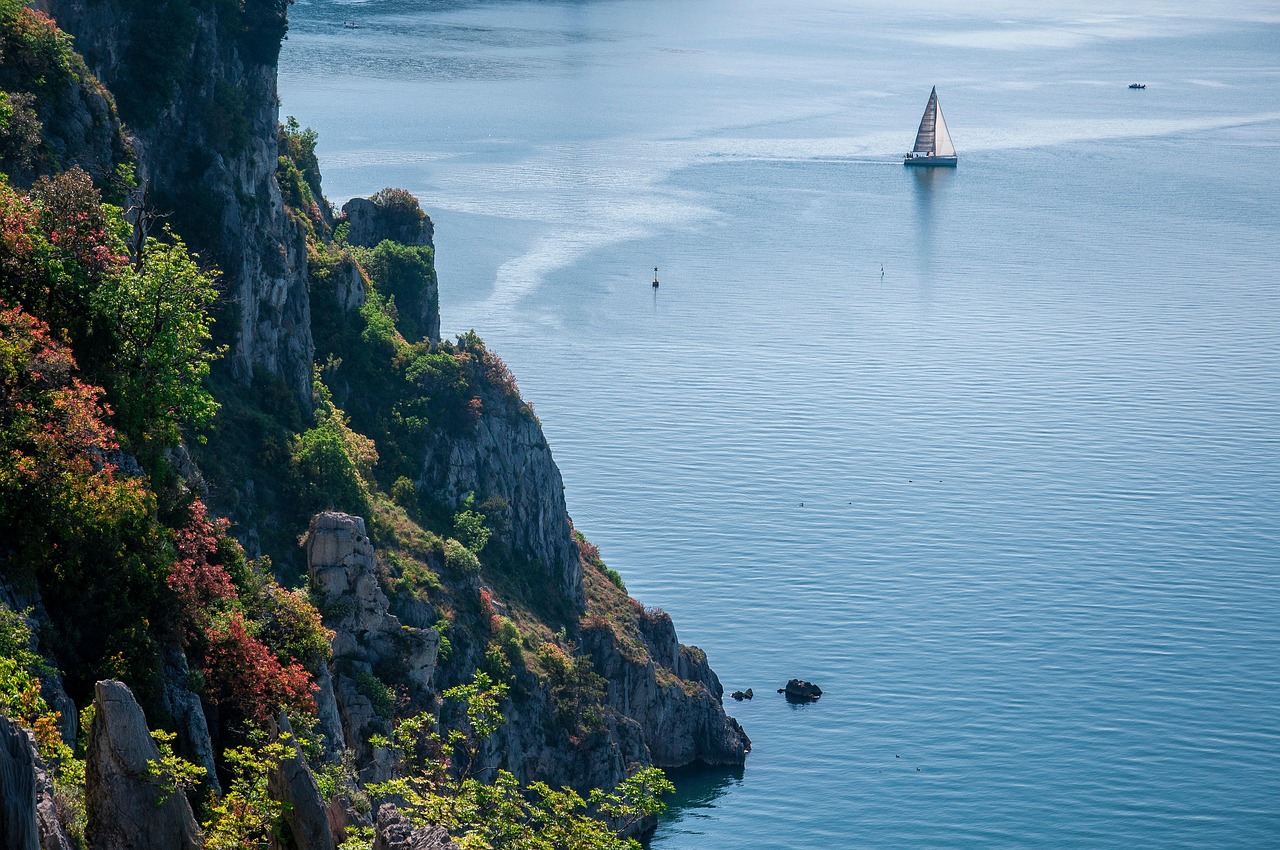
- Tip: Combine a visit with a walk along the Strada Napoleonica, a scenic path clinging to the cliffside above Trieste.
15. Strada Napoleonica
Why go: A gentle, spectacular walking path with constant views over Trieste and the gulf.
History: The name suggests Napoleonic origins, though the current path mainly dates from the 19th century. Today it doubles as a walking trail and a popular climbing area on the cliffs below.
My experience: This is one of my favorite low-effort, high-reward walks in Europe. I’ve walked it with friends, solo with a podcast, and once at dusk when the city slowly lit up below like a galaxy.
- Good for: Families with older kids, couples, anyone wanting a non-strenuous hike.
- Tip: Wear comfortable shoes; bring water in summer as there’s little shade on parts of the path.
16. Muggia
Why go: A postcard-perfect harbor town with an Istrian feel, just across the bay from Trieste.
History: Once part of the Republic of Venice, Muggia still shows Venetian architectural influences in its narrow streets and central square.
My experience: I love the feeling of stepping off the ferry into what feels like “small-town Adriatic.” It’s calmer, more intimate, and great for a slow lunch and stroll.
- Good for: Day trips, couples, photographers, relaxed family outings.
- Tip: Take the ferry one way and the bus the other to see the coast from both perspectives.
17. Museo del Mare & Porto Vecchio (Old Port)
Why go: To understand Trieste’s maritime soul and see an evolving industrial waterfront.
History: The old port area was once the bustling engine of the Habsburg Empire’s trade. Now, many warehouses stand as monumental industrial relics slowly being redeveloped for culture, offices, and events.
My experience: I like walking through Porto Vecchio imagining it 150 years ago, cranes swinging, ships unloading. As of 2026, more spaces are being converted into galleries and event venues, so it’s an area to watch.
- Good for: History buffs, urban explorers, photographers.
- Tip: Check for temporary exhibitions and events; the area’s role in the city is changing quickly.
18. Jewish Quarter & Synagogue
Why go: To see one of Europe’s largest synagogues and trace the history of Trieste’s Jewish community.
History: Built in the early 20th century when the Jewish community was thriving and influential in trade and culture. The community suffered heavily during World War II, and the synagogue now stands as both a spiritual center and a reminder.
My experience: The building’s scale surprised me the first time I saw it—another reminder of how cosmopolitan Trieste once was and still is underneath the surface.
- Good for: History and architecture lovers.
- Tip: Tours and visiting hours can change; check ahead in 2026 for updated information.
19. Civic Museums of History & Art (Civico Museo di Storia ed Arte)
Why go: A compact but rich overview of Trieste’s archaeological and historical treasures, including Roman artifacts and items from the city’s past.
History: The museum collects finds from the surrounding area, illustrating Trieste’s role from Roman Tergeste to modern port city.
My experience: This is an underrated stop, perfect for a quieter hour or two when you want substance without crowds.
- Good for: History lovers, rainy days, curious kids.
- Tip: Pair with a visit to San Giusto since they’re close geographically and thematically.
20. Theater & Opera: Teatro Verdi
Why go: For a classic Italian opera or concert night in an elegant 19th-century theater.
History: Teatro Verdi opened in the early 19th century and has hosted performances of Italian and international works ever since, surviving political changes and wars.
My experience: I once attended a last-minute opera here with cheap balcony seats. Even from the top, the sound was rich and the atmosphere magical—locals dressed up, couples holding hands, the red-and-gold interior glowing.
- Good for: Couples, culture lovers, anyone wanting a “special night” without breaking the bank.
- Tip: Check same-day tickets or student discounts; you can often get affordable seats.
Neighborhoods & Areas to Explore in Trieste
Borgo Teresiano
Laid out in the 18th century under Empress Maria Theresa, Borgo Teresiano is the orderly, Habsburg heart of Trieste: straight streets, elegant buildings, and the Canal Grande running through it.
- Vibe: Central, busy, commercial, yet still grand.
- Highlights: Canal Grande, Serbian Orthodox church, shopping streets, many hotels.
- Stay here if: You want to be in the middle of everything and close to transport.
Cavana & Città Vecchia
This is the old town proper: narrow streets, stairways, and small piazzas. Once somewhat run-down, it’s now Trieste’s nightlife and restaurant hub.
- Vibe: Lively, bohemian, mixed crowd, busy at night.
- Highlights: Bars, trattorias, small boutiques, proximity to San Giusto hill.
- Stay here if: You prioritize atmosphere and don’t mind some nighttime noise.
San Giacomo
A more local, working-class neighborhood a short walk from the center. Less polished, more real.
- Vibe: Residential, everyday life, local markets and bakeries.
- Highlights: Cheaper eats, non-touristy cafés, good for people who like “real city” feel.
- Stay here if: You’re on a budget and don’t mind walking 15–20 minutes to main sights.
Barcola & Grignano
These are the seaside suburbs north of the center, strung along the coast towards Miramare.
- Vibe: Relaxed, summery, sea-focused.
- Highlights: Barcola promenade, small beaches, views of the gulf.
- Stay here if: You’re visiting in summer and want to live like a local by the water.
Karst Villages (Prosecco, Opicina, Contovello)
Perched on the plateau above the city, these small villages feel a world away, with stone houses, vineyards, and osmica taverns.
- Vibe: Rural, quiet, bilingual (Italian/Slovene), traditional.
- Highlights: Views over Trieste, hiking paths, local food and wine.
- Stay here if: You have a car and want a countryside base with city access.
Local Food & Drink in Trieste: What to Eat & Where
What to Eat in Trieste
Trieste’s cuisine is a reflection of its borderland history: Italian, Central European, and Balkan influences all on one table.
- Prosciutto di San Daniele & local salumi: Often served in osmize and traditional buffets.
- Jota: Hearty bean, potato, and sauerkraut soup—perfect on cool days.
- Goulash & boiled meats: Echoes of Austro-Hungarian and Central European cuisine.
- Štruklji, gnocchi, and other dumplings: Variations you’ll recognize from Slavic and Alpine kitchens.
- Seafood: From grilled fish to fritto misto, especially along the waterfront and in Muggia.
- Presnitz & Putizza: Spiral pastries filled with nuts and dried fruit, typical of Triestine holidays.
- Strudel: Apple or other fruit, often served warm with cream or ice cream.
Where to Eat: Buffets, Osterie & Osmize
Buffets are a Trieste institution: casual taverns serving boiled meats, sausages, and other hearty fare, often eaten standing at the counter.
- Buffet da Pepi: Classic, near Piazza Unità. Come hungry.
- Buffet da Siora Rosa / others: Look for chalkboards and locals crowded around the counter.
Osterie & Trattorie serve more typical sit-down meals—pasta, seafood, daily specials.
Osmize (singular: osmiza) are seasonal rural taverns on the Karst plateau where farmers sell their own products. They’re one of the best hidden gems in Trieste’s food scene.
- How to find them: Look for the handwritten “osmiza” signs and bunches of ivy by the road, or use updated local listings in 2026.
- What to order: House wine (Terrano, Vitovska), cold cuts, cheese, hard-boiled eggs, pickles.
- My tip: Go at sunset; the light over the gulf from the Karst is magic.
Coffee, Wine & Nightcaps
Coffee: Try different forms of nero, capo in b, gocciato in multiple cafés. Each bar has its own character, from marble-topped counters to hip, modern roasteries.
Wine: Local whites (Vitovska, Malvasia, Ribolla), reds (Terrano, Refosco), and orange wines are widely available.
Beer: Italian and Central European influences mean good lager and craft beer options, especially in student areas.
Saving Money on Food in Trieste
- Lunch deals: Look for menu del giorno (daily menu) in trattorie—often 2–3 courses for a fixed price.
- Standing at the bar: Coffee and quick bites are cheaper at the counter than at a table.
- Markets & bakeries: Grab focaccia, sandwiches, or pastries for cheap and picnic on the seafront.
- Osmize: Excellent value for wine and cold plates, especially if you share among friends.
Nightlife, Entertainment & Cultural Experiences
Where to Go Out at Night
- Cavana: Bars, wine bars, and cocktail spots cluster around Piazza Cavana and nearby streets. Great for bar-hopping.
- Canal Grande: More relaxed, scenic drinks along the water. Good for couples and small groups.
- Student bars: Scattered around the university area and side streets; cheaper and livelier.
Cultural Experiences in Trieste
- Teatro Verdi: Opera, ballet, and classical concerts.
- Small theaters & cinemas: Independent productions, often in Italian but occasionally with international events.
- Literary events: Book presentations and readings at Caffè San Marco and local bookstores.
- Museums by night: During certain events in 2026, museums may open late with special programming—check local listings.
Day Trips & Nearby Attractions from Trieste
Muggia
A perfect half- or full-day escape: wander the alleys, climb to the castle, have a seafood lunch, and stroll the harbor.
Collio & Brda Wine Regions
On both sides of the Italy–Slovenia border, the Collio/Brda area offers rolling vineyards, hilltop villages, and excellent wineries. With a car, you can easily combine a couple of tastings with a long lunch.
Slovenian Coast: Koper, Izola, Piran
The Slovenian coast is a short drive or bus ride away. Piran is the jewel: Venetian architecture, narrow streets, and a beautiful promenade.
Ljubljana (Long Day Trip)
Slovenia’s capital is about 1.5–2 hours away. It’s a stretch for a day trip but doable if you start early—especially if Trieste is your base for several days.
Cultural Etiquette & Local Customs in Trieste
Greetings & Language
Italian is the main language, but you’ll also hear Slovene and local dialects. Basic Italian greetings go a long way:
- Buongiorno (good day) until late afternoon; buonasera (good evening) afterwards.
- In shops, greet when entering and say arrivederci when leaving.
Coffee Culture
Coffee is quick and serious. Many locals drink it standing at the bar, chat briefly, and move on.
- Don’t expect huge takeaway lattes; espresso-based drinks are the norm.
- After 11:00, locals rarely drink cappuccino; you won’t be judged harshly as a foreigner, but it’s a cultural marker.
Tipping & Service
Service is usually included. Tipping is modest but appreciated.
- Round up small bills or leave 5–10% in restaurants if service was good.
- For coffee at the bar, leaving coins on the saucer is common but not required.
Dress & Behavior
Trieste is relatively relaxed but with a Central European touch of formality.
- Beachwear is for Barcola and beaches, not for city streets and cafés.
- In churches, cover shoulders and avoid very short shorts.
- Keep voices moderate, especially in residential areas at night.
Practical Travel Tips for Trieste (2026–2027)
Getting Around Trieste
- On foot: The center is compact and walkable; expect some hills and stairs.
- Buses: Efficient network run by Trieste Trasporti. Tickets available at kiosks, tabacchi, or via apps—validate when boarding.
- Taxis & rideshare: Taxis are reliable but not cheap; rideshare options fluctuate—check 2026 availability.
- Car rental: Useful for day trips (Karst, Collio, Slovenia), but not necessary in town. Parking in the center can be tricky and costly.
SIM Cards & Connectivity
As of 2026, Italy has solid 4G/5G coverage in Trieste.
- Where to buy: Mobile operator shops (TIM, Vodafone, WindTre, Iliad) and some electronics stores.
- What to bring: Passport or ID; EU residents can often use their home SIM with no roaming charges.
- eSIM: Widely available—check major providers or travel eSIM apps before arrival.
Saving Money in Trieste
- Transport passes: Multi-day bus passes can be cheaper if you plan multiple trips to Barcola, Miramare, and the Karst.
- Lunch vs. dinner: Eat your main meal at lunch with menu del giorno deals.
- Free sights: Piazza Unità, Molo Audace, Barcola, old town wandering, many churches, and hilltop viewpoints.
- Picnics: Markets and supermarkets offer excellent picnic ingredients; eat by the sea or in parks.
Visa Requirements & Driving Licenses
Visas (2026):
- Italy is part of the Schengen Area. EU/EEA/Swiss citizens can enter with ID cards.
- Many non-EU nationals (e.g., US, Canada, UK, Australia) can enter visa-free for short stays—check current Schengen rules and ETIAS implementation details for 2026 before traveling.
Driving licenses:
- EU licenses are valid in Italy.
- Non-EU visitors should carry their national license and, in many cases, an International Driving Permit (IDP). Check current Italian regulations before renting.
Best Seasons for Trieste & What They’re Good For
- Spring (April–June): Mild weather, fewer crowds, perfect for walking, sightseeing, and early dips at Barcola. My favorite season overall.
- Summer (July–August): Hot, lively, great for sea swimming and long evenings outside. Expect more visitors and higher prices; the Bora wind is rarer but the air can be humid.
- Autumn (September–October): Warm sea, cooler air, harvest season in wine regions, and the Barcolana regatta. Excellent mix of culture and outdoors.
- Winter (November–March): Quiet, moody, with strong Bora winds at times. Great for café culture, museums, and feeling like a temporary local—but not for beach life.
Major Events & Festivals in Trieste (2026–2027)
Barcolana Regatta (October)
One of the world’s largest sailing regattas, the Barcolana turns the Gulf of Trieste into a sea of sails each October. The city hosts concerts, food stalls, and events along the waterfront.
- Good for: Sailing fans, photographers, anyone who loves a festive atmosphere.
- Tip: Book accommodation early for October 2026; prices and demand spike.
Other 2026–2027 Highlights
- Trieste Film Festival (January): A key event for Central and Eastern European cinema, drawing filmmakers and fans.
- Science & research events: As a major science hub (with institutions like SISSA and ICTP), Trieste hosts conferences and public science events throughout the year.
- Local cultural festivals: Expect food, music, and neighborhood festivals in spring and summer—check local 2026–2027 calendars close to your trip.
Summary & Final Recommendations: Making the Most of Trieste
Trieste is one of those places that reveals itself slowly. On your first day, you’ll be impressed by Piazza Unità and Miramare. By day three or four, you’ll be slipping into osmize, ordering a capo in b like a local, and debating which Barcola terrace has the best sunset view.
- For 3 days in Trieste: Focus on the historic center, San Giusto, Miramare, Barcola, and at least one deep dive into café culture.
- For 4 days in Trieste: Add Grotta Gigante or a Karst walk, plus more time in neighborhoods like Cavana and Borgo Teresiano.
- For 5 days in Trieste: Plan a full day trip to Muggia, Collio, or the Slovenian coast, and give yourself unscheduled time just to wander, read in cafés, and watch the sea.
Best seasons: For most travelers, late spring (May–June) and early autumn (September–early October) offer the best mix of weather, events, and manageable crowds. Come in summer if you love the sea and don’t mind heat; come in winter if you prefer introspective trips, long coffees, and a city that feels like it’s yours.
Whatever your itinerary—3, 4, or 5 days—Trieste rewards curiosity. Look up at the facades, listen to the languages swirling around you, follow the smell of coffee or the sound of waves, and you’ll understand why so many of us keep coming back.