Why Visit Siena in 2026
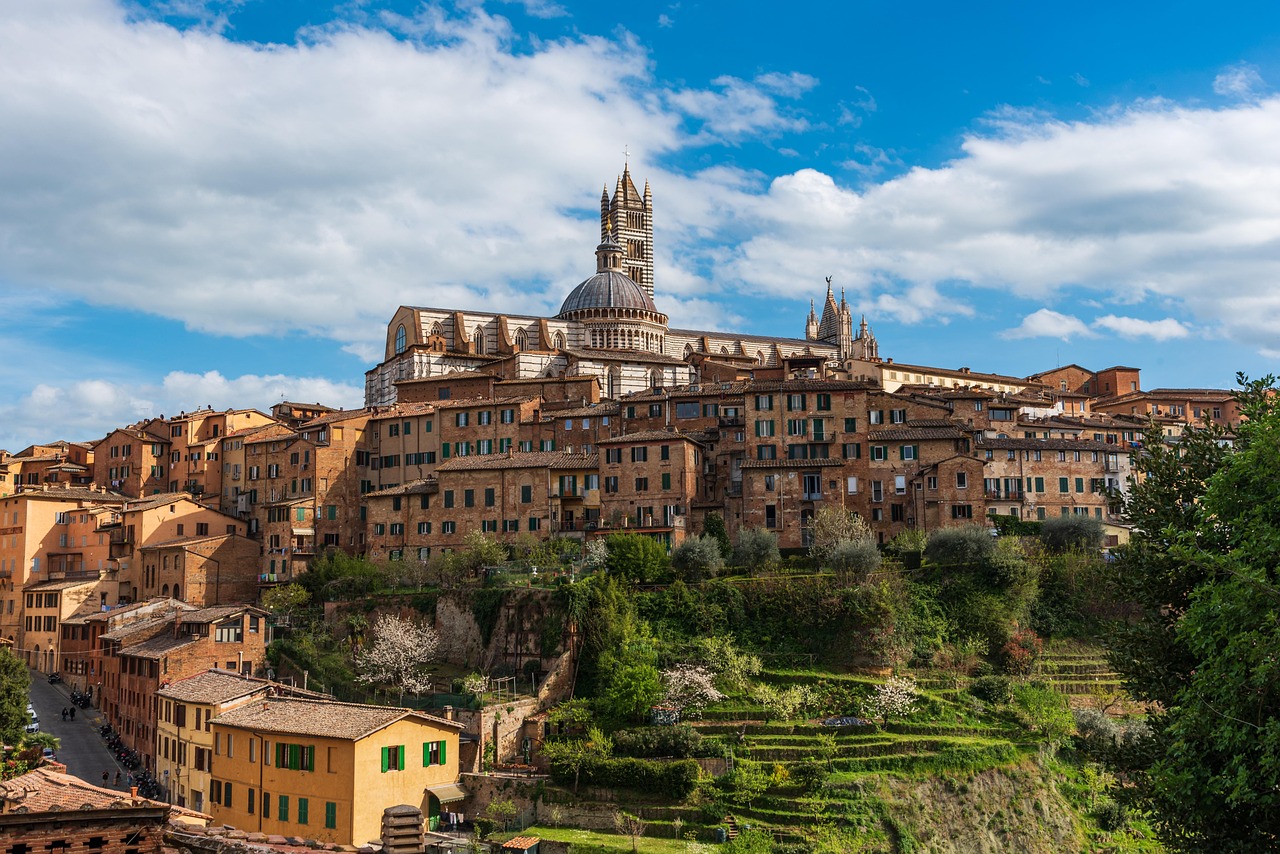
Siena is one of those rare places where history doesn’t sit behind museum glass – it lives in the streets. The city’s fan-shaped main square, Piazza del Campo, is still the stage for the legendary Palio horse race. Ancient contrade (neighborhoods) still fly their colorful flags and fiercely protect their traditions. And yet, little wine bars buzz with young locals, and chefs quietly reinvent Tuscan classics with seasonal produce and bold ideas.
In 2026, Siena feels especially alive. There’s a renewed focus on sustainable tourism, more pedestrian-friendly streets, and a growing calendar of cultural events stretching beyond the famous Palio. Whether you’re planning 3 days in Siena, crafting a 4 day itinerary for Siena, or lingering for a full 5 days in Siena, this city rewards every extra day you give it.
This travel guide for Siena is written like I’d plan a trip for a close friend: detailed itineraries, personal stories, hidden gems, brutally honest tips on where to splurge and where to save, and all the little cultural nuances that make Siena such a special place to explore slowly.
Table of Contents
- Why Visit Siena in 2026
- Siena at a Glance
- Neighborhoods & Districts of Siena
- 20 Must-See Attractions & Experiences in Siena
- Suggested Itineraries: 3, 4 & 5 Days in Siena
- Local Food & Drink in Siena
- Nightlife, Entertainment & Cultural Experiences
- Best Day Trips from Siena
- Cultural Etiquette & Local Customs
- Practical Travel Tips for Siena (2026–2027)
- When to Visit Siena & Final Thoughts
Siena at a Glance (2026)
Siena is compact, walkable, and best enjoyed at a slow pace. A few quick facts to frame your visit:
- Region: Tuscany, central Italy
- Population: ~54,000 (small city, big personality)
- Best for: History lovers, couples, families, foodies, culture nerds, slow travelers
- Ideal trip length: 3–5 days in Siena itself, plus 1–2 day trips
- Currency: Euro (€)
- Language: Italian (Sienese accent), but basic English widely understood in the center
In 2026–2027, look out for expanded museum passes, more evening openings at major sites, and special cultural programming connected to Tuscan wine and food festivals.
Neighborhoods & Districts of Siena
Siena is famously divided into 17 contrade – medieval districts, each with its own symbol, church, fountain, and fierce identity. You’ll see their flags everywhere. For visitors, it’s useful to think of Siena in a few main areas:
1. Centro Storico (Historic Center)
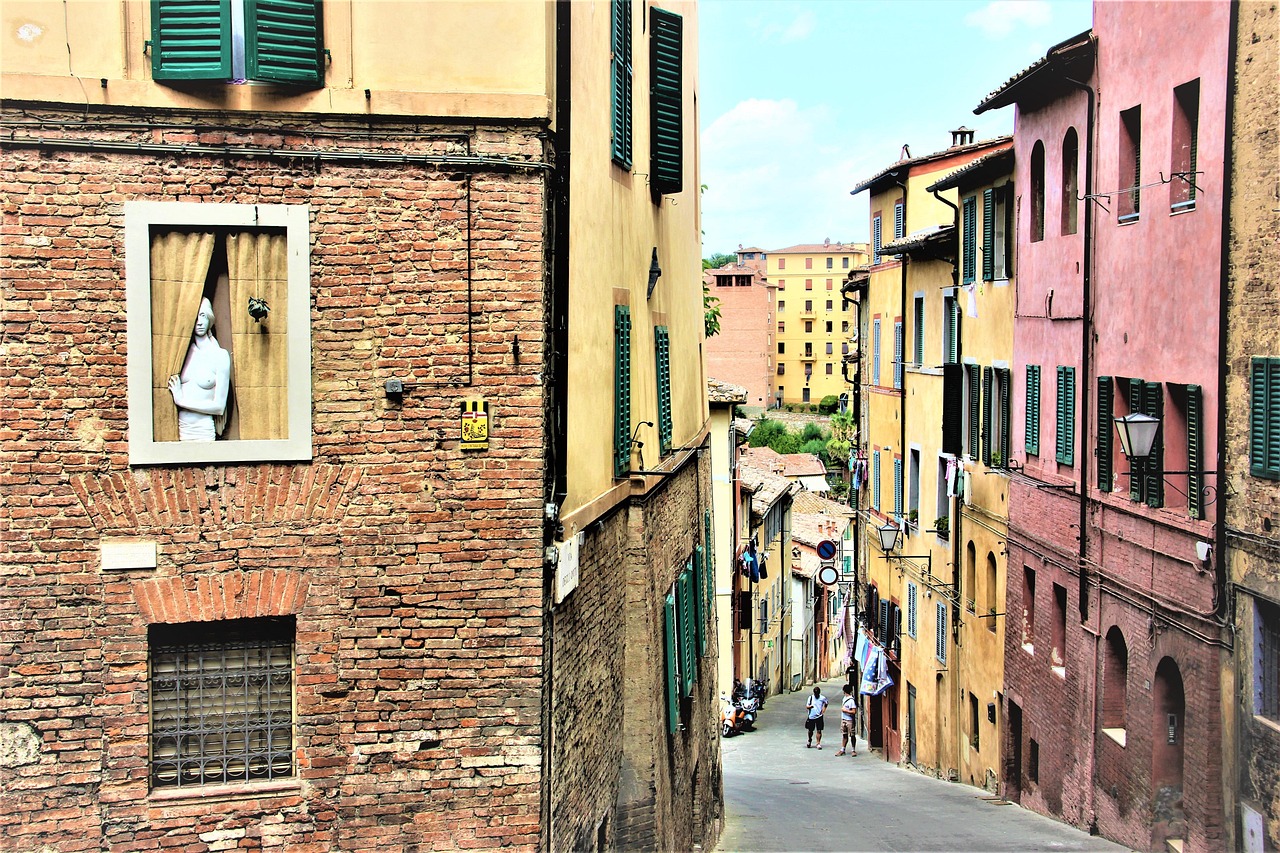
This UNESCO‑listed heart of Siena includes Piazza del Campo, the Duomo, and most must-see attractions. It’s where you’ll likely stay and spend most of your time. Streets are narrow, hilly, and mostly pedestrianized – bring comfortable shoes and be ready to climb.
2. Around the Duomo (Santa Maria & Nearby Contrade)
Quieter at night, this area has dramatic views over the Tuscan countryside and quick access to major sights. I love staying here when I want early-morning strolls and Duomo views out the window.
3. San Prospero & Antiporto
Just outside the historic walls, this is where more locals live. It’s great for budget stays, supermarkets, and less touristy eateries. You’ll walk 10–20 minutes uphill into the center, but the trade-off is space and lower prices.
4. Fortezza & Stadium Area
Anchored by the Fortezza Medicea, this part of town has green spaces, jogging paths, playgrounds, and a more relaxed feel. It’s ideal if you’re traveling with kids or want easy access to sunset views and wine bars.
5. Viale Vittorio Emanuele II & Train Station Area
Not the prettiest part of Siena, but useful if you’re arriving by train or renting a car. Budget hotels and parking options cluster here. You’ll take escalators and a short uphill walk to reach the historic center.
20 Must-See Attractions & Experiences in Siena
These are the places I return to on every visit – not just the postcard spots, but the corners where Siena feels most itself. For each I’ll share history, what it’s like to be there, and practical tips, so you can weave them into your own 3, 4, or 5 day itinerary for Siena.
1. Piazza del Campo – Siena’s Beating Heart
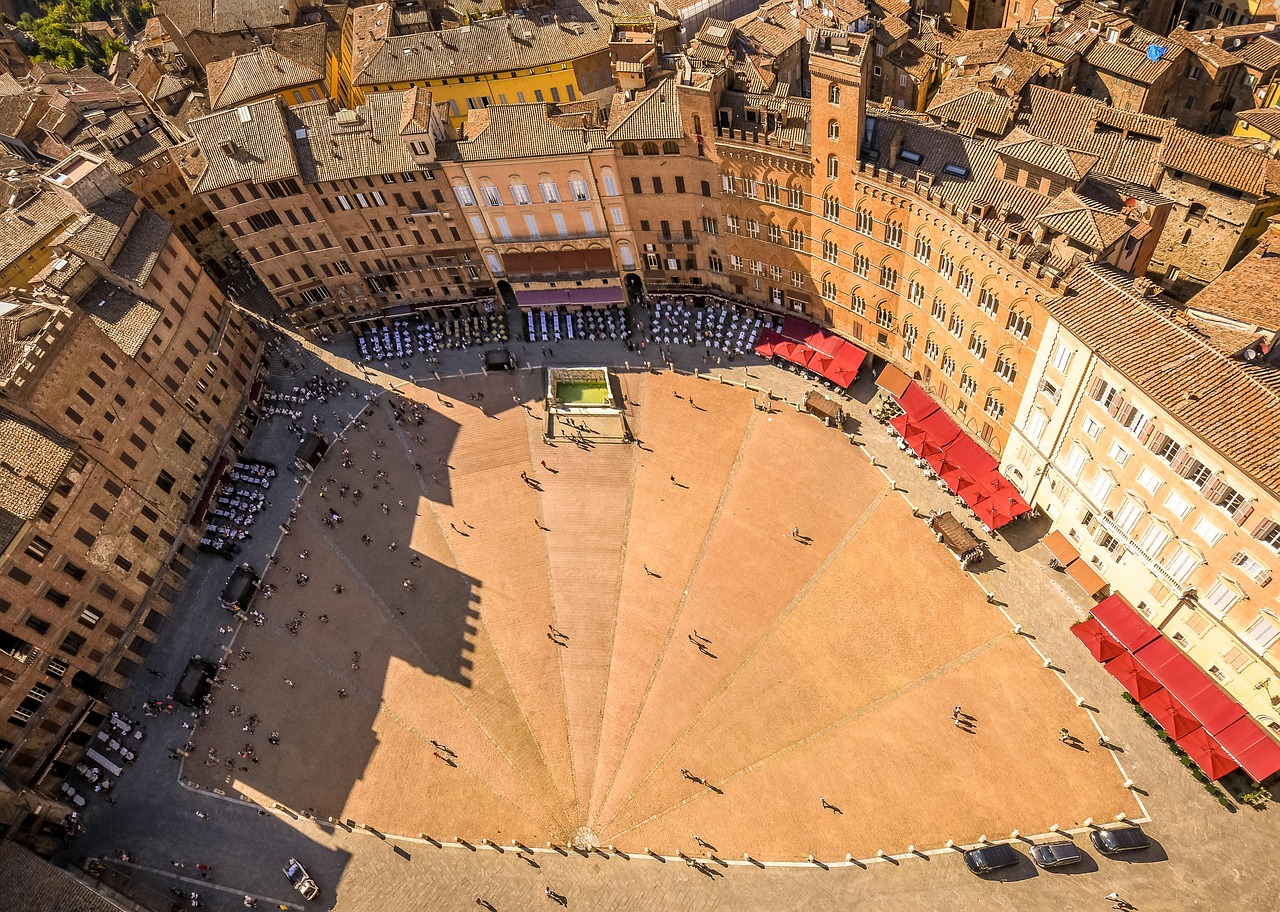
Piazza del Campo is where Siena gathers: for coffee, for gossip, for the Palio, for sunsets, for teenagers’ first dates and old men’s slow afternoon chats. Its unique shell shape fans out from the central Fonte Gaia fountain, ringed by honey-colored palazzi that glow at golden hour.
The first time I walked into the Campo, I did what everyone does: I stopped, looked up at the curve of buildings and the Torre del Mangia towering above, and just stood there, grinning. Now, every trip, I make a ritual of grabbing a morning cappuccino from a small bar just off the square, then sitting on the warm bricks watching Siena wake up.
History snapshot: The Campo was laid out in the 13th–14th centuries as a civic rather than religious center – a radical idea at the time. It was the seat of the Republic of Siena’s power, a marketplace, and, famously, the site of the Palio horse race, which has origins going back to medieval times.
What to do:
- Sit on the sloping bricks (yes, locals do this too – it’s not just a tourist thing) and people-watch.
- Visit at different times of day: early morning for quiet, midday for buzz, evening for golden light and aperitivo.
- Step into the tiny lanes radiating out – that’s where you find the best gelato and quieter cafés.
Tips: Avoid the most obvious restaurants right on the square for full meals – they’re pricey and often mediocre. They’re fine for a single drink if you want that view, but for better food, slip into a side street. If you’re planning 3 days in Siena, make sure you return here at least twice; the Campo changes character with the light and crowds.
2. Torre del Mangia – The View You’ll Never Forget
The Torre del Mangia is the slender, elegant bell tower soaring 102 meters above Piazza del Campo. Climbing it is a minor workout, but the reward is one of the most breathtaking city views in Italy: Siena’s terracotta rooftops fading into soft Tuscan hills.
I’ve climbed the tower three times now, and every time I swear I won’t take as many photos – and every time I fail. On my last visit, I went right when it opened, and for five magical minutes I had the top almost to myself, with the city still in morning haze.
History: Built between 1325 and 1348, the tower was meant to rival Florence’s Palazzo Vecchio in height and beauty – a bold statement of Sienese pride. Its nickname, “Mangia,” comes from the first bell ringer, Giovanni di Balduccio, who was famous for spending his salary on food.
Practical tips:
- Tickets: You must book a timed slot, especially in high season (May–September). In 2026, combined tickets with the Palazzo Pubblico are still the best value.
- Climb details: ~400 narrow steps, some sections quite tight. Not ideal if you’re claustrophobic or have bad knees.
- Best time: Early morning for softer light and fewer people; late afternoon for warm colors over the countryside.
3. Palazzo Pubblico & Civic Museum – Power & Paintings
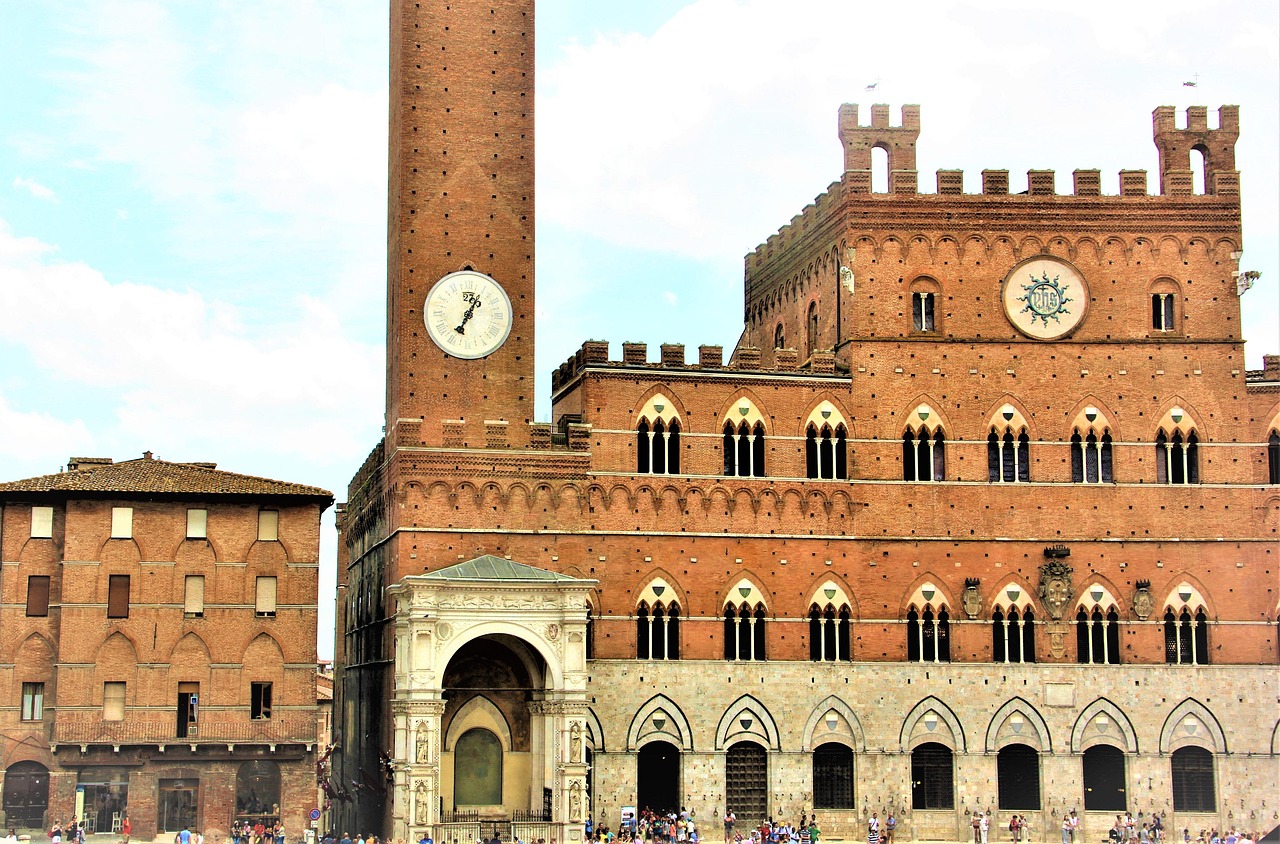
Standing proudly on the lower edge of the Campo, the Palazzo Pubblico was the seat of Siena’s government. Today, it houses the Museo Civico, one of my favorite museums in Italy and an absolute must-see attraction in Siena, even if you usually avoid museums.
Don’t miss: The Allegory of Good and Bad Government by Ambrogio Lorenzetti. These 14th-century frescoes are staggeringly modern in their message: scenes of prosperity, safety, and justice under good governance, contrasted with chaos and ruin under tyranny. I remember standing in front of them the first time, feeling almost shaken by how relevant they still are.
Other rooms are rich with Sienese school paintings, intricate ceilings, and glimpses of the republic’s former glory.
Tips: Combine your visit with Torre del Mangia. Plan at least 1.5–2 hours, especially if you like art. Families: turn the “Good and Bad Government” frescoes into a story challenge for kids – ask them to spot the differences between the “good” and “bad” city scenes.
4. Duomo di Siena – Black-and-White Marble Wonder
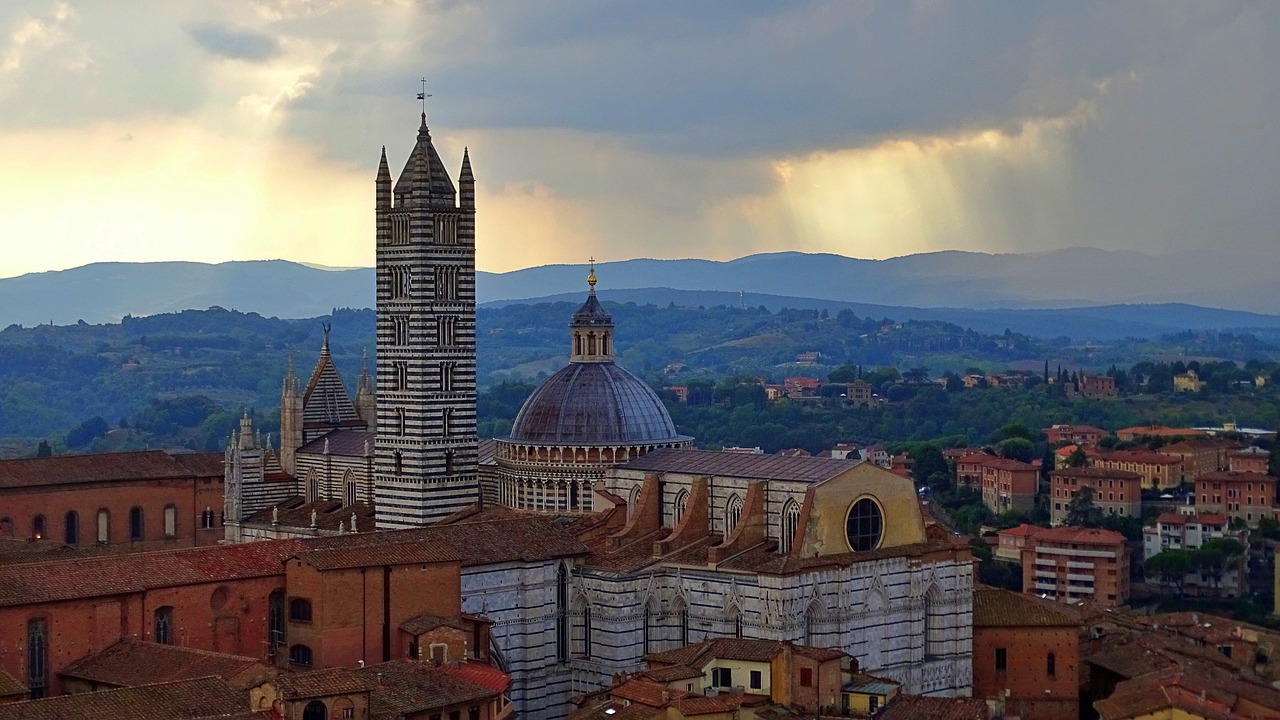
The Duomo di Siena is the kind of cathedral that makes you whisper “wow” under your breath. Its façade is a riot of Gothic detail: saints, gargoyles, striped marble, and rose windows. Inside, it’s even more striking – black-and-white marble columns, soaring arches, and an inlaid marble floor that’s unlike anything else in Italy.
I always tell friends: if you see only one church in Siena, let it be this one. On my last trip, I timed my visit for late afternoon. Sunbeams slanted through the windows, catching the dust in the air and turning the columns into something almost otherworldly.
Highlights:
- The marble floor, with 56 panels depicting biblical and allegorical scenes (fully uncovered only in certain weeks, usually late summer–early autumn).
- The Pulpit by Nicola Pisano, an early masterpiece of Italian sculpture.
- The Piccolomini Library, a jewel box of vivid frescoes by Pinturicchio.
Practical tips: Get the OPA Si Pass (or its current equivalent in 2026), which usually includes the cathedral, crypt, Baptistery, and Facciatone (Panoramic view). This is excellent value if you’re doing a 3 or 4 day itinerary for Siena and planning multiple visits.
5. Facciatone & Panorama del Facciatone – Secret Skyline View
Just behind the Duomo lies one of Siena’s most atmospheric spots: the unfinished nave of a grand cathedral extension that was never completed, known as the Facciatone. Today, you can climb up to a narrow panoramic terrace for one of the best views over Siena’s rooftops and the Duomo’s striped dome.
The staircase is tight and the platform narrow, so it’s not for the faint of heart, but standing up there, facing the city’s patchwork of terracotta and stone, you really feel Siena’s layers of history under your feet.
Tip: Time your visit for late afternoon for beautiful light on the city and fewer tour groups. Entry is usually included in the Duomo complex pass.
6. Battistero di San Giovanni – Glittering Baptistery
Tucked behind the Duomo, the Baptistery of San Giovanni is easy to miss – and that would be a mistake. Inside, golden frescoes cover the ceiling, and the intricately carved baptismal font is a collaborative masterpiece by Renaissance sculptors, including Donatello.
It’s usually quieter than the main cathedral. I like slipping in here after the bustle of the Duomo; the soft light and cool air feel like a reset button.
Tip: Look up. The ceiling frescoes of the life of John the Baptist are dazzling and often overlooked because people focus on the font.
7. Santa Maria della Scala – Underground Siena
Directly opposite the Duomo lies Santa Maria della Scala, once one of Europe’s oldest hospitals, now a vast cultural complex and museum. This is where Siena’s story gets under your skin – quite literally, as you wander through underground corridors, chapels, and frescoed halls.
On a hot summer afternoon, I spent nearly three hours here, ducking from one level to another, stumbling upon archaeological finds, temporary exhibits, and the haunting Pellegrinaio hall with frescos depicting medieval hospital life. It’s one of the most underrated things to do in Siena.
Good for: Families (there are often kid-friendly exhibits), rainy days, culture lovers, and anyone curious about Siena beyond the postcard views.
8. Pinacoteca Nazionale – Sienese Art Treasure Chest
If you’re interested in art, the Pinacoteca Nazionale is non-negotiable. It’s home to an extraordinary collection of Sienese painting from the 13th to the 16th centuries – think Duccio, Simone Martini, the Lorenzetti brothers, and more.
I love how old-school this museum feels: quiet rooms, minimal signage, and those tall wooden frames leaning slightly forward as if bowing to you. On one visit in early spring, I had entire halls to myself and could sit in front of a Simone Martini panel without a single interruption.
Tip: It’s a bit of an uphill walk from the Campo, but the streets along the way are charming. Allow at least 1.5–2 hours. Pair it with a slow lunch nearby to rest your brain after all that visual richness.
9. Basilica di San Domenico – Saint Catherine’s Siena
The Basilica di San Domenico is a stark, fortress-like church that dominates Siena’s skyline. Inside, it’s intimately connected to one of the city’s most important figures: Saint Catherine of Siena, a 14th-century mystic and patron saint of Italy.
The church houses relics of Saint Catherine and several chapels dedicated to her life. Even if you’re not religious, it’s a powerful space, and the views from the surrounding area over the city and Duomo are spectacular.
Tip: Combine a visit here with a walk down to Casa di Santa Caterina (see below). Late afternoon is a lovely time, with the sun dropping behind the hills and washing the brick façade in warm light.
10. Casa di Santa Caterina – A Quiet Pilgrimage
Just a few minutes’ walk from San Domenico, Casa di Santa Caterina is the preserved home of Saint Catherine. It’s a modest, peaceful complex of rooms, chapels, and courtyards, with an intimate, almost domestic feel.
On my last visit, I slipped in on a hot day and found a cool stone bench in one of the courtyards. Bells rang in the distance, and for a few moments, the city’s noise faded away. Whether you’re spiritual or not, it’s a calming place to pause.
Tip: Dress modestly (shoulders and knees covered) out of respect. It’s free or donation-based, making it a good stop if you’re trying to save money.
11. Fortezza Medicea – Sunset Stronghold
The Fortezza Medicea, a 16th-century fortress built by the Medici after they took control of Siena, is now one of the city’s best open spaces. Its brick ramparts host a park, walking paths, and panoramic viewpoints over both the city and the surrounding countryside.
This is where I go running when I’m staying in Siena for more than a few days, and where I tell friends to go for a romantic sunset. One evening, with a takeaway panino and a cheap bottle of Chianti from a nearby enoteca, I watched the sky turn pink behind the distant hills – one of my favorite Siena memories.
Good for: Families (there’s space to burn off energy), picnics, joggers, budget travelers, and anyone needing a break from stone streets.
12. Orto de’ Pecci – Secret Garden Below the City
Just a 5–10 minute walk downhill from Piazza del Campo, the Orto de’ Pecci feels like a countryside escape. It’s a green valley with gardens, lawns, and a casual trattoria, framed by the city walls above.
On a warm May afternoon, I had lunch here – a simple plate of pici all’aglione (thick Tuscan pasta with garlic tomato sauce) and a glass of house wine – while kids played nearby and locals sunbathed on the grass. It’s one of my favorite hidden gems in Siena.
Tip: The walk back up is steep, so go slowly or plan it before a mid-afternoon rest. Great spot for families and picnic lovers.
13. Via Banchi di Sopra & Corso – Siena’s Shopping Spine
Via Banchi di Sopra is the main shopping street of Siena and part of the ancient pilgrimage route, the Via Francigena. Lined with old palazzi now housing boutiques, bookstores, gelaterie, and cafés, it’s perfect for an afternoon stroll.
I love this street around 6 p.m., when locals are out for la passeggiata, the evening stroll. It’s the perfect time to join the flow, grab a gelato, and window-shop your way toward Piazza del Campo.
Tip: Duck into side alleys for artisan shops selling ceramics, leather, and local food products – much better than the generic souvenir stands.
14. Basilica di San Francesco & Piazza San Francesco
The Basilica di San Francesco is another large Gothic church, a little removed from the main tourist flow. The piazza in front is a transit hub, but step inside and you’ll find a quiet, airy interior and important relics of the Eucharistic Miracle of Siena.
Just beside the church, there’s a modern escalator complex that connects the historic center with lower parts of the city and some parking areas – useful if you’re arriving by car or staying outside the walls.
Tip: Visit in the late afternoon and then head toward the nearby viewpoint terraces for sweeping vistas over the valley and city walls.
15. Santuario di Santa Maria in Provenzano & Via di Provenzano
Less famous but beloved by locals, Santa Maria in Provenzano is a Baroque church closely tied to the Palio run on July 2nd, which is dedicated to the Madonna of Provenzano. The neighborhood around it feels more lived-in and less polished than the area immediately around the Campo.
If you’re in Siena outside the main tourist crush, this is a great place to see everyday life: kids playing in the piazza, older residents on benches, laundry fluttering above the narrow streets.
Tip: Combine this with a wander through the Contrada della Giraffa (Giraffe district) streets, watching for the contrada symbols on fountains and doors.
16. Contrade Walk – Flags, Fountains & Identity
One of the best free things to do in Siena is simply wander through the contrade – the 17 districts that define Sienese identity. Each has its own symbol (like the Dragon, Eagle, Porcupine, or She-Wolf), colors, fountain, museum, and Palio stable.
On a long stay, I once dedicated an entire afternoon to “collecting” contrade, walking slowly through the lanes and photographing each district’s flag. What struck me most was how real and current this system is: kids in contrada scarves, notices for dinners and events, neighbors chatting in front of their contrada headquarters.
Tip: Be respectful: contrada courtyards and museums are often private, but sometimes open for special events or visits. If you’re lucky enough to be invited in, it’s a huge privilege. Don’t treat them like theme parks; they’re living communities.
17. Il Palio di Siena – The Wildest Horse Race in Italy
The Palio is not just a horse race; it’s the soul of Siena. Held twice a year, on July 2 and August 16, it’s a whirlwind of pageantry, rivalry, devotion, and pure emotion.
I was lucky enough to be in Siena for the July Palio one year. I watched a morning prova (trial run) from the stands, nervous energy crackling in the air. Later, I followed one contrada’s procession through the streets, drums echoing off the stone walls. The actual race lasted just over a minute, but the tension beforehand and the eruption of joy and heartbreak after are what stay with you.
If you go for the Palio (2026–2027):
- Book accommodation 6–12 months in advance. Prices spike.
- Consider watching a prova (trial) instead of the main race if crowds overwhelm you. It’s less packed but still atmospheric.
- Remember: this is a deeply local, emotional event. Be respectful, don’t push, and follow any police or stewards’ instructions.
18. Enoteche & Wine Bars – Tasting Tuscany in a Glass
Tuscany is wine country, and Siena is perfectly positioned between Chianti, Montalcino, and Montepulciano. The city’s enoteche (wine bars) are some of the best places to taste the region in a glass – or several.
One rainy evening, I ducked into a tiny enoteca near the Campo. The owner, a middle-aged Sienese with a generous smile, poured me small tastes of three different Chianti Classico wines, explaining the differences in soil and elevation as if he were talking about old friends. I left an hour later, happily tipsy and a lot wiser.
Tip: Look for places with lots of locals, chalkboard menus, and wines by the glass. Ask for recommendations; Sienese wine people love to talk.
19. Mercato & Food Shops – Everyday Sienese Life
Siena’s weekly markets and small food shops are where you see daily life unfolding: nonnas inspecting tomatoes, students loading up on cheap fruit, locals gossiping at the cheese counter.
I love shopping for picnic supplies: pecorino cheese, finocchiona (fennel salami), fresh bread, and some seasonal fruit, then heading to the Fortezza or Orto de’ Pecci. It’s a budget-friendly way to eat well and feel local for an afternoon.
Tip: Markets are typically busier in the morning. Bring small change and your own bag if you can. Ask for “un po’ di tutto” (a bit of everything) at deli counters if you want a small tasting selection.
20. Siena by Night – Lanterns & Quiet Stones
My favorite version of Siena might be the nighttime one. After day-trippers leave, the city exhales. Lanterns throw warm light on the stone, couples stroll arm in arm, and the Campo turns from buzzing stage to intimate living room.
Every stay, I dedicate at least one evening to a slow loop: from the Campo to the Duomo, down side streets, pausing at quiet viewpoints. I once walked this loop in a light rain; the wet stones reflected the lights, and the air smelled like wet earth and wine.
Tip: Siena is very safe, even late, but streets can be steep and slick. Wear shoes with grip. Night walks are perfect for couples and photographers.
Planning Your Trip: 3, 4 & 5 Day Itineraries for Siena
Here’s how I’d structure 3 days in Siena, then how I’d expand that to a 4 day itinerary for Siena and a deeper 5 day itinerary for Siena. Treat these as flexible frameworks rather than strict schedules; Siena rewards wandering and lingering.
3 Days in Siena – Classic First-Timer Itinerary
With 3 days in Siena, you can see the essential must-see attractions, savor the local food, and still have unplanned time to get lost in the contrade. Here’s a tried-and-tested structure I use when friends visit for the first time.
Day 1: First Impressions & The Campo
Morning: Arrive, drop your bags, and walk straight toward Piazza del Campo. Let yourself be pulled by the slope of the streets and the sound of voices. When you step into the square, don’t rush to the camera – just stand there and take in the curve of the buildings, the brick patterns underfoot, the Torre del Mangia overhead.
Grab a coffee at a bar a street or two off the Campo (cheaper and better than the main square spots). I like choosing a tiny table where I can watch locals doing their mid-morning espresso dash.
Late morning: Visit the Palazzo Pubblico & Museo Civico. Spend time with the Good and Bad Government frescoes; they’re central to understanding Siena’s civic pride. Imagine how radical this celebration of good governance must have felt in the 14th century.
Lunch: For your first meal, go classic Sienese: pici pasta (thick, hand-rolled) with cacio e pepe or ragù, paired with a glass of Chianti. Pick a trattoria a few blocks from the Campo to avoid tourist prices.
Afternoon: Climb the Torre del Mangia. Yes, it’s a lot of stairs, but this view sets the stage for your whole trip. I like doing it on Day 1 so I can mentally map the city from above.
Afterward, wander aimlessly through the nearby contrade, following flags and fountains. If you’re visiting in 2026–2027 outside Palio dates, you might still see contrada events, especially on weekends.
Evening: Aperitivo in or near the Campo. Order an aperol spritz or a local red and enjoy the people-watching. For dinner, try a cozy osteria in the backstreets – look for handwritten menus and busy tables. Finish with a gentle night walk to the Duomo, which is beautifully lit.
Day 2: Duomo, Underground Siena & Secret Gardens
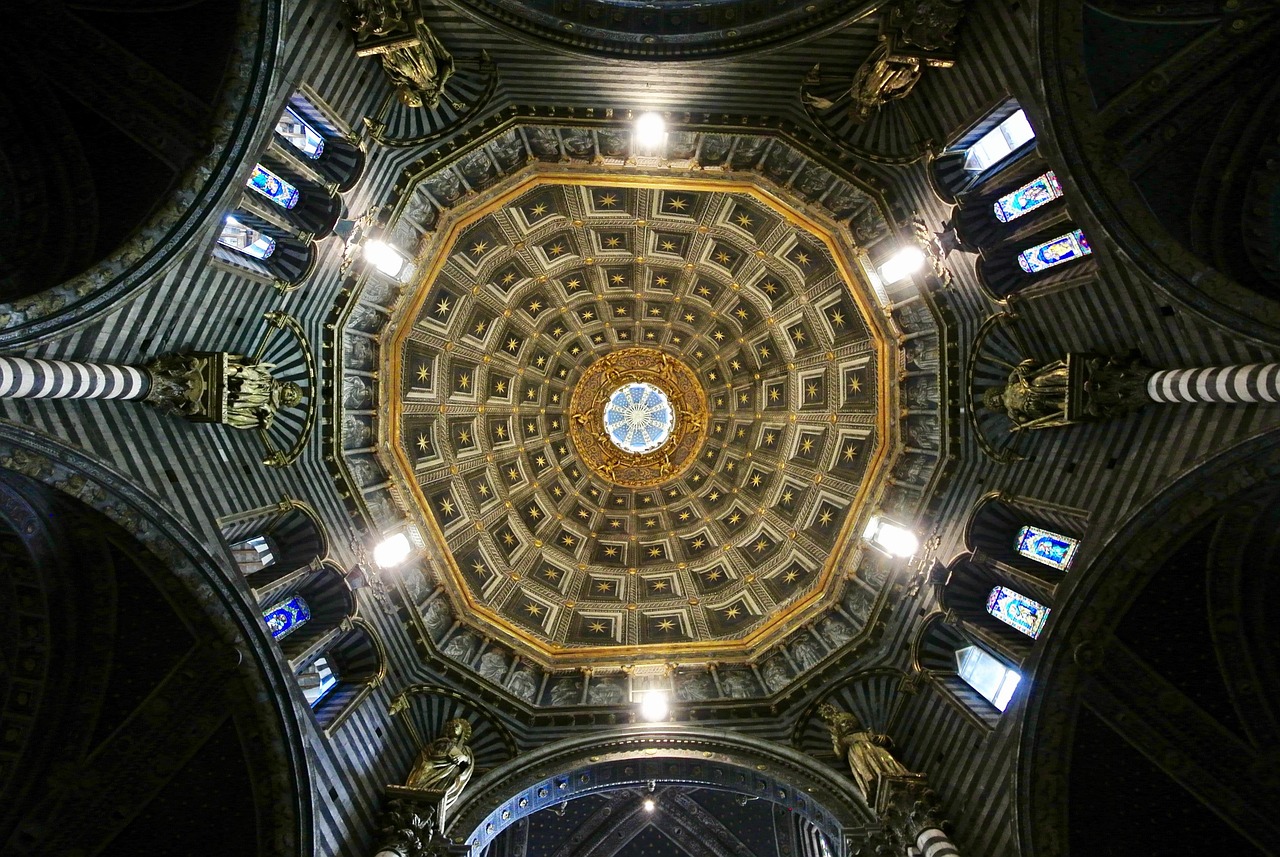
Morning: Dedicate this morning to the Duomo complex. Start early to beat tour groups. Visit the cathedral, the Piccolomini Library, the Baptistery, and the crypt if included in your pass. Take your time; there’s a lot to absorb.
Late morning: Cross the square to Santa Maria della Scala. Explore its layered history: hospital, pilgrims’ hostel, children’s shelter, now museum. I like following my curiosity here – one corridor leads to another, with chapels, archaeological zones, and rotating exhibits.
Lunch: Head toward Via di Città or Via di San Pietro for a simple lunch: panini, salads, or a light pasta. If it’s warm, get a takeaway panino and eat on a shaded bench.
Afternoon: Walk down to Orto de’ Pecci. The descent gives you a different perspective on Siena, watching the city climb above you. In the garden valley, linger over a drink or gelato, or just stretch out on the grass. This is a great, relaxing counterpoint to the morning’s heavy art and architecture.
On your way back up, zigzag through side streets to discover small artisan workshops and contrada corners.
Evening: Consider a short, informal wine tasting at a local enoteca. Ask them to pour you a flight of three Tuscan reds – maybe a Chianti Classico, a Vino Nobile di Montepulciano, and a Brunello di Montalcino – and explain the differences. Then dinner: try cinta senese (local pork) or wild boar if you eat meat.
Day 3: Art, Views & Your Favorite Corners
Morning: Head to the Pinacoteca Nazionale for a deep dive into Sienese painting. Even if you’re not usually an art fan, seeing so many works in their city of origin is powerful.
Late morning: Make your way back toward the Duomo and climb the Facciatone for another unforgettable panorama, this time with the cathedral itself front and center.
Lunch: By now you’ll have spotted a few places that looked tempting. Trust your instincts and pick one. I like to ask the server, “Cosa mi consiglia oggi?” (What do you recommend today?) and go with that.
Afternoon: Use this time to revisit wherever tugged at your heart: another lazy hour on the Campo, a second wander through a favorite contrada, or a visit to San Domenico and Casa di Santa Caterina if you haven’t gone yet.
Evening: For your final night, have a slightly more special dinner: maybe a courtyard restaurant with twinkling lights. Afterwards, walk one last loop through the quiet lanes. This is often the moment when people decide they’ll be back – and start scheming a 4 or 5 day itinerary for their next Siena trip.
4 Days in Siena – Slow & Savoring
With 4 days in Siena, you can add more breathing room or a half-day mini-excursion while still having time to get to know the city deeply.
Day 4: Fortezza, Neighborhoods & Everyday Siena
Morning: Start with a leisurely breakfast and then head toward the Fortezza Medicea. Walk its ramparts, enjoy the greenery, and take in long views over the countryside. If you run, this is a good spot for a jog.
Late morning: Wander down into the surrounding neighborhoods – San Prospero and beyond. This is where Siena feels more local: kids going to school, people doing errands. Pick up picnic supplies at a supermarket or small deli.
Lunch: Either picnic back at the fortress or find a family-run trattoria outside the main tourist core. I’ve had some of my best-value meals in these slightly out-of-the-way spots.
Afternoon: Explore more contrade, perhaps focusing on a cluster like Onda, Torre, and Selva. Look for their fountains and headquarters. If you’re here in 2026–2027 and lucky, you might stumble upon a contrada event or dinner being set up.
Evening: Consider a cultural event: a small concert in a church, a temporary exhibition at Santa Maria della Scala, or a wine-themed evening. Check the 2026 events calendar at the tourist office or online closer to your trip.
5 Days in Siena – Deep Dive & Day Trips
With 5 days in Siena, you can fully relax into the city’s rhythm and add at least one day trip into the countryside. Here’s how I’d stretch the itinerary.
Day 5: Day Trip to Tuscan Wine Country or Hill Towns
Option 1 – Chianti Wine Day: Join a small-group tour or hire a driver to explore the Chianti hills: vineyards, stone farmhouses, and cypress-lined roads. Visit 2–3 wineries, learn about Sangiovese grapes, and linger over a long lunch. Back in Siena by evening, pleasantly tired and full.
Option 2 – San Gimignano: Take a bus or tour to San Gimignano, the “medieval Manhattan” with its stone towers. Wander its streets, climb a tower, taste gelato from the famous gelateria, and return to Siena in time for dinner.
Option 3 – Montalcino & Pienza: For cheese and Brunello lovers, a day hitting Montalcino and Pienza is perfect. This is easier by car or organized tour. Expect incredible countryside views and some of the best pecorino cheese of your life.
Evening in Siena: Spend your last night revisiting your favorite wine bar or restaurant. I like to end trips with a simple meal at a spot I’ve already tried earlier in the stay – it feels almost like being a temporary regular.
Local Food & Drink in Siena
Tuscan food is rustic, hearty, and ingredient-driven. Siena adds its own twists with local sweets, specific pasta shapes, and a love for offal and game. Eating well here doesn’t require a big budget if you know where to look.
Must-Try Local Dishes
- Pici: Thick, hand-rolled spaghetti-like pasta, often served all’aglione (garlic tomato sauce), with cacio e pepe, or with ragù.
- Ribollita: Hearty bread-and-vegetable soup, perfect in cooler months.
- Pappa al pomodoro: Tomato and bread soup, simple but addictive.
- Cinta senese: Local heritage pork, often grilled or cured.
- Crostini toscani: Toasts topped with chicken liver pâté and other spreads.
- Cantucci & Vin Santo: Almond biscuits dipped in sweet dessert wine.
- Panforte & Ricciarelli: Traditional Sienese sweets, especially popular around Christmas but available year-round.
Where & How I Like to Eat in Siena
For budgets of all kinds, here’s how I usually structure my eating:
- Breakfast: Coffee and a pastry at the bar – a few euros, stand at the counter for local prices.
- Lunch: Either a sit-down pasta or a takeaway panino eaten in a piazza or park (budget-friendly).
- Dinner: The main event. I’ll often splurge a bit more here: shared antipasti, a pasta or meat dish, maybe dessert or a cheese plate, plus house wine.
To save money, target one “big” meal per day and keep the others simple. House wine (vino della casa) is usually excellent value and often local.
Nightlife, Entertainment & Cultural Experiences in Siena
Siena isn’t a nightclub city, but it has a warm, sociable evening culture: wine bars, late dinners, open-air concerts, and contrada events.
Evenings & Nightlife
- Wine bars: Cozy enoteche are where locals gather; perfect for couples and friends.
- Cafés & gelato: Families often stroll with gelato until late, especially in summer.
- Live music: Look for small jazz or acoustic performances, especially around summer festivals and at the Fortezza.
Cultural Experiences
- Church concerts: Classical and choral concerts in historic churches.
- Temporary exhibitions: Regular shows at Santa Maria della Scala and smaller galleries.
- Contrada events: Dinners, celebrations, and parades, especially around Palio dates. Often private, but sometimes open to visitors by arrangement.
Best Day Trips from Siena
San Gimignano
Famous for its medieval towers and Vernaccia white wine. Easy bus connections from Siena make it a natural day trip. Go early to beat the crowds, climb the Torre Grossa, and wander the back alleys to escape the main tourist throng.
Chianti Region
Rolling hills, vineyards, and stone villages. Best done by car or organized tour. Perfect for wine-tasting, long lunches, and countryside walks.
Montalcino & Pienza
Brunello wine and pecorino cheese heaven. These two hill towns make a great combined day trip if you start early. Expect jaw-dropping views and indulgent tastings.
Monteriggioni
A tiny, perfectly walled medieval town visible from the highway. Easy to pair with another short outing. Walk the walls, sip a coffee in the main square, and imagine defending the city centuries ago.
Cultural Etiquette & Local Customs in Siena
Understanding the Contrade
The contrade are not tourist shows – they’re living communities. A few key points:
- Don’t mock or trivialize contrada symbols or rivalries.
- If you’re invited to a contrada dinner, be respectful, dress neatly, and follow locals’ lead.
- During Palio season, emotions run very high. Avoid provocative comments about who should win.
General Italian & Sienese Etiquette
- Greetings: A simple “Buongiorno” (before afternoon) or “Buonasera” (afternoon/evening) goes a long way.
- Dress: Casual but neat. Cover shoulders and knees in churches.
- Noise: Keep voices down, especially at night in residential lanes – sound echoes in stone streets.
- Ordering coffee: Cappuccino is typically a morning drink; after lunch locals switch to espresso.
- Tipping: Not mandatory, but rounding up or leaving a small amount (5–10%) for good service is appreciated.
Practical Travel Tips for Siena (2026–2027)
Getting To & Around Siena
Arriving:
- By train: Frequent connections from Florence, Pisa, and Rome. The station is below the historic center; escalators and a bit of uphill walking get you into town.
- By bus: Often faster than the train from Florence, dropping you closer to the center.
- By car: You can’t drive into most of the historic center (ZTL zones). Park in designated lots outside the walls and walk or use escalators.
Getting around: The center is compact and best explored on foot. Be prepared for hills and stairs. There are local buses, but most visitors rarely need them once in town.
Money-Saving Tips
- Eat your main meal at lunch, when some places have cheaper menus.
- Use supermarket delis and bakeries for picnic lunches.
- Choose accommodations slightly outside the main tourist streets for better value.
- Buy combined museum passes (Duomo complex, Torre del Mangia + Palazzo Pubblico) rather than individual tickets.
- Drink tap water – it’s safe and free; refill your bottle at public fountains.
SIM Cards & Connectivity (2026)
In 2026, Italy’s main providers (TIM, Vodafone, WindTre, Iliad) all offer tourist-friendly prepaid SIMs with generous data. You can buy them at airports, larger train stations, or phone shops in Siena. Bring your passport. E-SIMs are increasingly common; check if your phone supports them and consider setting one up before arrival.
Car Rental & Driving
If you plan to explore the countryside extensively, renting a car for a couple of days can be worthwhile. Remember:
- Foreign driver’s licenses from many countries are accepted; some non-EU visitors also need an International Driving Permit. Check current rules before you travel.
- Watch out for ZTL zones (limited traffic areas) – cameras fine you automatically if you enter without authorization.
- Parking garages outside the walls are the safest bet for visitors.
Visa Requirements
Italy is part of the Schengen Area. Many visitors (including from the EU, UK, US, Canada, Australia, New Zealand, and others) can enter visa-free for short stays, but rules are changing with new digital travel authorization systems rolling out in 2026–2027. Always check the latest entry requirements for your nationality before traveling.
Safety & Health
- Siena is generally very safe; usual big-city pickpocket precautions apply in crowds.
- Streets can be uneven; bring sturdy, comfortable shoes.
- Summer can be hot – carry water, wear sunscreen, and take midday breaks.
When to Visit Siena & Final Thoughts
Best Seasons for Visiting Siena
- Spring (April–June): Mild weather, blooming countryside, fewer crowds than peak summer. Ideal for a 3 or 4 day itinerary for Siena plus day trips.
- Summer (July–August): Hot, busy, especially around the Palio. Incredible atmosphere if you can handle heat and crowds.
- Autumn (September–October): My personal favorite: harvest season, wine events, warm days and cooler nights. Perfect for a 5 day itinerary for Siena and countryside explorations.
- Winter (November–March): Quiet, atmospheric, with lower prices. Some shorter opening hours and fewer events, but you’ll have the city almost to yourself.
Major 2026–2027 Events & What’s New
- Palio di Siena: July 2 and August 16 each year, with extended celebrations and cultural programming in the weeks before and after.
- Wine & Food Festivals: Expect enhanced wine events and food fairs in autumn 2026–2027, as Tuscany continues to lean into sustainable, local gastronomy.
- Extended Museum Hours: Key sites like the Duomo complex and Santa Maria della Scala are increasingly offering evening openings in peak months – a wonderful way to avoid midday crowds.
Final Takeaways
Siena is not a city to rush through on a day trip. Whether you’re crafting 3 days in Siena, stretching to a 4 day itinerary for Siena, or giving yourself a luxurious 5 days in Siena, the magic lies in repetition and rhythm: returning to the same piazza at different times of day, recognizing the same faces at your morning bar, learning the names of a few contrade, finding your favorite view.
If you let Siena set the pace – slower, more deliberate, more attentive – it will reward you with layers of history, flavors, and small, luminous moments you’ll carry long after you leave.
Pack good shoes, an open schedule, and a big appetite. Siena will take care of the rest.