Why Visit Abu Dhabi in 2026
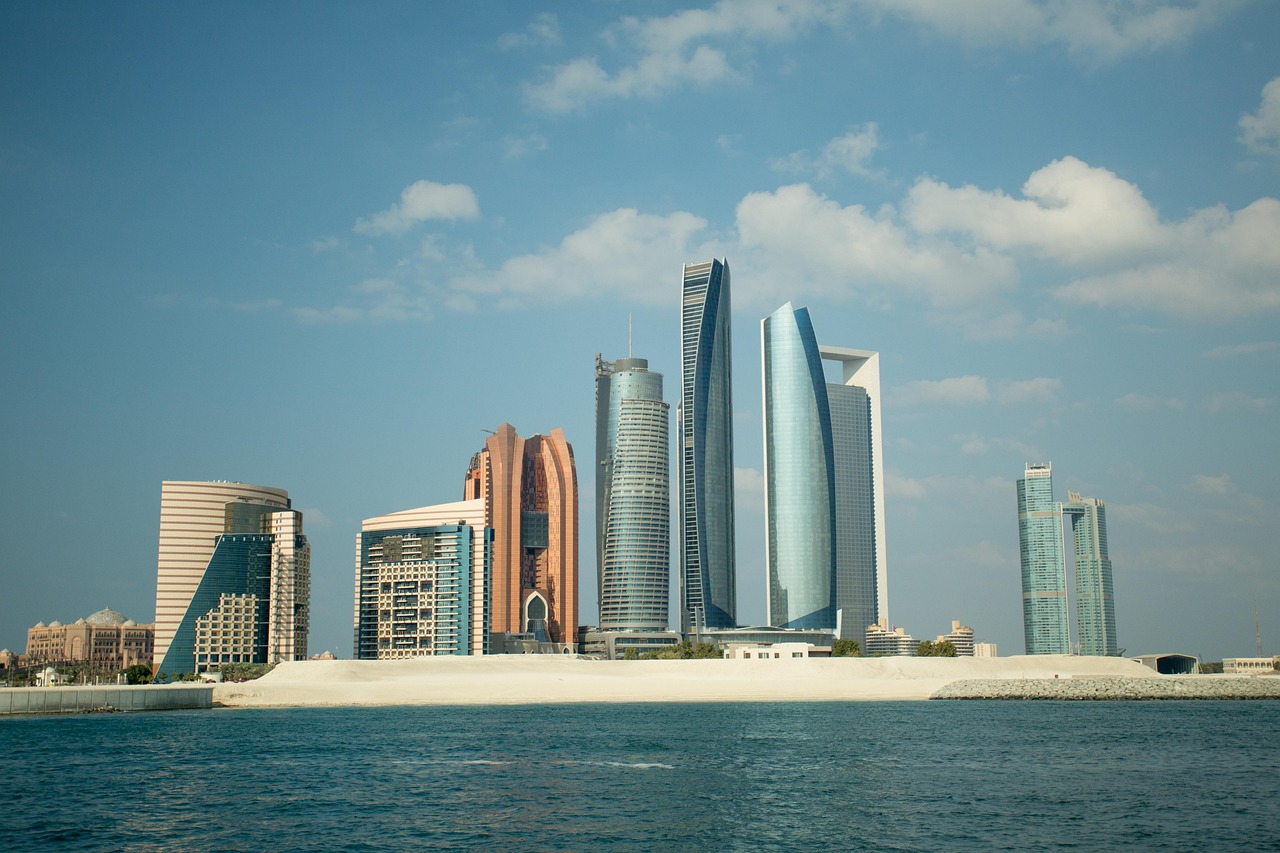
Abu Dhabi is the city that surprised me the most in the UAE. The first time I came, I expected a quieter cousin of Dubai – a place to spend a day or two before flying out. Instead, I found a city that feels like a slow-blooming story: vast desert and mangroves brushing up against futuristic skyscrapers, mosques made of marble and light, long evenings by the Gulf, and an arts scene that’s finally stepping into the spotlight.
What makes Abu Dhabi special in 2026 is the balance it has found: it’s modern but not frantic, wealthy but still grounded in Emirati traditions, family-friendly but not boring, romantic without being over-the-top. You can kayak through mangroves in the morning, wander an art museum in the afternoon, and finish the day at a shawarma stand where the guy behind the counter has already memorized your order by your second visit.
For first-timers, Abu Dhabi delivers the “wow” factor with places like the Sheikh Zayed Grand Mosque and Louvre Abu Dhabi. For repeat visitors (like me), it rewards you with small rituals: sunset walks on the Corniche, late-night karak tea in Mina Zayed, and weekend escapes to desert resorts that feel a world away from city life.
In 2026–2027, Abu Dhabi is also ramping up with new cultural events, expanded public transport options, and upgraded waterfront developments. If you’ve been saying “I’ll go one day,” this is a very good year to finally book that ticket.
Table of Contents
- Why Visit Abu Dhabi
- Essential Overview of Abu Dhabi
- 20 Must-See Attractions in Abu Dhabi (With Local Insights)
- Suggested Itineraries: 3–5 Days in Abu Dhabi
- Neighborhoods & Districts to Explore
- Local Food & Where to Eat
- Nightlife, Entertainment & Cultural Experiences
- Best Day Trips from Abu Dhabi
- What’s New & Events in 2026–2027
- Cultural Etiquette & Local Customs
- Practical Travel Tips for Abu Dhabi
- Summary & Best Time to Visit Abu Dhabi
Essential Overview of Abu Dhabi
Abu Dhabi is the capital of the United Arab Emirates and the largest of the seven emirates. The city itself spreads across islands and the mainland, with ever-expanding neighborhoods, new cultural districts, and long stretches of waterfront. It’s more spread out than Dubai, which means getting around usually involves taxis or driving, but it also means you rarely feel crushed by crowds.
Abu Dhabi is very safe, obsessively clean, and easy to navigate with English. It’s also a city of micro-worlds: opulent malls, quiet backstreet cafes, Indian and Filipino neighborhoods buzzing late into the night, traditional dhow harbors, and sleepy residential areas where life happens behind villa walls.
Weather-wise, the sweet spot is November to March, when you can sit outside without melting. The rest of the year can be searingly hot and humid, but it’s still possible to enjoy the city with an “indoor by day, outdoor by night” strategy.
20 Must-See Attractions in Abu Dhabi (With Local-Style Stories & Tips)
These are the places I keep returning to – either because they’re objectively spectacular, or because they’ve become part of my personal Abu Dhabi rituals. I’ll start with the heavy-hitters, then move into the quieter gems.
1. Sheikh Zayed Grand Mosque
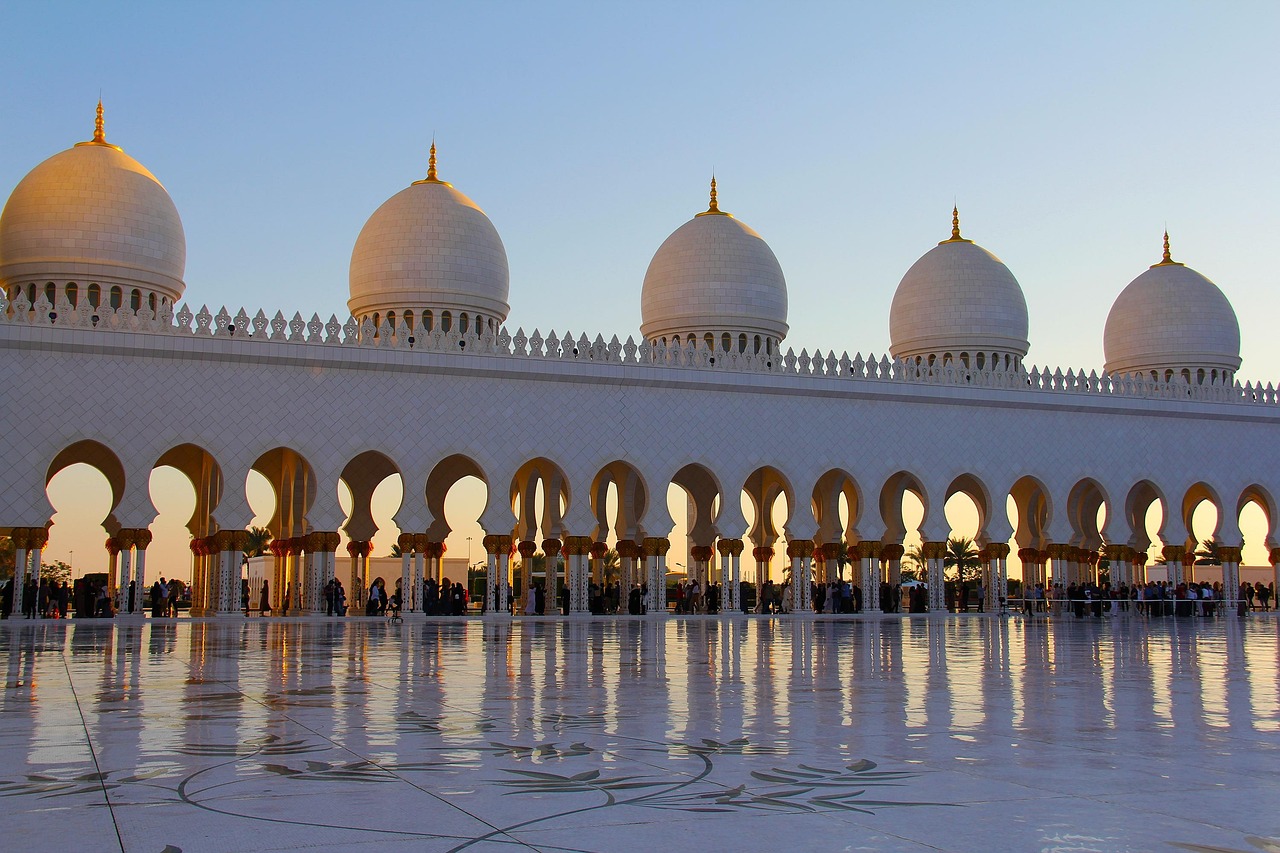
If you only have time for one sight in Abu Dhabi, make it the Sheikh Zayed Grand Mosque. The first time I walked into the courtyard at golden hour, I actually went quiet – and I’m not someone who goes quiet easily. The mosque is a place where everything feels exaggerated yet serene: 82 domes, 1,000+ columns, one of the world’s largest hand-knoven carpets, and chandeliers dripping with Swarovski crystals.
The mosque was completed in 2007 and named after Sheikh Zayed bin Sultan Al Nahyan, the founding father of the UAE, who is buried on the grounds. It blends Ottoman, Mamluk, and Fatimid influences into a distinctly Emirati statement: confident, welcoming, and deeply rooted in Islamic tradition.
My routine: I usually time my visit to arrive about 60–90 minutes before sunset. I enter through the underground visitor center, pass through security, and emerge into the courtyard right when the light starts turning honey-gold. After the guided tour (free, and highly recommended), I linger in the colonnades and watch the marble shift colors as the sky darkens.
How to get there: The mosque is about 20–25 minutes by taxi from the Corniche or downtown. Public buses (like route 94) stop nearby, but taxis are far more convenient and still reasonably priced. Ride-hailing apps (Careem, Uber) work well.
Dress code & etiquette: Modest clothing is non-negotiable. Women should cover arms, legs, and hair. Men should wear long trousers and sleeved shirts. The mosque used to lend abayas; policies shift, so bring your own modest outfit just in case. Avoid loud conversation, and be mindful that it’s a functioning place of worship.
Family, romantic, or adventurous? Beautiful for families (kids are usually awed by the size), romantic at blue hour when the lights come on, and spiritually moving even if you’re not religious.
Local tip: Join one of the free cultural tours; they’re not long, and you’ll walk away with a much deeper understanding of Islamic architecture and Emirati history. Photography is allowed in most areas, but avoid taking photos of people praying.
2. Louvre Abu Dhabi
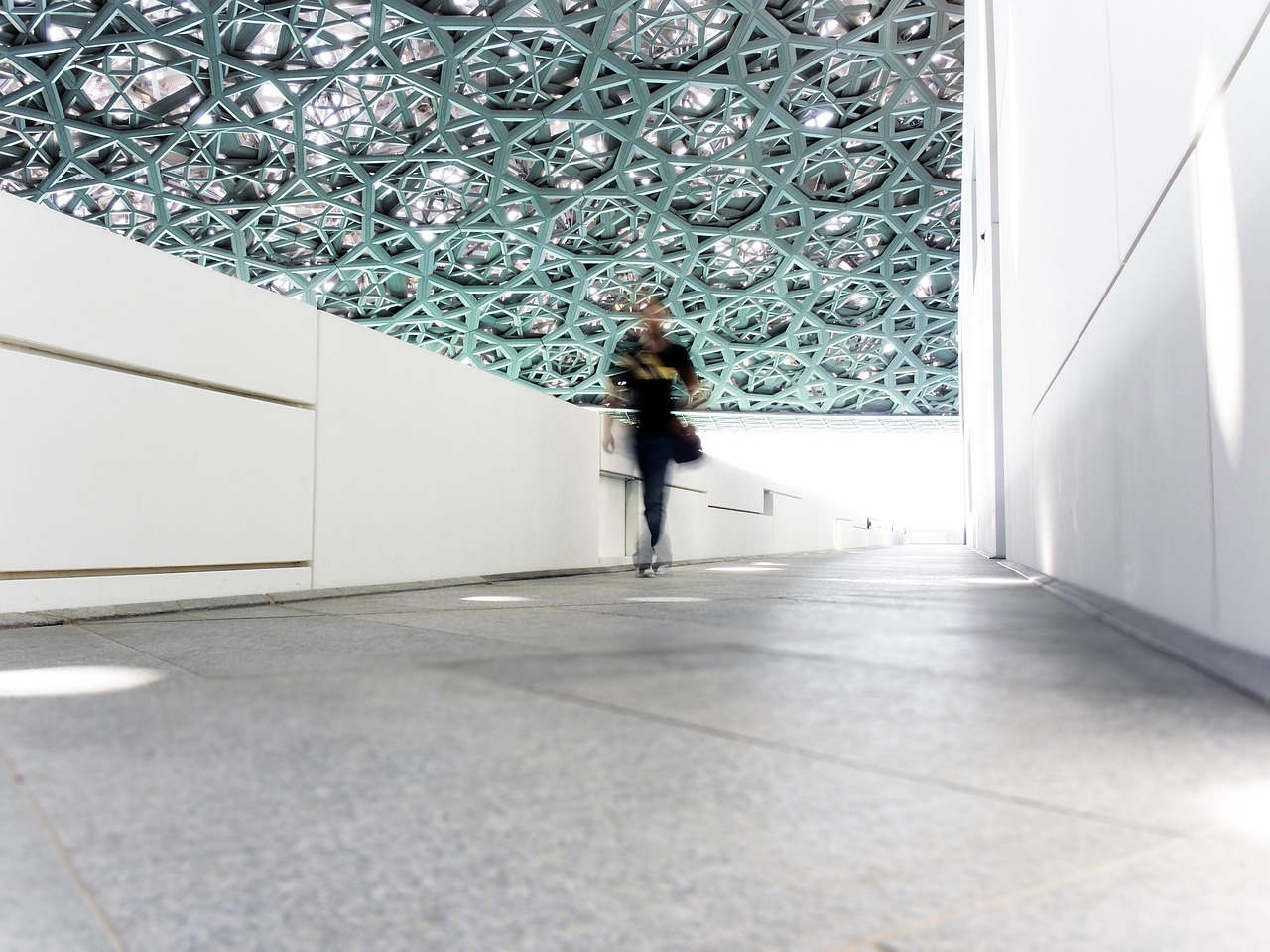
Louvre Abu Dhabi is the UAE’s love letter to art and architecture. Designed by Jean Nouvel, the building alone is worth the visit: a floating silver dome that lets in “rain of light” – shifting dappled sunlight that moves across the courtyard throughout the day.
The museum opened in 2017 as the first universal museum in the Arab world, with works on loan from France and its own growing permanent collection. Instead of organizing art by geography, it arranges pieces by theme and era, telling a global story of human creativity.
My favorite moment: On my second visit, I spent nearly an hour in the outdoor galleries by the water, just watching the light play on the sea and the dome. The soundscape (water, wind, distant city hum) makes the entire place feel like a living installation.
Inside highlights: Works by Leonardo da Vinci, Van Gogh, and Monet sit comfortably next to ancient Middle Eastern artifacts, African sculptures, and contemporary art. The children’s museum is excellent – interactive and thoughtfully curated.
How to get there: Located on Saadiyat Island, about 15–20 minutes from the city center by taxi. Buses serve the island, but they’re slower; if you’re short on time, take a cab.
Food & drink: The on-site café and the waterfront restaurant are decent but pricey. I sometimes grab a coffee there just to linger under the dome, then head elsewhere on Saadiyat for a proper meal.
Local tip: Go right when it opens or a couple of hours before closing for quieter galleries. If you love photography, bring a fast lens – the interplay of light and shadow under the dome changes minute by minute.
3. Abu Dhabi Corniche
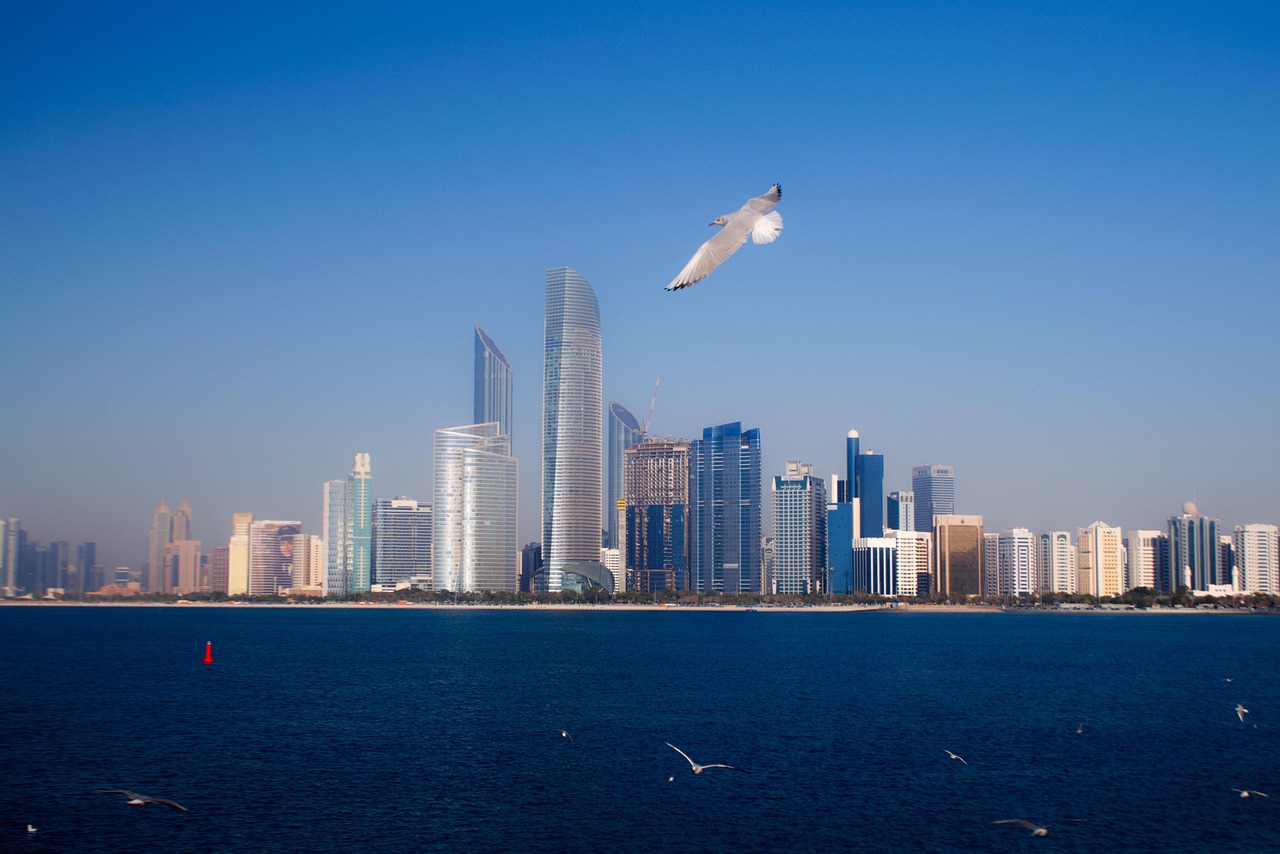
The Corniche is Abu Dhabi’s long, curving waterfront promenade – 8 kilometers of beach, parkland, bike lanes, and postcard city views. For me, this is where Abu Dhabi truly breathes. In the cooler months, it’s full of families picnicking, kids riding scooters, couples strolling hand-in-hand, and runners pacing themselves along the seafront.
My ritual: I like to rent a bicycle near Nation Towers and ride towards Marina Mall around sunset. The sun drops behind the skyline, and the sky flushes pastel over the Gulf. Afterward, I grab a shawarma or falafel from a streetside stall nearby and sit on the low wall watching the city lights come on.
Beaches: The Corniche has several public and private beach sections, with loungers, umbrellas, and calm swimming areas. Water is usually clear and gentle – lovely for families.
How to get there: If you’re staying downtown, you can probably walk. Otherwise, hop in a taxi and ask for “Corniche Beach” or “Nation Towers.”
Local tip: Friday and Saturday evenings (weekend) are the busiest and most atmospheric. If you prefer quiet, go in the early morning; I’ve had entire stretches almost to myself at 7 a.m. in January.
4. Qasr Al Watan (Presidential Palace)
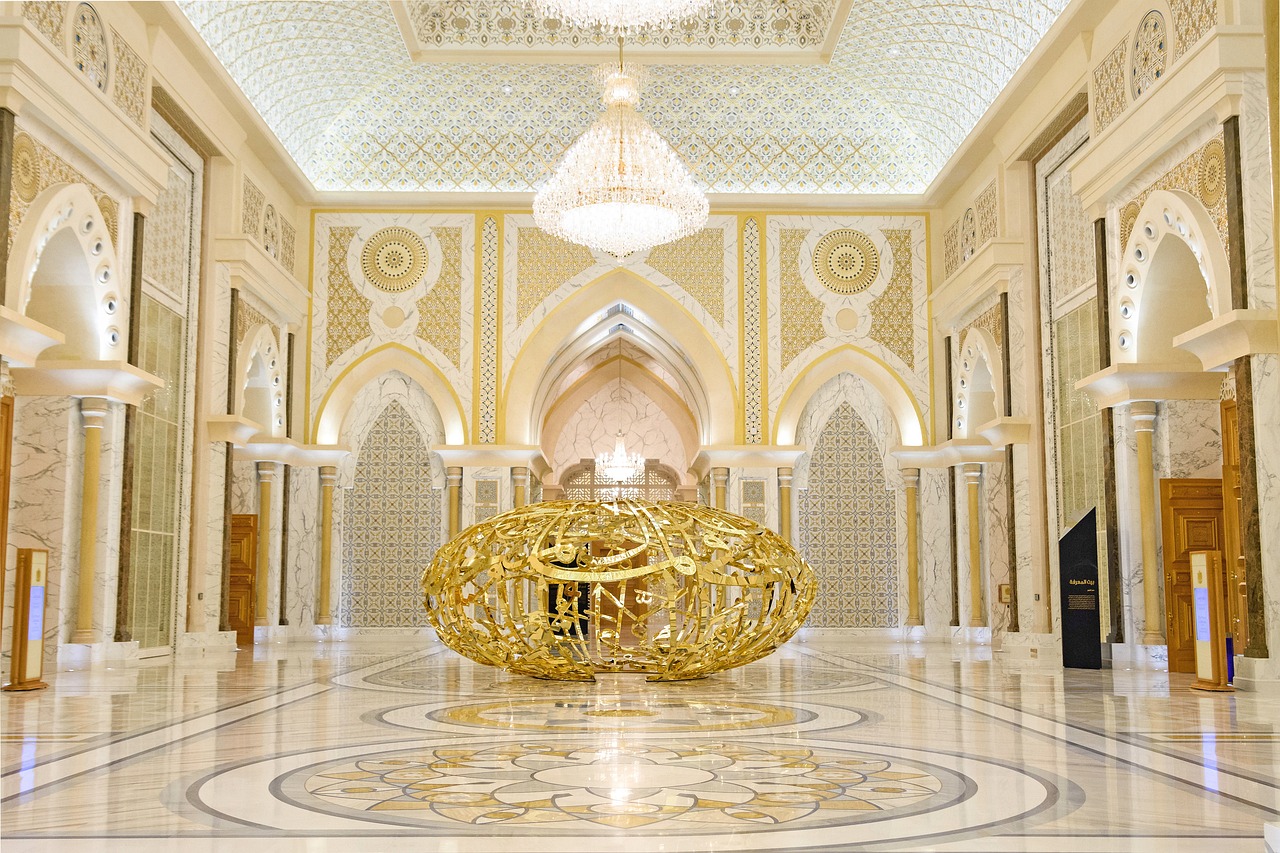
Qasr Al Watan is the UAE’s working presidential palace and one of the most visually jaw-dropping interiors you’ll ever see. When it opened to the public, I honestly expected a stiff, roped-off experience. Instead, it turned out to be surprisingly informative and welcoming.
The palace architecture blends traditional Islamic design with modern precision: vast domes, intricate geometric patterns, and a main hall that makes your neck ache from looking up. Exhibits explain how the UAE government works, showcase rare manuscripts, and highlight the country’s diplomatic history.
Evening show: On certain nights, there’s a sound-and-light show projected on the palace façade. Standing in the courtyard, with the building glowing against the night sky, feels a bit like stepping into a movie set.
How to get there: Located within the Presidential Palace complex, near Emirates Palace and the Corniche end. Taxis drop you at the visitor gate, from where you take a shuttle bus inside.
Dress & etiquette: Modest clothing recommended (shoulders and knees covered). It’s not as strict as the mosque, but it’s still a seat of government, so dress with respect.
Local tip: Combine Qasr Al Watan with a visit to nearby Emirates Palace and the Corniche for a full day in this part of town. Book tickets in advance during peak season.
5. Emirates Palace (Now Emirates Palace Mandarin Oriental)
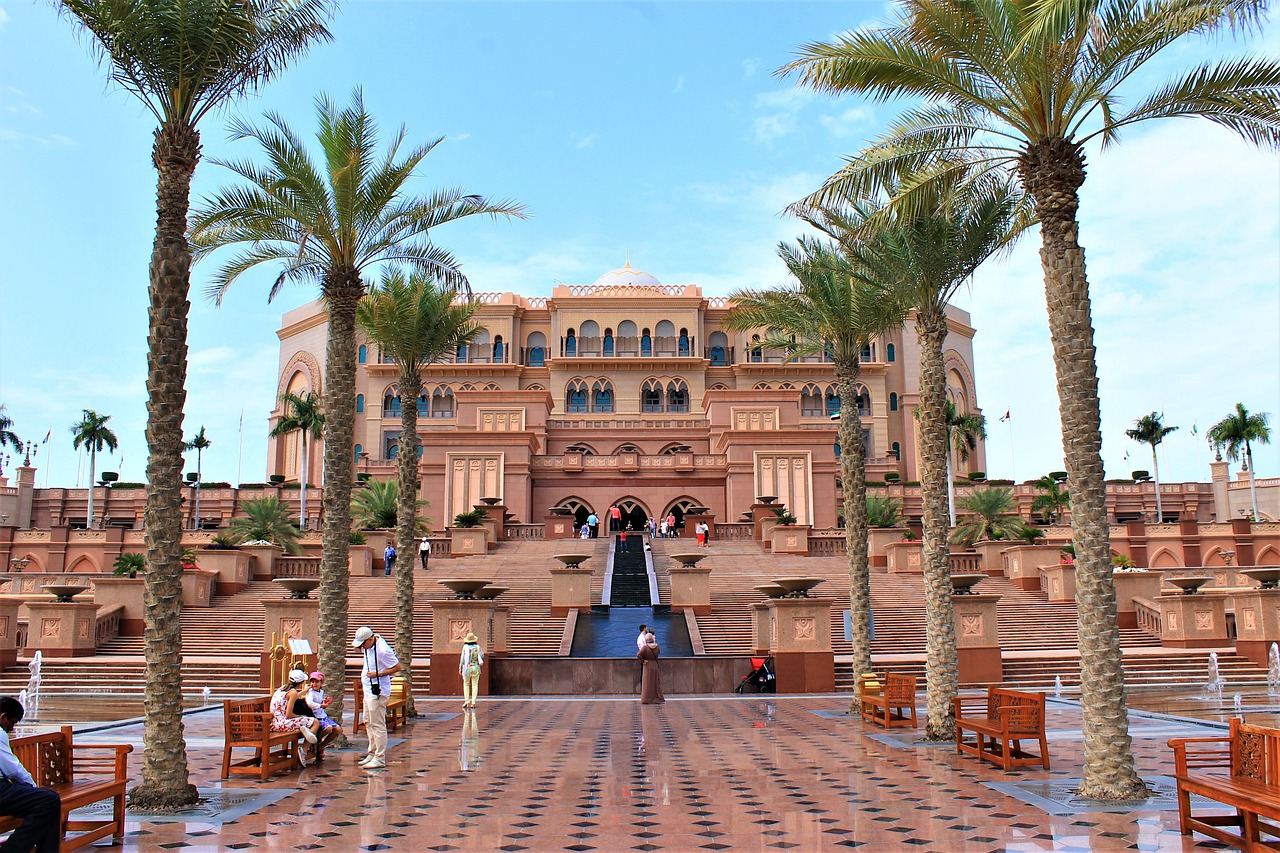
Emirates Palace is Abu Dhabi’s most iconic luxury hotel – a sprawling, sand-colored palace with manicured gardens, fountains, and its own private stretch of beach. You don’t need to be a hotel guest to enjoy it; I’ve often popped in just for coffee or a walk around the grounds.
Inside, it’s gilded everything: marble floors, grand staircases, crystal chandeliers. It can feel over-the-top, but there’s a certain charm in leaning into the opulence for an hour or two.
My favorite indulgence: The famous “gold cappuccino,” sprinkled with 24-karat gold flakes, served in the lobby café. It’s a bit gimmicky, but if you’re going to be extra anywhere, it may as well be here. The cake display is also dangerously tempting.
How to visit: Dress smart-casual (no beachwear) and enter through the main gates. Security is usually polite but firm about dress code. You can wander public areas, dine in the restaurants, or book a spa treatment.
Local tip: Go just before sunset, grab a coffee, then step outside to watch the last light over the Palace’s private marina and gardens. At night, the building lights up in different colors – a completely different mood from daytime.
6. Yas Island: Ferrari World, Yas Waterworld & Yas Marina Circuit
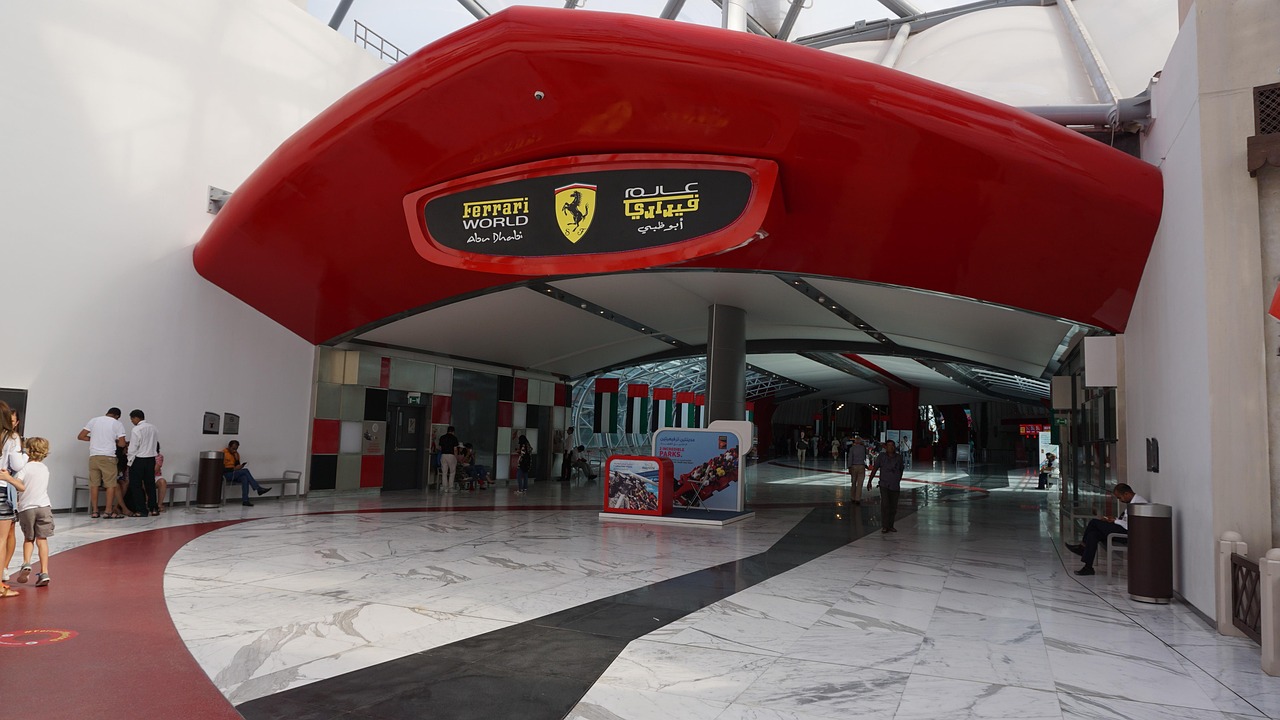
Yas Island is Abu Dhabi’s epicenter of theme parks and thrills. If you’re traveling with kids (or if you’re a grown-up who loves roller coasters), you’ll probably spend at least a day here. I’ve done Yas with friends, with family, and solo – it’s easy to tailor to your energy level.
Ferrari World: Home to Formula Rossa, one of the world’s fastest roller coasters. The launch is so intense that I screamed non-stop from start to finish the first time. The rest of the park mixes high-adrenaline rides with gentler family attractions, Ferrari exhibits, and Italian-themed areas. Indoor and air-conditioned, so perfect for summer.
Yas Waterworld: When I need to cool off, this is where I go. It has a good mix of body slides, tube rides, and lazy river segments, plus a surf-style wave attraction. Lockers, changing rooms, and food outlets are well-organized.
Yas Marina Circuit: F1 fans will know this as the Abu Dhabi Grand Prix venue. Even if you’re not into racing, the evening track runs and cycling sessions are fantastic. I once did a sunset cycle around the track and could not wipe the grin off my face.
How to get there: About 30 minutes by taxi from central Abu Dhabi. Yas also has shuttle buses connecting major hotels and attractions.
Local tip: Look for multi-park combo tickets to save money. Go on weekdays to avoid crowds, and plan indoor parks midday, outdoor water activities early morning or late afternoon in hotter months.
7. Saadiyat Public Beach & Cultural District
Saadiyat Island is where Abu Dhabi’s cultural and laid-back beach personalities meet. On one side, you have Louvre Abu Dhabi and other upcoming cultural institutions; on the other, powdery white sand and turquoise water straight out of a brochure.
Saadiyat Public Beach has become my default “reset” place in Abu Dhabi. The sand is soft, the water is usually clear, and the vibe is more tranquil than some city beaches. There are loungers and umbrellas for rent, plus a few casual food options.
Wildlife note: The island is also a nesting site for Hawksbill turtles, so parts of the beach may be cordoned off during nesting season. Respect the signs; the conservation work here is serious and well-organized.
How to get there: 15–20 minutes by taxi from downtown. Some hotels on Saadiyat offer shuttles.
Local tip: Go on weekday mornings for a quieter, almost private-beach feel. Bring snacks and water if you want to avoid resort prices.
8. Heritage Village
Heritage Village is a small open-air museum that recreates a traditional oasis village – think Bedouin tents, mud-brick houses, a falaj (irrigation system), and small workshops. It’s not flashy, but it’s a gentle place to understand what life looked like in the Emirates before oil.
I like going in the late afternoon, when the sun is softer. I’ve had long chats with artisans in the workshops – one weaver once explained how patterns in textiles used to signal tribal identity.
How to get there: Located near Marina Mall, on a small breakwater with great views of the city skyline.
Local tip: Combine Heritage Village with a Corniche stroll and Marina Mall visit. It’s especially good if you’re traveling with kids who need space to roam but you still want something cultural.
9. Qasr Al Hosn & House of Artisans
In the middle of glass towers, Qasr Al Hosn stands like a white mirage. This fort is the oldest stone building in Abu Dhabi and once served as a watchtower guarding the island’s only freshwater well. Over time, it became the ruling family’s residence and the seat of government.
The restoration is beautifully done. Inside, galleries walk you through Abu Dhabi’s transformation from a pearling village to a modern capital, with old photos that feel almost impossible compared to today’s skyline.
Next door, the House of Artisans showcases traditional Emirati crafts: palm-frond weaving, Sadu (bedouin weaving), and more. I’ve spent entire afternoons here just talking to artisans and watching them work.
Local tip: Check for events and workshops; they often run weaving or craft sessions where you can try your hand at traditional techniques.
10. Eastern Mangroves & Kayaking
Whenever the city feels a bit too vertical, I escape to the mangroves. The Eastern Mangroves are a protected natural area where you can kayak or paddleboard through narrow channels flanked by lush greenery, with herons and flamingos for company.
The contrast is always striking: you’re ten minutes from a multilane highway, yet it feels like a world away. On one sunset paddle, my guide pointed out tiny crabs scuttling on roots and explained how the trees filter salt – it felt more like a biology lesson than a city excursion.
How to get there: Tours depart from the Eastern Mangroves Marina area, about 15 minutes from downtown. Book in advance, especially on weekends and in cooler months.
Local tip: Go for early morning or sunset tours to avoid the heat and catch better wildlife activity. Bring a dry bag for your phone and a change of clothes; you will get splashed.
11. Warner Bros. World Abu Dhabi
Warner Bros. World is one of the biggest indoor theme parks on the planet, and honestly, it’s much more fun than I expected. Fully air-conditioned and themed to the nines, it’s a lifesaver in the peak of summer.
From Gotham City to Bedrock (hello, Flintstones), the park mixes rides, shows, and character meet-and-greets. I went once “for research” and ended up staying until closing, shamelessly queuing for cartoon-themed rides with kids half my size.
Local tip: Go on a weekday and start early; crowds peak in the mid-afternoon. Wear comfortable shoes – you’ll walk more than you think.
12. Abu Dhabi Falcon Hospital
This is one of the most unique experiences in Abu Dhabi. Falcons are deeply woven into Emirati culture, and this hospital is both a state-of-the-art veterinary center and an educational facility.
On the guided tour, you’ll see falcons undergoing check-ups, learn how their feathers are repaired, and maybe even hold one on your gloved arm. The first time I did this, I was surprised by how light the bird felt, and how intensely it looked at me.
How to get there: Located near the airport, around 30–40 minutes from the city center. Tours must be booked in advance.
Local tip: Combine with an arrival or departure day if your flight times line up; it’s close to the airport, and you can store luggage in your vehicle if you’re on a private tour.
13. Desert Safari in Al Khatim or Liwa
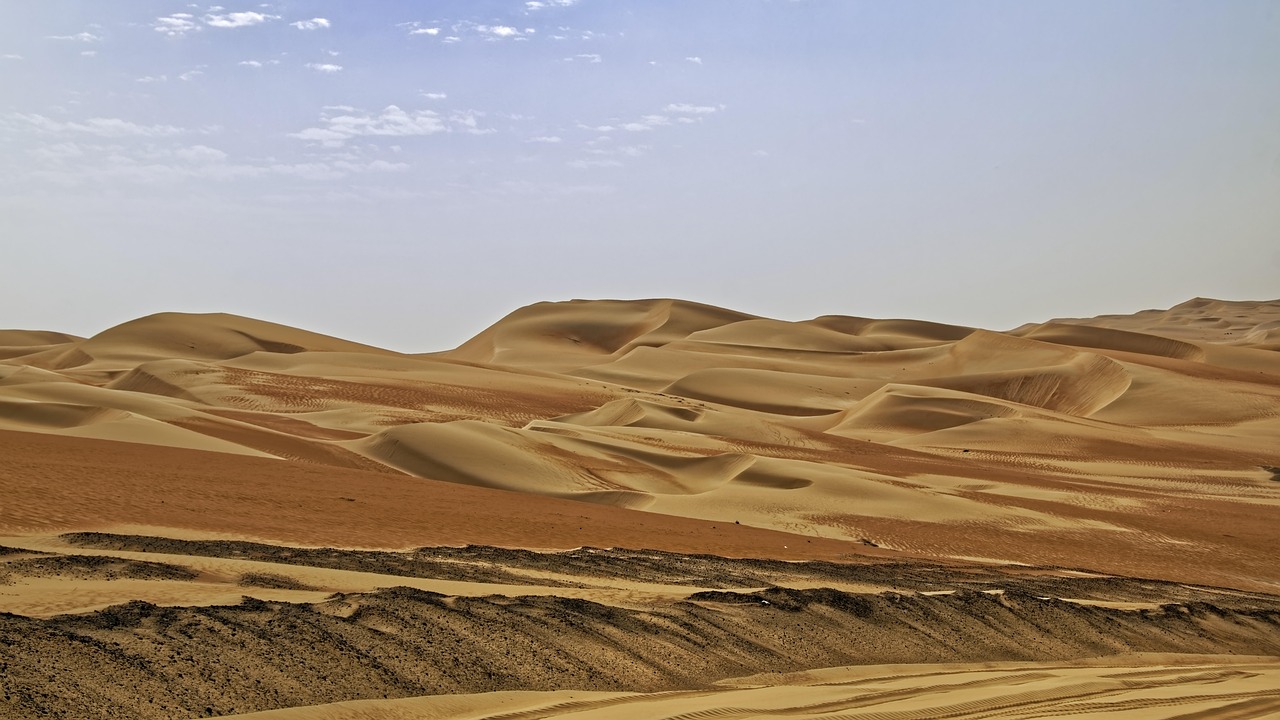
A desert safari is a bit of a cliché, but it’s still magical if done well. The dunes outside Abu Dhabi glow orange at sunset, and the silence is a kind of luxury you don’t get in the city.
Most tours include dune bashing in 4x4s (I recommend telling your driver your comfort level; they can go from gentle to roller-coaster), sandboarding, a sunset stop, and a camp dinner with entertainment.
My experience: On my first safari, I asked the driver for “medium” dune bashing. He laughed and delivered exactly that – thrilling without being nauseating. We stopped on a high dune as the sun dipped; everyone fell quiet, cameras forgotten for a few minutes.
Local tip: Avoid the cheapest tours; they often pack camps and cut corners. Look for smaller group or premium options with good reviews, and bring a light jacket in winter evenings – the desert can get chilly.
14. Al Ain Oasis & Jebel Hafeet (Day Trip)
Al Ain, about 90 minutes from Abu Dhabi, is a green, historic city at the foot of Jebel Hafeet mountain. It’s technically a separate city, but for visitors based in Abu Dhabi, it’s one of the best day trips you can take.
The Al Ain Oasis is a vast palm grove crisscrossed by shaded paths and traditional falaj irrigation channels. It’s blissfully cool compared to the open streets. Walking here feels like stepping back in time.
Later, you can drive up Jebel Hafeet for sweeping views over the desert. The road’s hairpin bends are beloved by drivers; I’ve done it both during the day and at night, and both have their charm.
Local tip: If you have the time, stay overnight; Al Ain has a slower, more traditional vibe that contrasts nicely with Abu Dhabi’s coastal glitz.
15. Mina Zayed Port & Fish Market
Mina Zayed is where Abu Dhabi still feels like a working port city. The fish market is an assault on the senses in the best way: rows of fresh catch, vendors calling out prices, families negotiating for dinner.
On one visit, I followed a local friend’s lead: we picked a fish, took it to a nearby grill station, and sat down with a pile of grilled fish, rice, and lemon wedges. Simple, fresh, and far cheaper than eating the same fish at a hotel restaurant.
Local tip: Go in the morning for the freshest selection, or early evening for atmosphere. Wear shoes you don’t mind getting a bit wet; it is a working market.
16. Al Reem Island & Reem Central Park
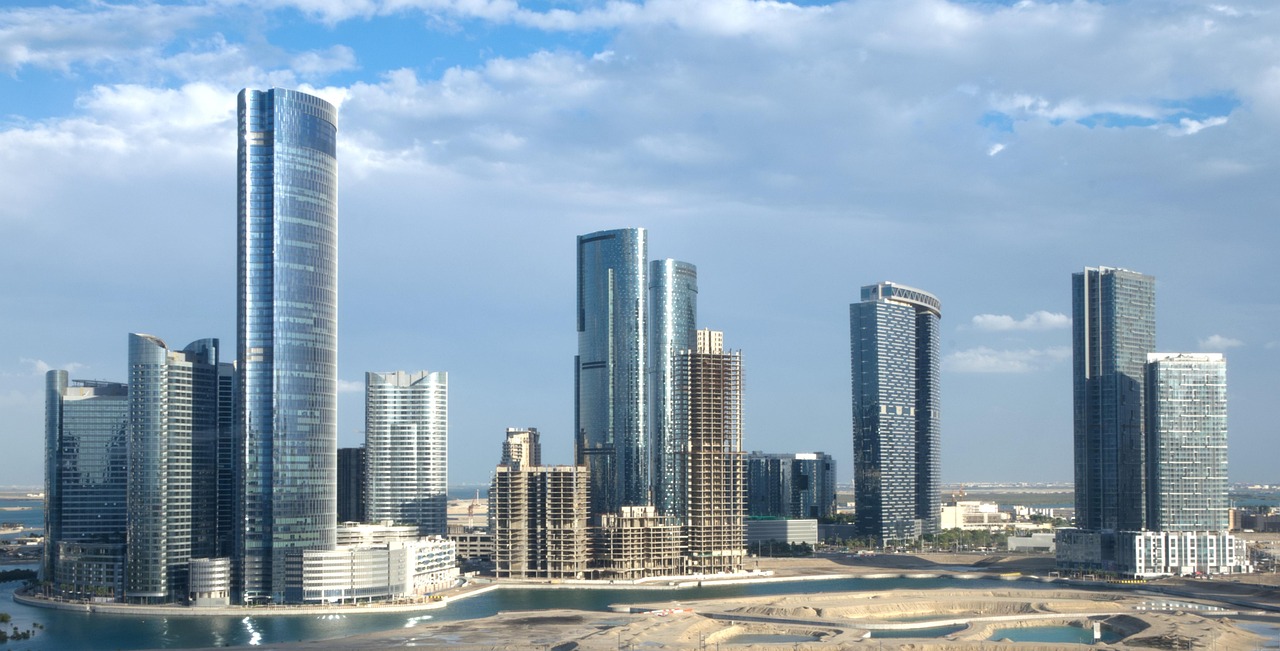
Al Reem Island is one of the newer residential and business districts – all glass towers and water views. For visitors, the draw is Reem Central Park, a modern waterfront park with walkways, skate areas, playgrounds, and open-air cafés.
I like coming here on weekday evenings to sit by the water and people-watch. The skyline views are different from the Corniche, more “up close” to the towers.
Local tip: Good for an evening stroll if you’re staying nearby or want to see a more everyday side of modern Abu Dhabi living.
17. Al Bateen Beach & Marina
Al Bateen is one of my favorite “local-feel” beaches. It’s quieter than the Corniche or Saadiyat, with views over Hudayriat Island and a more relaxed, neighborhood atmosphere.
On Fridays, you’ll see families with picnic setups that look like they’ve moved their living rooms outside: carpets, cushions, teapots, the works. Sunset here is understated but lovely.
Local tip: There are separate family and single sections; pay attention to signs. Modest swimwear is appreciated, especially away from tourist-heavy spots.
18. Hudayriat Island
Hudayriat Island has quietly become one of Abu Dhabi’s best outdoor playgrounds. Think cycling tracks, running paths, beaches, food trucks, and adventure parks. It’s where you go when the weather is good and you want to move your body.
I’ve rented bikes here, tried the obstacle courses, and ended long afternoons with burgers from food trucks overlooking the water.
Local tip: Go in the late afternoon to avoid mid-day heat, then stay for sunset and early evening lights. Many facilities are free or low-cost, making it a budget-friendly outing.
19. Etihad Towers Observation Deck
For a bird’s-eye view of Abu Dhabi, head up to the observation deck in Etihad Towers. On a clear day, you can see the Corniche, Emirates Palace, and a scatter of islands stretching into the gulf.
It’s a great spot for photos and a mid-afternoon coffee; I usually time it to arrive an hour before sunset so I can see the city in both daylight and dusk.
Local tip: Check if there’s a minimum spend for the café; sometimes entrance fees can be offset by ordering food or drinks.
20. Marina Mall & Marina Eye
Marina Mall itself is a fairly standard UAE-style shopping mall, but its location and the nearby Marina Eye Ferris wheel make it a pleasant stop. From here, you get nice views back toward the city and the Corniche.
I often end up here for practical reasons (groceries, quick meals) and stay longer than planned, especially if I grab a seat at one of the cafés with windows facing the water.
Local tip: Combine Marina Mall with Heritage Village and the Corniche for a compact day of sightseeing, shopping, and city views.
Suggested Itineraries: 3–5 Days in Abu Dhabi
These itineraries are based on how I actually move around the city when I’m hosting friends or revisiting my favorite spots. They’re flexible; swap days around depending on your interests and the weather.
3 Days in Abu Dhabi: Classic Highlights
If you only have 3 days in Abu Dhabi, focus on the city’s greatest hits: the Grand Mosque, Louvre Abu Dhabi, the Corniche, and a dose of desert.
Day 1: Grand Mosque, Qasr Al Watan & Corniche Sunset
Start gently but powerfully with the spiritual and political heart of the city.
- Morning – Sheikh Zayed Grand Mosque: Arrive early to beat tour buses. Give yourself 2–3 hours to explore, join a guided tour, and take photos.
- Lunch: Grab a casual lunch at a nearby mall (like The Souk at Qaryat Al Beri) where you can find everything from Lebanese grills to Asian fusion.
- Afternoon – Qasr Al Watan: Head to the Presidential Palace. Spend 2–3 hours wandering the palatial halls and exhibits.
- Evening – Corniche walk: End your day with a relaxed walk along the Corniche. If you still have energy, rent bikes or just sit by the water with a takeaway shawarma.
Personal note: This is usually the day when my first-time-visiting friends say, “Okay, I get why you keep coming back here.” The mix of architecture, sea, and sky is a strong introduction.
Day 2: Louvre Abu Dhabi & Saadiyat Beach
- Morning – Louvre Abu Dhabi: Arrive at opening time. Spend 3–4 hours wandering the galleries and relaxing under the dome. Don’t rush; this is a place to linger.
- Lunch: Eat at the museum café or one of the Saadiyat Island eateries. Try something light if you’re heading to the beach after.
- Afternoon – Saadiyat Public Beach: Rent a lounger or spread a towel on the sand. Swim, nap, read. In cooler months, this is one of the best beaches in the region.
- Evening: Head back to the city for dinner. Consider Lebanese, Syrian, or Emirati cuisine (later in this guide I’ll list specific restaurants).
Family note: Kids usually love the children’s wing at Louvre Abu Dhabi and the gentle waves at Saadiyat Beach, making this a very family-friendly day.
Day 3: Yas Island Fun & Desert Sunset Safari
- Morning – Yas Island park of your choice: Ferrari World or Warner Bros. World depending on your group’s interests. If you have younger kids, Warner Bros. is often the winner; thrill-seekers gravitate to Ferrari World.
- Lunch: Eat inside the park; not cheap, but convenient.
- Afternoon to evening – Desert safari: Your driver will pick you up mid-afternoon. Expect dune bashing, a photo stop at sunset, and a camp dinner with entertainment. You’ll be back in the city around 9–10 p.m.
Energy check: This is a big “wow” day. If you prefer a slower pace, you can swap the desert safari with a calmer evening activity like mangrove kayaking another day.
4 Days in Abu Dhabi: Add Culture & Local Life
With 4 days in Abu Dhabi, you can slow down and add neighborhoods, markets, and more time outdoors.
Day 1–3:
Follow the 3 day itinerary for Abu Dhabi above.
Day 4: Qasr Al Hosn, Mina Zayed & Local Eats
- Morning – Qasr Al Hosn & House of Artisans: Explore the fort, learn about Abu Dhabi’s history, and chat with artisans. This is where the city’s past feels most tangible.
- Lunch: Head to a nearby Indian, Pakistani, or Filipino restaurant downtown for an affordable, hearty meal. Portions are generous; prices are much lower than hotel restaurants.
- Afternoon – Mina Zayed: Visit the fish market and the adjacent date and vegetable markets. Watch the boats, people-watch, and maybe buy some dates to snack on.
- Evening – Local café or karak tea: Finish with a karak tea (sweet, spiced tea) and a snack at a roadside café. This is everyday Abu Dhabi, far from the glam but full of life.
Personal note: This is the day when Abu Dhabi starts feeling less like a polished destination and more like a city you could, in some alternate universe, live in.
5 Days in Abu Dhabi: Deep Dive & Day Trips
With 5 days in Abu Dhabi, you can add either an Al Ain day trip or more active outdoor experiences.
Day 1–4:
Follow the 4 day itinerary for Abu Dhabi above.
Day 5 Option A: Al Ain Day Trip
- Morning: Depart early for Al Ain. Visit Al Ain Oasis, the National Museum, and maybe a fort or two.
- Lunch: Try a local restaurant for grilled meats and rice dishes.
- Afternoon: Drive up Jebel Hafeet for views, then head back to Abu Dhabi in the evening.
Day 5 Option B: Mangroves & Hudayriat
- Morning: Kayak through Eastern Mangroves on a guided tour.
- Afternoon: Rest during the hottest hours, then head to Hudayriat Island for cycling, running, or just relaxing by the water.
- Evening: Grab casual dinner from a food truck or simple waterfront café.
Who this suits: Option A is best for history and culture lovers; Option B is perfect if you crave movement and nature.
Neighborhoods & Areas to Explore in Abu Dhabi
Corniche & Downtown
The Corniche and its inland streets are Abu Dhabi’s most walkable and visually iconic area. This is where you’ll find a mix of high-rise apartments, offices, small eateries, and easy access to the waterfront. It’s a great base for first-timers: central, lively, and full of accommodation options.
Saadiyat Island
Saadiyat is arts-and-beach central, with Louvre Abu Dhabi and other cultural projects, plus some of the best upscale resorts. It feels quieter and more resort-like than downtown, ideal for couples or travelers who want a calmer base and don’t mind taking taxis into the city.
Yas Island
Yas is the entertainment district: theme parks, malls, F1 track, and hotels with easy access to everything on the island. It’s very convenient for families who plan to spend multiple days at the parks, but less atmospheric if you care about traditional neighborhoods or the Corniche.
Al Bateen & Hudayriat
Al Bateen is a more residential, upscale area with a marina and local-feeling beach. Hudayriat, just across the bridge, is an outdoor hub. This side of town feels more laid-back and local than the business-centric downtown.
Al Reem Island
High-rise residential, business, and waterfront promenades. It’s not a traditional tourist destination, but if you stay here (many serviced apartments are on Reem), you’ll see a modern, lived-in side of Abu Dhabi with parks and easy taxi access to the rest of the city.
Mina Zayed & Old Port Area
Closer to the port, this area has markets, warehouses, and a more industrial vibe. It’s where everyday commerce happens – fish, dates, vegetables, and shipping. It’s not “pretty” in the postcard sense, but it’s real and fascinating.
Local Food in Abu Dhabi & Where to Eat
Abu Dhabi’s food scene is a reflection of its population: Emirati, Arab, Indian, Pakistani, Filipino, African, and Western influences all mixing on one table. You can eat like royalty in a hotel restaurant or like a local at a tiny Indian cafeteria – sometimes on the same day.
Must-Try Dishes
- Machboos: Spiced rice with meat (often chicken, lamb, or fish), similar to biryani but with its own Gulf flavor profile.
- Harees: Slow-cooked wheat and meat, especially common during Ramadan and Eid.
- Shawarma: The UAE staple – marinated meat shaved from a vertical spit, wrapped in flatbread with garlic sauce and pickles.
- Falafel & hummus: Levantine classics that you’ll find everywhere.
- Grilled fish at Mina Zayed: Choose your fish, have it grilled fresh, and eat it with rice and lemon.
- Karak: Strong, sweet, milky tea spiced with cardamom – my nightly ritual in Abu Dhabi.
Where to Eat (Sample Suggestions)
I won’t name specific tiny places that may change quickly, but here’s the kind of spots I gravitate toward:
- For Emirati food: Look for traditional Emirati restaurants near Qasr Al Hosn or in cultural districts; these often serve machboos, harees, and luqaimat (sweet dumplings).
- For cheap and cheerful: Indian and Pakistani cafeterias downtown serve massive plates of biryani, curries, and bread for a fraction of hotel prices.
- For seafood: Mina Zayed fish market plus adjacent grills; also some midrange seafood restaurants along the Corniche and Al Bateen.
- For romantic dining: Waterfront restaurants at luxury hotels on Saadiyat or along the Corniche; sunset bookings are gold.
Saving Money on Food
Abu Dhabi can be as expensive or as affordable as you make it. Eat all your meals in hotels and you’ll feel it. Mix in meals at local cafeterias and small restaurants and your daily food budget drops significantly without sacrificing flavor.
I often do hotel breakfasts, a local lunch (like a 15–25 AED biryani downtown), and then decide based on energy levels whether dinner is a shawarma-to-go or a sit-down spot.
Nightlife, Entertainment & Cultural Experiences
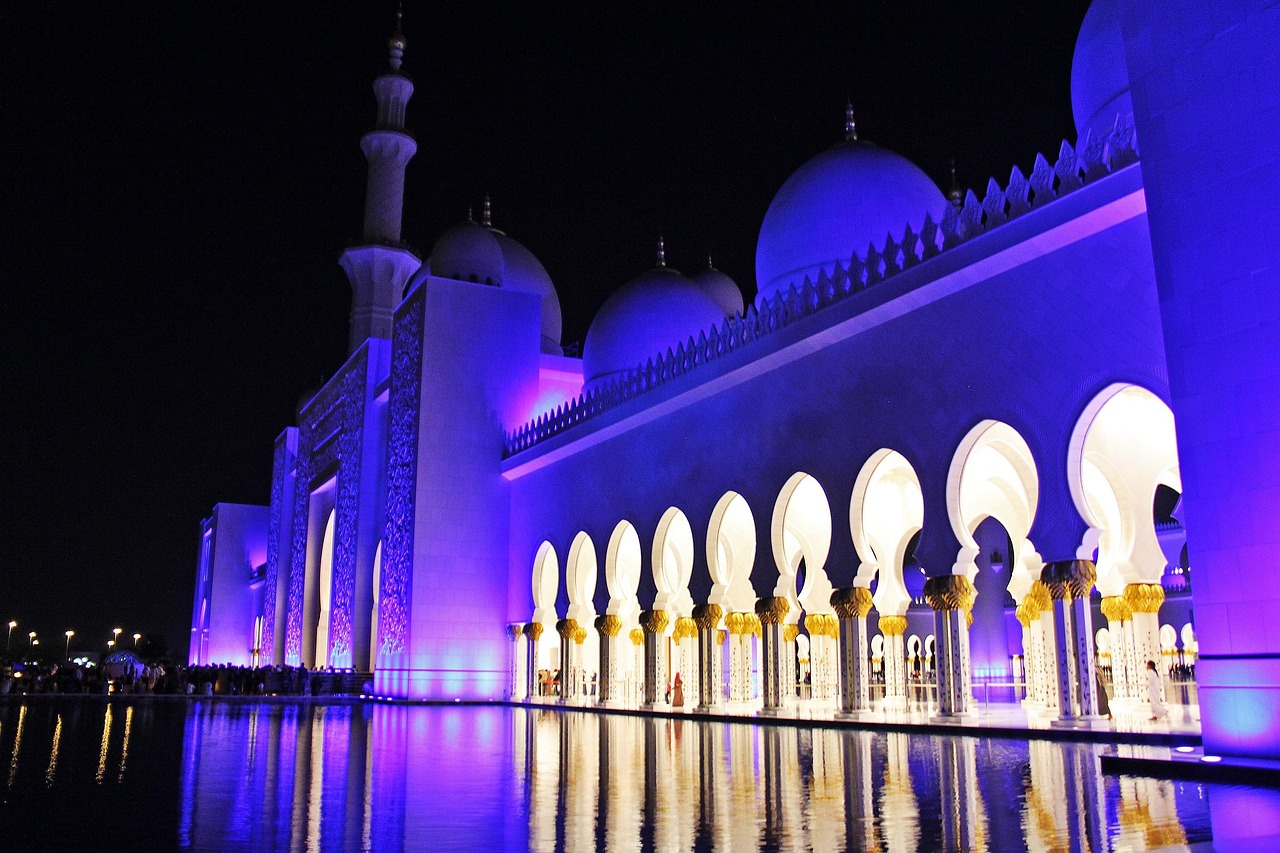
Abu Dhabi’s nightlife is more low-key than Dubai’s but still varied: hotel bars, shisha lounges, waterfront cafés, and organized cultural events.
Nightlife & Bars
Alcohol is served in licensed hotel bars and some independent venues. You’ll find rooftop bars with skyline views, sports pubs, and more polished lounges. Dress codes are generally smart-casual; check venue policies in advance.
Shisha & Cafés
Shisha cafés and late-night tea spots are where much of everyday social life happens. I love sitting at an outdoor café on a mild winter night with a pot of mint tea, watching families and groups of friends come and go.
Cultural Experiences
- Concerts & performances: Keep an eye on event calendars for shows at Etihad Arena (Yas Island), cultural foundations, and Saadiyat venues.
- Ramadan (shifting dates annually): If you visit during Ramadan, evenings come alive with iftar (breaking the fast) buffets and suhoor (late-night meals). It’s a beautiful time to experience local hospitality.
Day Trips & Nearby Excursions
Al Ain
As mentioned earlier, Al Ain offers oases, forts, and mountain views. It’s a refreshing contrast to coastal Abu Dhabi.
Liwa Desert
If you have more time, an overnight stay in the Liwa area puts you among some of the tallest dunes in the region. Stargazing here is incredible.
Dubai
About 90 minutes by car or bus, Dubai is an easy day trip if you want to see its malls, old creek, or Burj Khalifa. Personally, I prefer Abu Dhabi as a base and do Dubai as a one-off visit.
What’s New in 2026–2027: Events & Changes
Abu Dhabi is constantly evolving. For 2026–2027, expect:
- Expanded cultural programming at Saadiyat’s museums and cultural centers, with more international exhibitions and performances.
- Regular major sporting events at Yas Marina Circuit and Etihad Arena, including F1, UFC, and concerts – check schedules close to your travel dates.
- Continued development of waterfront areas like Hudayriat, with improved cycling and running facilities and new dining options.
Always verify event dates closer to your trip; schedules can shift, and new festivals often pop up with relatively short notice.
Cultural Etiquette & Local Customs in Abu Dhabi
Abu Dhabi is welcoming and used to visitors, but it’s still a conservative, Muslim-majority city. A bit of cultural awareness goes a long way.
Dress Code
- In malls and public streets, aim for at least knee-length bottoms and covered shoulders.
- At religious sites like Sheikh Zayed Grand Mosque, stricter rules apply; plan modest outfits in advance.
- Beachwear is fine at pools and beaches, but not in city streets or malls.
Behavior in Public
- Public displays of affection should be minimal – holding hands is generally fine; anything more is frowned upon.
- During Ramadan, avoid eating, drinking, or smoking in public during daylight hours out of respect, unless local rules provide designated areas.
- Always ask before photographing people, especially women and families.
Social Interactions
- Greetings are often warm and polite. A simple “As-salaam alaykum” (peace be upon you) is appreciated.
- Use your right hand for giving and receiving items; the left is traditionally considered unclean.
Practical Travel Advice for Abu Dhabi (2026)
Visa & Entry
Visa requirements depend on your nationality. Many countries receive visa-on-arrival access to the UAE, while others require advance visas. Always check the latest information from official UAE government or embassy websites before traveling in 2026.
Foreign Driver’s License & Car Rental
Major rental companies operate in Abu Dhabi. Many visitors can drive with their home country license or an International Driving Permit, but rules vary; confirm before arrival. Roads are generally excellent, signage is in English and Arabic, and gas is affordable. Driving is fast but mostly orderly; keep your wits about you on multilane highways.
Getting Around Without a Car
- Taxis: Plentiful, metered, and relatively affordable. I use them constantly.
- Ride-hailing apps: Careem and Uber both operate in Abu Dhabi.
- Buses: Cheap and air-conditioned but slower and best for those with time and patience.
SIM Cards & Connectivity
At the airport, you’ll find kiosks for major telecom providers (e.g., Etisalat, du). Tourist SIM packages usually include generous data, local calls, and sometimes international minutes. Bring your passport; it’s needed for registration.
Money & Costs
The currency is UAE dirham (AED). Cards are widely accepted, but it’s handy to carry some cash for smaller cafés and markets. Abu Dhabi can be pricey if you lean heavily on luxury hotels and fine dining, but mixing in local eateries and free public spaces (Corniche, parks, some beaches) keeps budgets manageable.
Best Seasons & Weather
- November–March: Ideal. Pleasant temperatures, outdoor-friendly. Higher prices and busier, but worth it.
- April–May & October: Shoulder seasons. Warm to hot, but manageable, especially if you plan indoor activities midday.
- June–September: Extremely hot and humid. Stay indoors during the day, focus on malls, museums, and indoor attractions, and venture out early morning or late night.
Health & Safety
Abu Dhabi is very safe, with low crime rates and excellent medical facilities. Tap water is generally safe, but many people prefer bottled. Use sunscreen, hats, and hydration – the sun is intense even in winter.
Saving Money
- Use local restaurants and cafeterias instead of hotel dining for everyday meals.
- Buy multi-park passes for Yas Island attractions.
- Use taxis strategically: cluster sights in the same area per day to cut down on back-and-forth rides.
Summary & Final Recommendations
Abu Dhabi in 2026 is a city of contrasts that somehow feel harmonious: marble mosques and mangrove forests, roaring roller coasters and silent desert dunes, high-end dining and late-night shawarma stands. Whether you have 3 days in Abu Dhabi or a full 5 day itinerary for Abu Dhabi, you can craft a trip that balances spectacle with stillness.
Key takeaways:
- Don’t skip the big icons: Sheikh Zayed Grand Mosque, Louvre Abu Dhabi, and the Corniche are must-see attractions in Abu Dhabi.
- Give yourself at least one slow day to wander neighborhoods, markets, and local cafés – that’s where the city’s personality really shows.
- Plan around the weather: winter (November–March) is best for beaches, outdoor parks, and desert trips; summer is for malls, museums, and indoor theme parks.
- Respect local customs and dress codes; you’ll feel more comfortable, and locals will appreciate your effort.
Every time I leave Abu Dhabi, I carry the same sensory memories: the hush of the Grand Mosque at dusk, the salty air along the Corniche, the crunch of sand underfoot in the desert, and the taste of late-night karak tea. If you let it, the city will get under your skin in the best way – and you may find yourself, like me, planning your next visit before you’ve even left.